The Science of Delta Waves for Deep Sleep 1–4Hz

8 min read
Your brain generates electrical activity around the clock, but the slowest waves it produces - those pulsing at just 1 to 4 cycles per second - might be the most critical for your health. These delta frequencies dominate during the deepest phases of sleep, orchestrating everything from tissue repair to memory formation. Understanding how delta waves work and what disrupts them can transform your approach to rest. The science behind these low-frequency brain oscillations reveals why some people wake up restored while others drag through their days despite spending eight hours in bed.
The Fundamentals of Delta Waves in the Human Brain
Defining the 1–4Hz Frequency Range
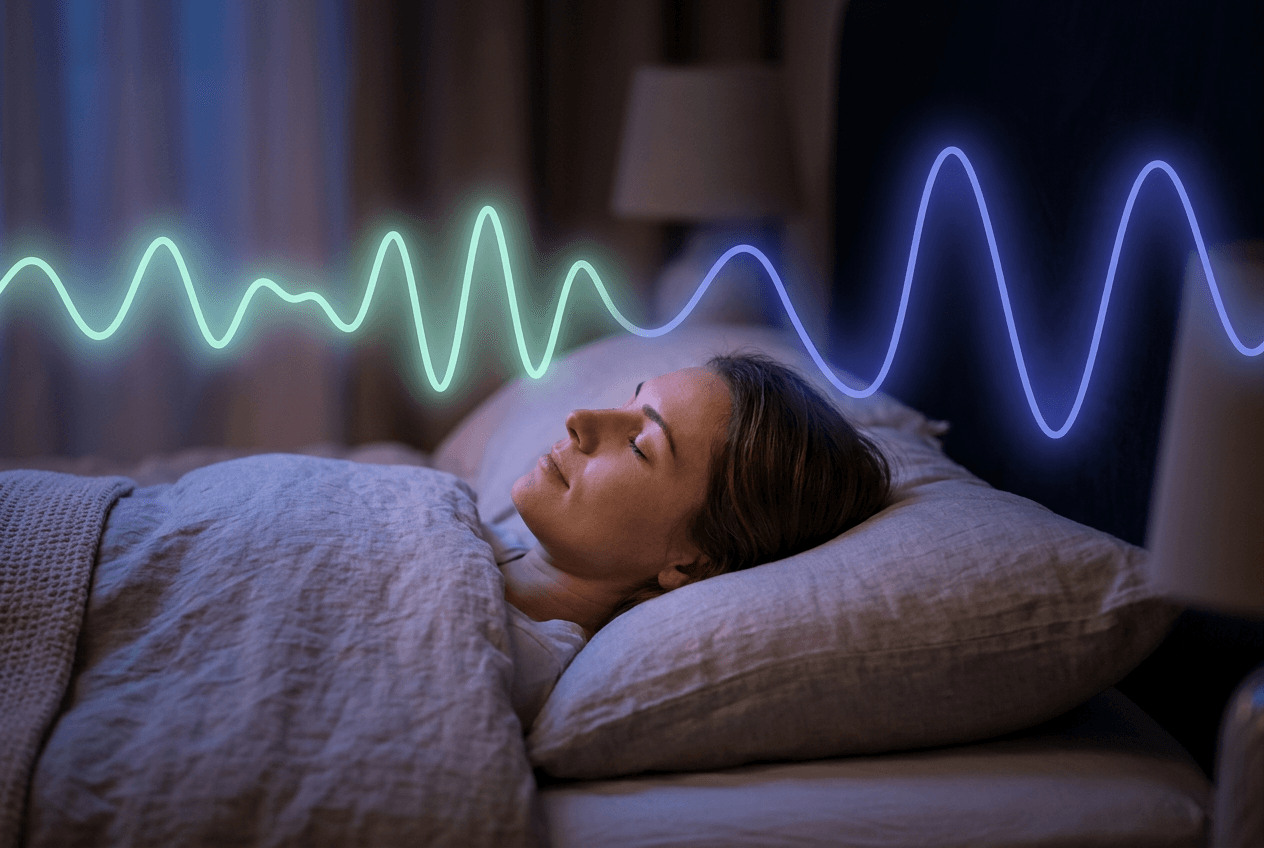
Brain waves are categorized by their frequency, measured in hertz. Beta waves (13-30Hz) dominate during active thinking. Alpha waves (8-12Hz) appear during relaxed wakefulness. Theta waves (4-8Hz) emerge during light sleep and meditation. Delta waves occupy the lowest end of this spectrum at 1-4Hz, meaning they complete just one to four full cycles every second.
These slow oscillations have the highest amplitude of any brain wave type, producing electrical signals that can be detected across large regions of the cortex simultaneously. Think of it like a stadium wave at a sports event: when the entire crowd moves in unison rather than randomly, the effect becomes visible from far away. Delta activity represents widespread neural synchronization that's impossible during waking consciousness.
The Role of the Thalamus in Wave Generation
The thalamus acts as the brain's relay station, sitting deep within the center of your skull and filtering sensory information before it reaches the cortex. During wakefulness, thalamic neurons fire rapidly and irregularly, processing incoming stimuli. As you transition into deep sleep, these same neurons shift into a rhythmic burst-firing pattern.
This switch happens because thalamic neurons contain specific ion channels that activate only when the cells become hyperpolarized. The resulting slow, synchronized bursts propagate outward to cortical neurons, creating the characteristic delta rhythm. Damage to the thalamus can eliminate delta wave production entirely, demonstrating its essential role in generating these deep sleep frequencies.
Delta Waves and the Architecture of Slow-Wave Sleep
NREM Stage 3: The Deepest Phase of Rest
Sleep researchers divide the night into distinct stages, with NREM Stage 3 representing the deepest level of unconsciousness. During this phase, delta waves account for more than 50% of recorded brain activity. Your heart rate drops, blood pressure decreases, and breathing becomes slow and regular.
Waking someone from Stage 3 sleep is notoriously difficult. If you've ever been roused from a deep nap and felt completely disoriented for several minutes, you've experienced sleep inertia from delta-dominant sleep. This grogginess reflects how profoundly different delta-state brain function is from waking consciousness. Most Stage 3 sleep occurs during the first third of the night, with each subsequent cycle containing progressively less deep sleep.
Biological Restoration and Growth Hormone Release
The pituitary gland releases approximately 70% of its daily growth hormone output during slow-wave sleep. This isn't coincidental. Growth hormone triggers protein synthesis, fat metabolism, and tissue repair processes that require the metabolic stability delta sleep provides.
Athletes who track their sleep stages often notice that inadequate deep sleep correlates with slower recovery times and increased muscle soreness. A 2019 study in the Journal of Sports Sciences found that athletes with suppressed slow-wave sleep showed elevated inflammatory markers compared to those with normal delta activity. The body essentially uses this period as a repair window, and shortening it compromises physical recovery.
Neurological Benefits of Sustained Delta Activity
Memory Consolidation and Synaptic Pruning
Your brain doesn't simply store memories during sleep - it actively reorganizes them. Delta waves facilitate the transfer of information from the hippocampus (short-term storage) to the neocortex (long-term storage). This process, called memory consolidation, requires the synchronized neural activity that delta oscillations provide.
Equally important is synaptic pruning: the elimination of unnecessary neural connections formed during the day. Learning creates new synapses, but maintaining every connection would eventually overwhelm the brain's capacity. During delta-dominant sleep, weak or redundant synapses are selectively eliminated while important ones are strengthened. Research from the University of Wisconsin demonstrated that synaptic density decreases by approximately 20% during sleep, resetting the brain for new learning.
The Glymphatic System and Metabolic Waste Clearance
Perhaps the most significant discovery about deep sleep in recent decades involves the glymphatic system. This network of channels surrounding blood vessels in the brain activates primarily during sleep, flushing out metabolic waste products including beta-amyloid proteins associated with Alzheimer's disease.
A 2013 study in Science showed that the interstitial space between brain cells expands by 60% during sleep, allowing cerebrospinal fluid to flow more freely and clear accumulated toxins. This expansion correlates strongly with delta wave activity. Chronic sleep deprivation or poor-quality sleep with insufficient delta production may allow neurotoxic proteins to accumulate over years, potentially contributing to neurodegenerative disease.
External Methods for Inducing Delta State
Binaural Beats and Isochronic Tones
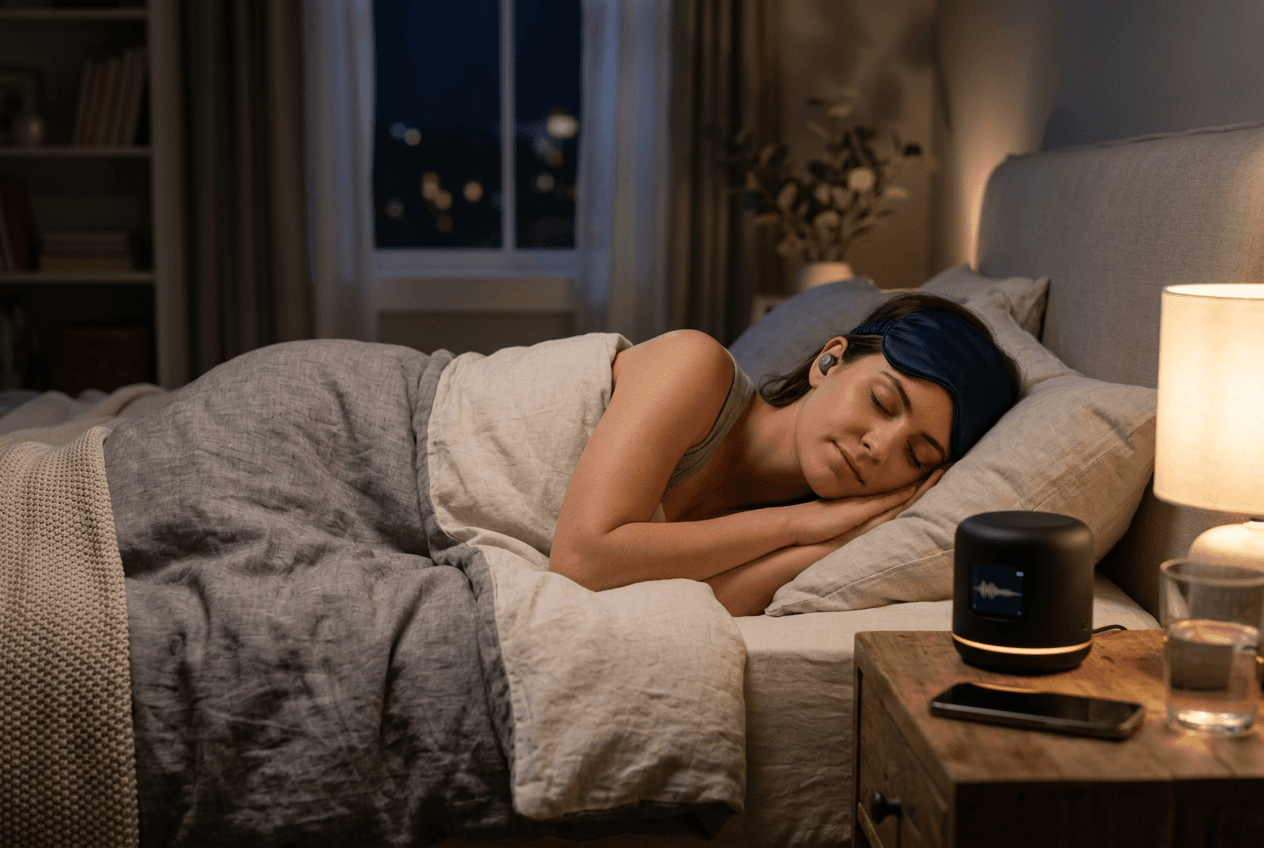
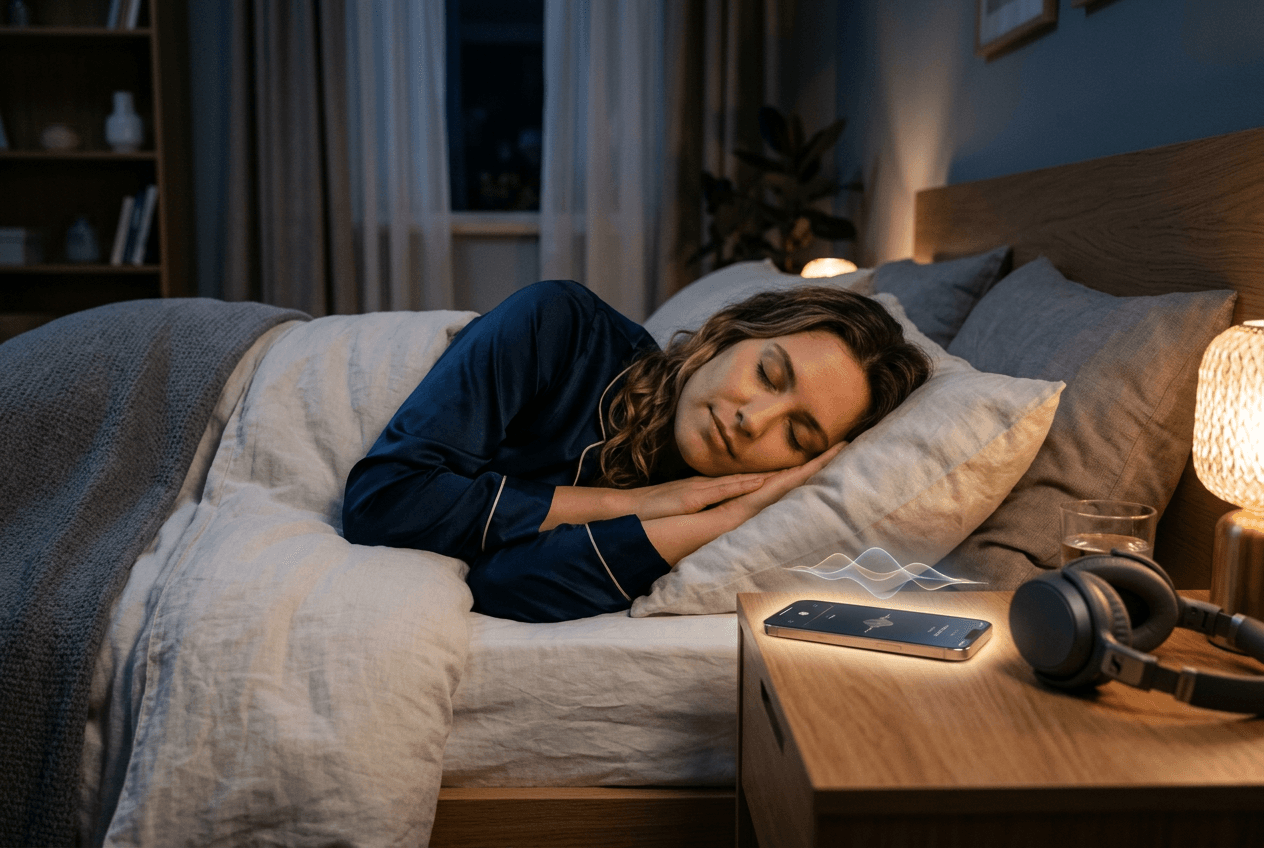
Binaural beats present slightly different frequencies to each ear through headphones. When one ear receives a 100Hz tone and the other receives 103Hz, the brain perceives a 3Hz "beat" and may begin synchronizing neural activity to that frequency. Our guide to binaural beats for sleep covers the full evidence base. This phenomenon, called frequency-following response, forms the basis for using audio to encourage delta wave production.
The research here is mixed but promising. A 2018 meta-analysis found that binaural beats in the delta range modestly improved sleep quality in controlled settings, though effect sizes varied considerably between studies. Isochronic tones - which pulse a single frequency on and off rather than relying on binaural processing - don't require headphones and may produce stronger entrainment effects in some individuals.
Acoustic Stimulation and Pink Noise Syncing
A more sophisticated approach involves timing sound pulses to coincide with naturally occurring slow waves. Researchers at Northwestern University developed a system that monitors EEG activity and delivers brief pink noise bursts precisely when delta waves peak. This closed-loop stimulation enhanced slow-wave amplitude by 25% and improved next-day memory performance in study participants.
While consumer devices attempting this technique exist, most lack the precision of laboratory equipment. Simpler approaches using continuous pink noise (which emphasizes lower frequencies compared to white noise) show modest benefits for sleep depth in some studies, possibly by masking disruptive environmental sounds rather than directly entraining brain waves.
Factors That Disrupt and Suppress Delta Production
The Impact of Aging on Slow-Wave Amplitude
Delta wave amplitude declines steadily after age 30, with some studies showing reductions of 2% per decade. By age 60, many people produce only 50-60% of the slow-wave activity they generated in their twenties. This decline correlates with decreased growth hormone secretion, impaired memory consolidation, and reduced subjective sleep quality.
The mechanism involves changes in cortical gray matter and alterations in thalamic function. While this decline appears partially inevitable, lifestyle factors can accelerate or slow the process. Maintaining physical fitness, managing chronic conditions, and protecting sleep architecture may preserve delta production longer than sedentary aging.
Chemical Interference: Alcohol and Caffeine
Alcohol is particularly destructive to delta sleep despite its sedative effects. While a drink may help you fall asleep faster, alcohol fragments sleep architecture and suppresses slow-wave activity during the second half of the night. The liver metabolizes alcohol at roughly one drink per hour, and the withdrawal effect as blood alcohol drops actively disrupts deep sleep.
Caffeine's half-life of 5-6 hours means that afternoon coffee can still occupy adenosine receptors at bedtime. Adenosine accumulation normally promotes sleep pressure and facilitates the transition into delta-dominant stages. Blocking these receptors reduces both the quantity and quality of slow-wave sleep, even when total sleep duration appears normal.
Optimizing Lifestyle for Maximum Deep Sleep Efficiency
Protecting your delta sleep requires attention to timing, environment, and daily habits. Exercise consistently improves slow-wave sleep, but intense workouts within 3 hours of bedtime can elevate core body temperature and cortisol levels that interfere with sleep onset. Morning or early afternoon training appears optimal for most people.
Temperature manipulation offers another lever. Core body temperature naturally drops during sleep, and a cool bedroom (65-68°F) supports this process. Taking a warm bath 90 minutes before bed accelerates the subsequent temperature drop through vasodilation, potentially enhancing the transition into deep sleep.
Light exposure patterns matter significantly. Bright light in the morning anchors circadian rhythms, while avoiding blue light in the evening allows melatonin to rise naturally. These signals help ensure that your deepest sleep coincides with the optimal biological window in the first third of the night.
The science of delta waves reveals that deep sleep isn't passive unconsciousness - it's an active biological process with measurable mechanisms and genuine consequences for health. Prioritizing conditions that support slow-wave production pays dividends in cognitive function, physical recovery, and potentially long-term brain health. Small adjustments to sleep hygiene compound over time into meaningful improvements in sleep quality.