The Best Frequencies for Sleep: A Scientific Comparison

8 min read
Your bedroom is quiet, but your brain won't stop. You've tried meditation apps, chamomile tea, and counting backwards from a thousand. Nothing works. Meanwhile, a growing body of research suggests that specific sound frequencies might be the missing piece in your sleep puzzle. But which frequency actually delivers results? The answer isn't as straightforward as the wellness industry would have you believe.
I've spent considerable time reviewing the clinical literature on sound-based sleep interventions, and the science reveals a more nuanced picture than most articles present. Some frequencies show genuine promise backed by peer-reviewed studies, while others ride on centuries-old claims with minimal modern validation. Understanding the best frequency for sleep requires a science-based comparison of what's actually happening in your brain when these sounds enter your ears.
The Science of Sound and Brainwave Entrainment
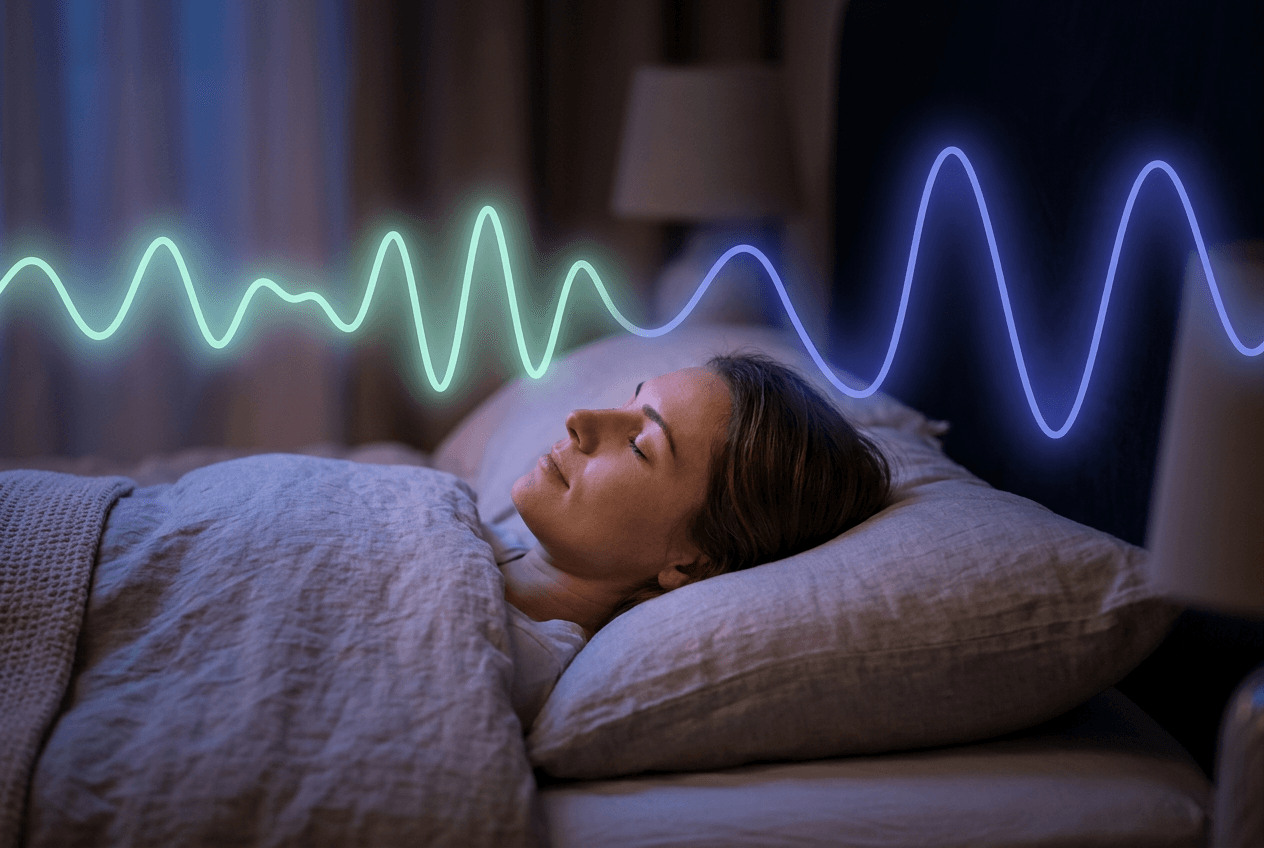
Your brain produces electrical patterns called brainwaves, measured in hertz (Hz). These patterns shift throughout your day and night, corresponding to different states of consciousness. The core principle behind sound-based sleep aids is brainwave entrainment: the theory that external rhythmic stimuli can guide your brain toward specific frequency states.
Understanding Delta and Theta Wave States
Delta waves (0.5-4 Hz) dominate deep sleep, the restorative phase where tissue repair and immune function peak. Theta waves (4-8 Hz) characterize the drowsy, pre-sleep state and light sleep stages. When you're fully awake and alert, beta waves (12-30 Hz) run the show.
The goal of sleep-focused sound therapy is pushing your brain from beta dominance down through alpha (8-12 Hz), into theta, and finally delta territory. Think of it like a room full of people clapping randomly. If someone starts a steady rhythm, others gradually synchronize. Your neurons can respond similarly to consistent auditory patterns.
How External Frequencies Influence Sleep Cycles
The auditory cortex processes incoming sounds even during sleep. Research published in Neuron (2013) demonstrated that acoustic stimulation timed to slow-wave sleep enhanced memory consolidation in participants. The key mechanism involves the thalamus, which acts as a relay station between your ears and cortex.
External sounds don't directly create delta waves in your brain. Instead, they may reduce cortical arousal, mask disruptive environmental noise, or provide a consistent stimulus that helps your brain settle into natural sleep rhythms. The distinction matters because it explains why different frequencies work for different people and purposes.
Comparing the Spectrum of Sonic Hues
Colored noise categories describe the distribution of energy across sound frequencies. Each type has distinct characteristics that affect how your brain and nervous system respond.
White Noise for Masking Environmental Disruptions
White noise contains equal energy across all audible frequencies, creating that familiar static-like sound. Its primary benefit isn't mystical: it simply masks sudden environmental sounds that would otherwise jolt you awake. A 2021 study in Sleep Medicine found that white noise reduced sleep onset latency by an average of 38% in participants living in noisy urban environments.
The downside? White noise contains substantial high-frequency content, which some people find harsh or fatiguing over extended periods. If you're sensitive to treble frequencies, white noise might feel more irritating than soothing.
Pink Noise and Its Impact on Memory Consolidation
Pink noise reduces energy as frequency increases, resulting in a deeper, more natural sound. Think rainfall or wind through trees. A Northwestern University study (2017) published in Frontiers in Human Neuroscience showed that pink noise synchronized to slow-wave sleep oscillations improved memory performance by 26% compared to control conditions.
The research suggests pink noise may be particularly effective for older adults, who naturally experience reduced slow-wave sleep. However, the studies used precisely timed acoustic pulses rather than continuous playback, meaning your smartphone app might not replicate these specific benefits.
Brown Noise for Relaxation and Deep Sleep
Brown noise (sometimes called red noise) emphasizes even lower frequencies, producing a rumbling quality similar to thunder or a waterfall. For a practical guide to choosing between all three, see our comparison of white, pink, and brown noise for sleep. Anecdotally, many people with ADHD or anxiety report brown noise helps quiet racing thoughts.
Clinical research specifically on brown noise remains limited compared to pink and white noise. However, its low-frequency emphasis may activate the parasympathetic nervous system more effectively, promoting the relaxation response necessary for sleep onset. If you find white noise too sharp and pink noise insufficient, brown noise warrants experimentation.
Binaural Beats and Solfeggio Frequencies
Beyond colored noise, specific tonal frequencies claim sleep-enhancing properties. The evidence here gets considerably murkier.
The 432 Hz vs. 528 Hz Debate
Proponents claim 432 Hz represents a "natural" tuning that resonates with human biology, while 528 Hz supposedly promotes healing and DNA repair. We examined the 528 Hz claims specifically in our article on whether 528 Hz helps you sleep. These claims trace back to alternative medicine circles rather than peer-reviewed neuroscience.
A 2019 study in the Journal of Music Therapy found that 432 Hz music reduced heart rate and blood pressure slightly more than 440 Hz (standard concert pitch) music. However, the effect sizes were small, and the study didn't specifically measure sleep outcomes. The 528 Hz healing claims lack any rigorous clinical validation.
My honest assessment: these frequencies might provide modest relaxation benefits, but the dramatic claims exceed the evidence. If you enjoy music tuned to 432 Hz, there's no harm in using it. Just don't expect miraculous results.
Mechanics of Left-Right Ear Frequency Differentials
Binaural beats work differently. You hear one frequency in your left ear (say, 200 Hz) and a slightly different frequency in your right ear (210 Hz). Your brain perceives a third tone at the difference frequency (10 Hz), which falls in the alpha range.
A meta-analysis in Psychological Research (2020) found binaural beats produced small but statistically significant effects on anxiety reduction. Sleep-specific research shows mixed results. Some studies report improved sleep quality with delta-frequency binaural beats (1-4 Hz difference), while others find no significant effect compared to placebo.
The requirement for headphones presents a practical limitation. Sleeping with earbuds isn't comfortable for everyone, and speakers can't deliver the ear-specific frequencies necessary for the binaural effect.
Clinical Evidence and Efficacy Studies
Looking across the research landscape, pink noise currently has the strongest evidence base for sleep enhancement, particularly when synchronized to slow-wave oscillations. White noise excels at environmental masking but may not actively improve sleep architecture. Brown noise lacks robust clinical trials but shows promise based on physiological principles.
Binaural beats demonstrate anxiety-reduction effects that may indirectly benefit sleep, though direct sleep quality improvements remain inconsistent across studies. Our full guide to what binaural beats are and whether they help you sleep covers the evidence in depth. Solfeggio frequencies and specific Hz claims (432, 528, etc.) rest primarily on theoretical frameworks and anecdotal reports rather than controlled trials.
A critical consideration: individual variation is enormous. Genetic differences in auditory processing, baseline anxiety levels, and sleep disorder profiles all influence which frequencies help specific people. The "best" frequency for sleep ultimately depends on your unique neurobiology.
Optimizing Your Sleep Environment with Sound
Choosing the right frequency matters less if your implementation causes other problems. Volume and delivery method significantly impact both safety and effectiveness.
Recommended Volume Levels and Decibel Safety
The World Health Organization recommends nighttime noise exposure below 40 decibels for healthy sleep. Most sound machines and apps operate between 50-70 dB at typical settings, which exceeds this threshold.
Keep your sleep sounds at the minimum volume necessary to achieve the desired effect. For masking purposes, your sound source only needs to be slightly louder than environmental disruptions. For entrainment purposes, lower volumes may actually work better since they require less cortical processing.
Extended exposure above 70 dB risks hearing damage over time. If you're using sleep sounds every night, err toward quieter settings.
Hardware Choices: Speakers vs. Sleep Headphones
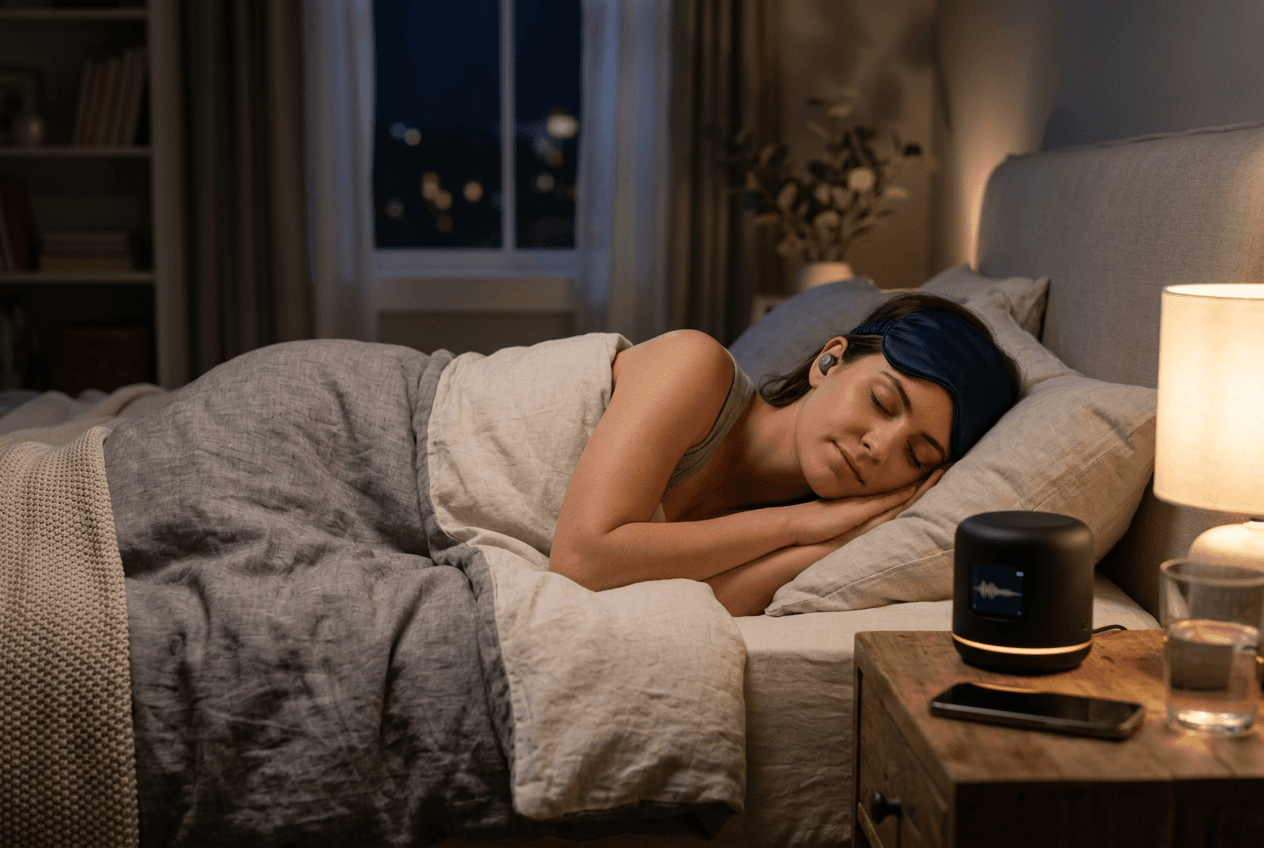
Pillow speakers and bedside sound machines avoid the discomfort of earbuds while providing adequate sound delivery for colored noise. They can't produce binaural beats, but most evidence-backed sleep frequencies don't require ear-specific delivery.
Sleep headphones with flat profiles exist for side sleepers who prefer binaural options. Bone conduction headphones offer another alternative, though they may feel unusual initially.
Consider your sleep position, partner preferences, and whether you need the stereo separation that binaural beats require. For most people, a simple speaker playing pink or brown noise delivers the best balance of effectiveness and practicality.
Finding Your Optimal Sleep Frequency
The science points toward pink noise as the most promising option for most people, with brown noise as a worthy alternative for those seeking deeper tones. White noise remains valuable for environmental masking in noisy settings. Binaural beats may help if anxiety contributes to your sleep difficulties, though the evidence is less consistent.
Start with pink noise at low volume for two weeks before concluding it doesn't work. Your brain needs time to associate the sound with sleep. If pink noise feels wrong, try brown noise instead. Track your sleep quality subjectively and, if possible, with a wearable device.
The future of sleep sound therapy likely involves personalized protocols based on real-time EEG feedback, with AI systems adjusting frequencies throughout the night. Until that technology becomes accessible, systematic self-experimentation remains your best path to finding what works for your unique brain.