What Are Binaural Beats and Do They Help You Sleep?

8 min read
You're lying in bed, exhausted after a long day, but your mind won't stop racing. You've tried warm milk, counting sheep, and even that meditation app your coworker recommended. Then someone mentions binaural beats, claiming these audio tracks can lull your brain into sleep mode. But what are binaural beats, and do they actually help you sleep, or is this just another wellness trend with more hype than substance?
The concept sounds almost too simple: listen to specific sounds through headphones, and your brain waves shift into a sleepier state. It feels like something from a science fiction novel, yet millions of people swear by these audio tracks for falling asleep faster and staying asleep longer. The truth, as with most things related to the brain, is more nuanced than either the skeptics or the enthusiasts suggest.
I've spent considerable time examining the research on binaural beats, testing various frequencies, and talking with people who use them nightly. What I've found is that while binaural beats aren't a magic cure for insomnia, there's legitimate science behind why they might help certain people achieve better sleep. Understanding how they work is the first step toward figuring out if they'll work for you.
Understanding the Science of Binaural Beats
Binaural beats occur when you present two slightly different frequencies to each ear simultaneously. Your brain perceives a third tone, the "beat," which equals the difference between the two frequencies. If your left ear hears 300 Hz and your right ear hears 310 Hz, your brain processes a 10 Hz binaural beat.
This phenomenon was discovered in 1839 by physicist Heinrich Wilhelm Dove, but it took another century before researchers began exploring its potential applications. The brain doesn't actually hear this third frequency in the traditional sense. Instead, it's an auditory illusion created by the superior olivary complex in your brainstem, where sound from both ears first gets processed together.
The Frequency Following Response
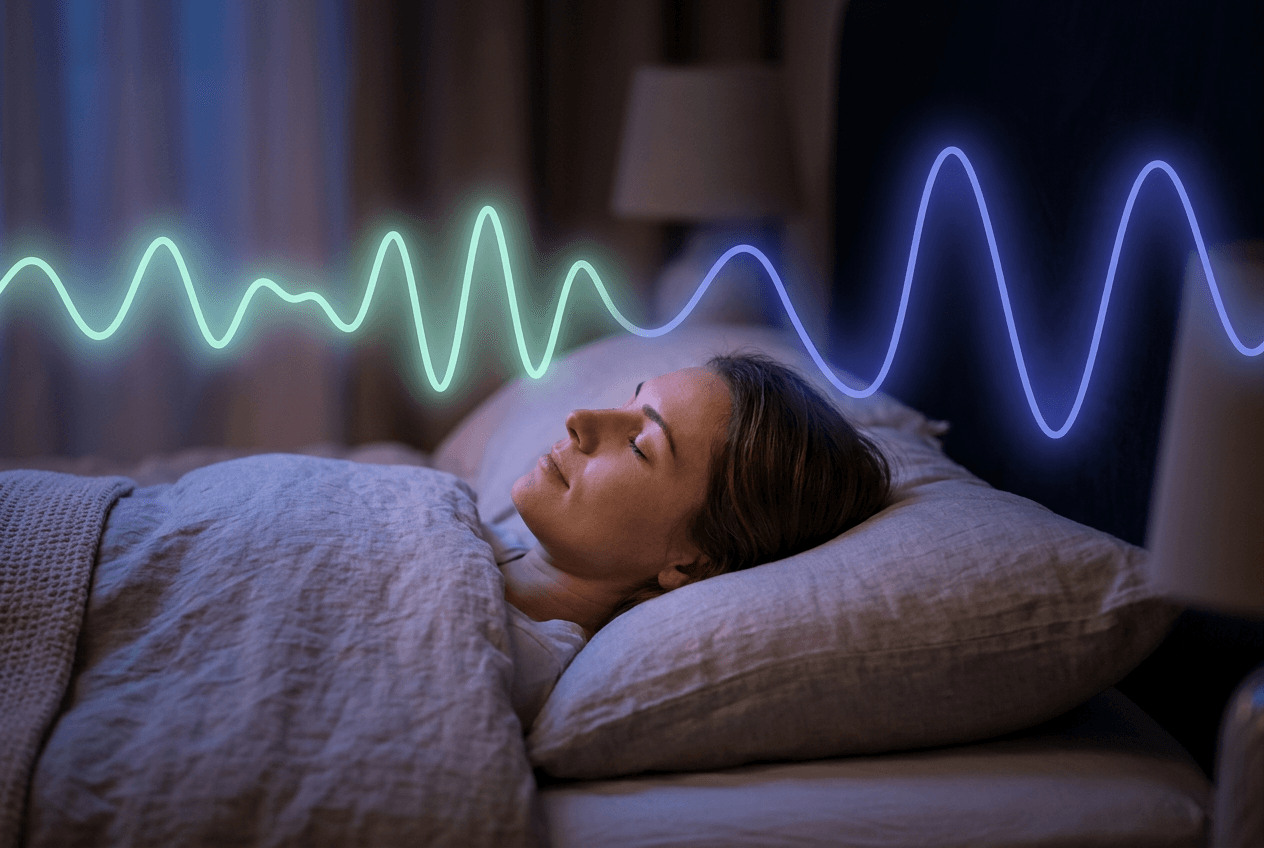
The real magic happens through something called the frequency following response. Your brain has a tendency to synchronize its electrical activity with external rhythmic stimuli. When exposed to a binaural beat at a specific frequency, your neural oscillations begin matching that frequency over time.
Think of it like being in a room where everyone is clapping at different times. Eventually, the clapping synchronizes into a unified rhythm. Your brain waves do something similar when exposed to consistent auditory beats, gradually aligning with the presented frequency.
Why Stereo Headphones are Required
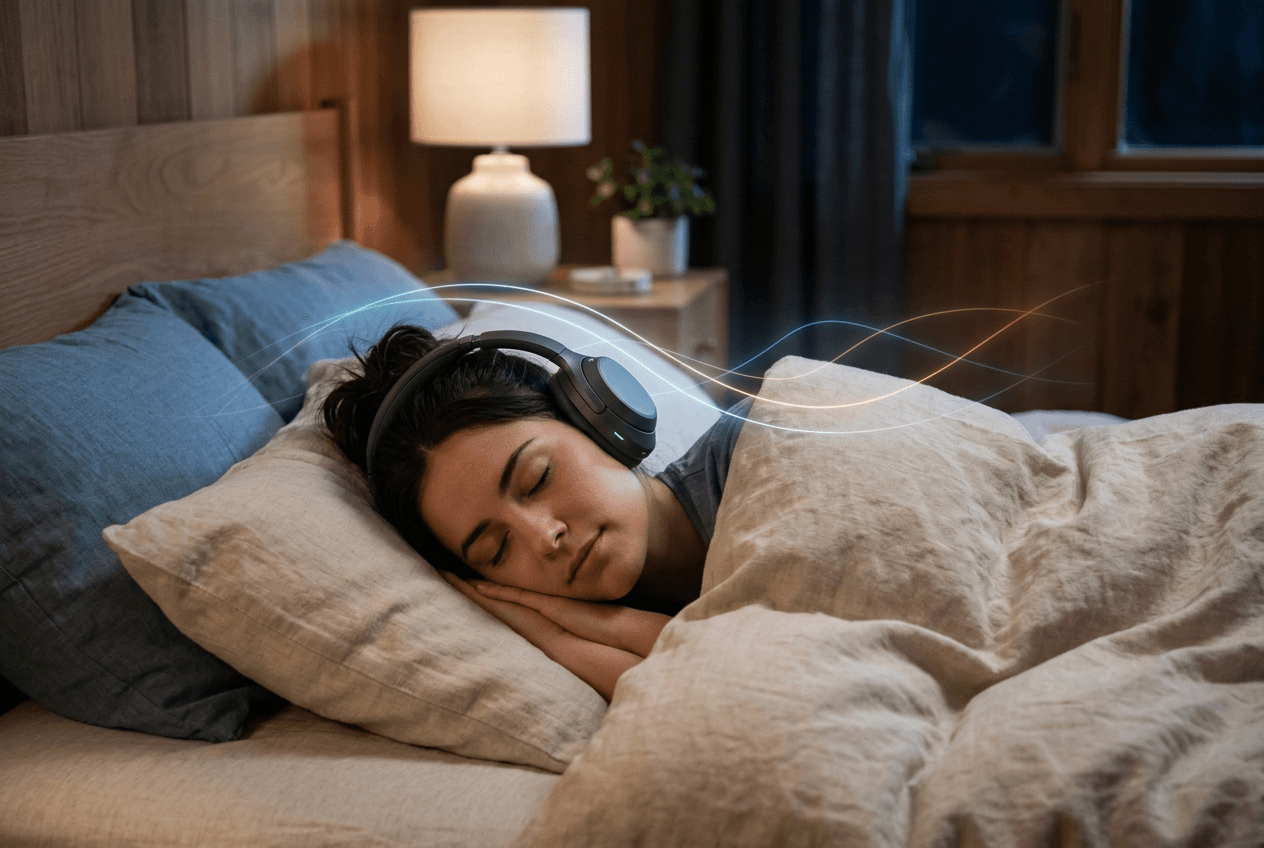
Binaural beats only work with stereo headphones because each ear must receive a different frequency. Speakers won't cut it since the sounds mix in the air before reaching your ears, eliminating the frequency difference your brain needs to detect.
The headphones don't need to be expensive, but they must properly isolate left and right channels. Earbuds work fine, though over-ear headphones often provide better comfort for sleep applications. The key requirement is that each ear receives its designated frequency without crossover.
Brainwave States and Their Connection to Sleep
Your brain produces different types of electrical patterns depending on your mental state. Beta waves dominate during active thinking, alpha waves appear during relaxed wakefulness, theta waves emerge during drowsiness and light sleep, and delta waves characterize deep, restorative sleep. Our article on theta vs. delta waves explains what each state does and why you need both.
Sleep researchers have mapped these patterns extensively, and the progression from alert wakefulness to deep sleep follows a predictable path through these brainwave states. Binaural beats aim to accelerate this natural progression by encouraging your brain to produce sleep-associated frequencies.
Theta Waves for Deep Relaxation
Theta waves oscillate between 4 and 8 Hz and represent the bridge between wakefulness and sleep. This state feels like that pleasant drowsiness when you're drifting off, still vaguely aware of your surroundings but not fully engaged with them.
Binaural beats targeting the theta range can help your mind transition out of the busy beta state that keeps you awake. A 2019 study in the Journal of Neurophysiology found that theta-frequency binaural beats increased theta wave activity in participants within 10 minutes of listening.
Delta Waves for Restorative Sleep
Delta waves, ranging from 0.5 to 4 Hz, dominate during the deepest stages of sleep when physical restoration occurs. For a deep dive into what's happening during this phase, see our article on the science of delta waves. Growth hormone releases, tissue repair accelerates, and memory consolidation happens during delta-dominant sleep.
Reaching adequate delta sleep is essential for waking up feeling refreshed. Binaural beats in the delta range theoretically help maintain this deep sleep state, though the research here is less conclusive than for theta frequencies. Some studies suggest the effect is modest but measurable.
Benefits of Binaural Beats for Sleep Quality
The potential benefits extend beyond simply falling asleep faster. Regular users report improvements in overall sleep architecture, meaning they spend more time in restorative sleep stages rather than cycling through light sleep repeatedly.
Reducing Sleep Latency and Insomnia
Sleep latency, the time it takes to fall asleep, averages about 15-20 minutes for healthy adults. People with insomnia often lie awake for an hour or more, their minds stuck in high-frequency beta activity.
A 2018 study published in Frontiers in Human Neuroscience found that participants listening to theta binaural beats fell asleep 26% faster than the control group. The effect was most pronounced in people who typically struggled with racing thoughts at bedtime. The beats seem to give the brain something neutral to focus on while simultaneously encouraging slower wave patterns.
Lowering Cortisol and Anxiety Levels
Anxiety and elevated cortisol are sleep's worst enemies. When your stress hormones remain high at night, your body stays in a state of alertness incompatible with restful sleep.
Research from 2020 showed that 30 minutes of theta binaural beat exposure reduced salivary cortisol levels by an average of 12%. Participants also reported feeling calmer and less anxious. This stress-reducing effect may be the primary mechanism through which binaural beats improve sleep for many users.
How to Use Binaural Beats Effectively
Getting results from binaural beats requires more than just pressing play on a random YouTube video. The frequency, duration, timing, and environment all influence effectiveness.
Choosing the Right Frequency Range
For falling asleep, start with theta frequencies between 4-8 Hz. These help transition your brain from active waking states into pre-sleep drowsiness. Some people prefer starting with alpha frequencies (8-12 Hz) for 10-15 minutes before shifting to theta.
For staying asleep and reaching deep sleep, delta frequencies below 4 Hz work best. Many sleep-focused binaural beat tracks gradually transition from theta to delta over 30-60 minutes, mimicking natural sleep progression.
Optimal Volume and Environment Settings
Volume should be low enough to feel comfortable but loud enough to clearly distinguish the beat. If you can barely hear it, it won't be effective. If it's distracting, it's too loud.
Keep your room dark, cool, and free from other audio distractions. Some people layer binaural beats under white noise or nature sounds, which can enhance the relaxation effect. Set a timer so the audio stops after you've fallen asleep, as continuous play throughout the night isn't necessary and may disrupt sleep cycles.
Potential Side Effects and Safety Considerations
Binaural beats are generally safe for most people, but they're not appropriate for everyone. People with epilepsy should avoid them entirely, as rhythmic auditory stimulation can potentially trigger seizures in susceptible individuals. If you have any neurological condition, consult the Mayo Clinic's guidance on seizure triggers before experimenting with audio entrainment.
Some users report headaches, especially when first starting or when using frequencies that don't suit them. If you experience discomfort, try a different frequency or reduce the volume. Nausea and dizziness occur occasionally, typically resolving when exposure stops.
Pregnant women and people with heart conditions should consult healthcare providers before regular use. Children's developing brains may respond differently than adults, so parental guidance is advisable. If binaural beats cause anxiety rather than relaxation, discontinue use immediately.
The Future of Auditory Beat Stimulation Research
Research into auditory beat stimulation is expanding rapidly. Scientists are exploring personalized frequency protocols based on individual brainwave patterns, potentially making binaural beats far more effective than one-size-fits-all approaches.
Wearable EEG devices that adjust binaural beat frequencies in real-time based on your current brain state are already in development. These could create a feedback loop that optimizes the stimulation moment by moment, significantly enhancing effectiveness.
The honest assessment? Binaural beats help some people sleep better, particularly those whose insomnia stems from anxiety or racing thoughts. They're not a replacement for good sleep hygiene, treating underlying sleep disorders, or addressing chronic stress. But as a low-risk, low-cost addition to your sleep routine, they're worth trying. Start with a quality theta-frequency track, comfortable headphones, and realistic expectations. If you want to compare binaural beats against other audio approaches like pink noise and brown noise, our scientific comparison of sleep frequencies is a useful companion read. Give it two weeks of consistent use before deciding if binaural beats deserve a permanent place in your bedtime ritual.