Pink Noise for Sleep: The 2025 Penn Medicine Study

7 min read
Most sleep advice falls into two categories: obvious tips you've heard a thousand times, or pseudoscientific claims that crumble under scrutiny. So when Penn Medicine published research in early 2025 examining pink noise for sleep and its effects on brain activity, it caught my attention. This wasn't another wellness blog making vague promises. It was a controlled study from one of the country's leading academic medical centers, and what the researchers revealed challenges some assumptions about how we optimize rest.
The study focused on something called acoustic stimulation during sleep, specifically using pink noise to enhance deep sleep phases. If you've dismissed sound machines as background noise for light sleepers, the findings might change your perspective. The research demonstrated measurable changes in brain wave patterns and sleep architecture when participants listened to carefully timed pink noise. We're talking about documented improvements in slow-wave activity, the deep sleep phase your brain needs for physical restoration and memory processing.
Here's what the Penn Medicine study actually found, why pink noise differs from the white noise you're probably familiar with, and how to apply this research to your own sleep routine without buying into marketing hype.
The Science of Pink Noise and Sleep Quality
Defining Pink Noise: Frequency and Power Density
Pink noise isn't just a marketing term for a slightly different sound machine setting. It has a specific acoustic definition that matters for sleep applications. The "pink" designation refers to how power is distributed across frequencies. In pink noise, power decreases by 3 decibels for every doubling of frequency. This creates a sound profile where lower frequencies are more prominent than higher ones.
Think of it this way: white noise gives equal energy to all frequencies, which can sound harsh or hissy. Pink noise sounds deeper, more balanced to human ears. For a side-by-side comparison of all three main noise colors, see our guide on white, pink, and brown noise for sleep. Natural examples include steady rainfall, wind through trees, and ocean waves at a distance. Your brain perceives pink noise as more natural because it mirrors many environmental sounds humans evolved hearing during sleep.
Pink vs. White Noise: Key Differences for the Listener
White noise has dominated the sleep sound market for decades, but the distinction matters more than most people realize. Our article on whether white noise actually works covers what it does well and where it falls short. White noise contains equal power across all audible frequencies, creating that characteristic static or "shhhh" sound. Many people find it effective for masking disruptive noises, but it can feel fatiguing over extended periods.
Pink noise, by contrast, emphasizes bass frequencies while softening treble. The practical difference is significant: pink noise sounds warmer and less intrusive during sleep. Your auditory system processes it with less effort, which may explain why the Penn Medicine research focused specifically on pink rather than white noise. The brain appears to respond differently to these acoustic profiles during sleep stages.
Breakdown of the 2025 Penn Medicine Study Findings
Impact on Slow-Wave Activity and Deep Sleep
The Penn Medicine researchers monitored participants using polysomnography, the gold standard for sleep measurement that tracks brain waves, eye movements, and muscle activity. What they found was striking: pink noise delivered during specific sleep phases increased slow-wave activity by a measurable margin compared to silent control conditions.
Slow-wave sleep is your brain's maintenance mode. During these phases, the brain clears metabolic waste, consolidates memories, and triggers hormone release for tissue repair. The full science of what happens during delta-dominant sleep is covered in our article on delta waves for deep sleep. The study revealed that pink noise timed to coincide with natural slow-wave oscillations could amplify these waves. Participants showed deeper, more sustained periods of slow-wave sleep rather than the fragmented patterns common in poor sleepers.
Memory Consolidation and Cognitive Benefits
Beyond sleep depth, the research examined next-day cognitive performance. Participants who received pink noise stimulation performed better on memory tests compared to nights without acoustic intervention. The improvement wasn't subtle: recall accuracy increased notably, particularly for information learned the previous day.
This aligns with existing neuroscience showing that slow-wave sleep is critical for transferring memories from short-term to long-term storage. By enhancing slow-wave activity, pink noise appears to support this consolidation process. The Penn Medicine team noted that older adults, who naturally experience declining slow-wave sleep, might benefit most from this intervention.
Mechanisms of Acoustic Stimulation in the Brain
Brain Wave Synchrony and Auditory Rhythms
The study's most interesting finding involved timing. Random pink noise didn't produce the same benefits as noise synchronized to the brain's natural rhythms. The researchers used real-time EEG monitoring to deliver brief pink noise pulses precisely when slow waves were building. This timing allowed the external sound to reinforce rather than disrupt the brain's natural oscillation.
Your brain essentially "locks on" to rhythmic external stimuli during sleep. When pink noise pulses arrive at the right moment, they amplify the slow waves your brain is already generating. It's similar to pushing a swing at the right point in its arc rather than randomly. The synchronization matters enormously, which explains why simply playing pink noise all night may not replicate the study's results.
The Role of Sound in Reducing Sleep Fragmentation
Sleep fragmentation, those micro-awakenings you don't remember but which degrade sleep quality, decreased in the pink noise group. The acoustic stimulation appeared to stabilize sleep architecture, reducing the frequency of brief arousals that interrupt restorative sleep phases.
This effect likely works through two mechanisms. First, consistent background sound masks environmental noise that might otherwise trigger arousal. Second, the rhythmic quality of pink noise may actively promote sleep stability by providing predictable auditory input. Your brain doesn't need to process unexpected sounds when the acoustic environment remains consistent.
Practical Applications for Daily Rest
Recommended Volume Levels and Soundscapes
The Penn Medicine study used relatively quiet pink noise, around 40-50 decibels — well within the range the WHO recommends for nighttime environmental sound. That's roughly the volume of a quiet conversation or light rainfall. Louder isn't better here. Excessive volume can trigger arousal responses and potentially damage hearing over time.
For home application, start at a volume where the sound is clearly audible but not prominent. You should be able to fall asleep without consciously focusing on the noise. Pure pink noise works well, but natural soundscapes with pink noise characteristics, like rain or distant thunder, can feel more pleasant for some sleepers. The key is consistency: your brain benefits from predictable acoustic input throughout the night.
Consider these guidelines:
- Keep volume between 40-50 decibels, roughly equivalent to a quiet refrigerator hum
- Position sound sources at least three feet from your head
- Avoid sounds with sudden changes in volume or frequency
- Test different soundscapes to find what feels most natural to you
Selecting Hardware: Speakers vs. Sleep-Safe Headphones
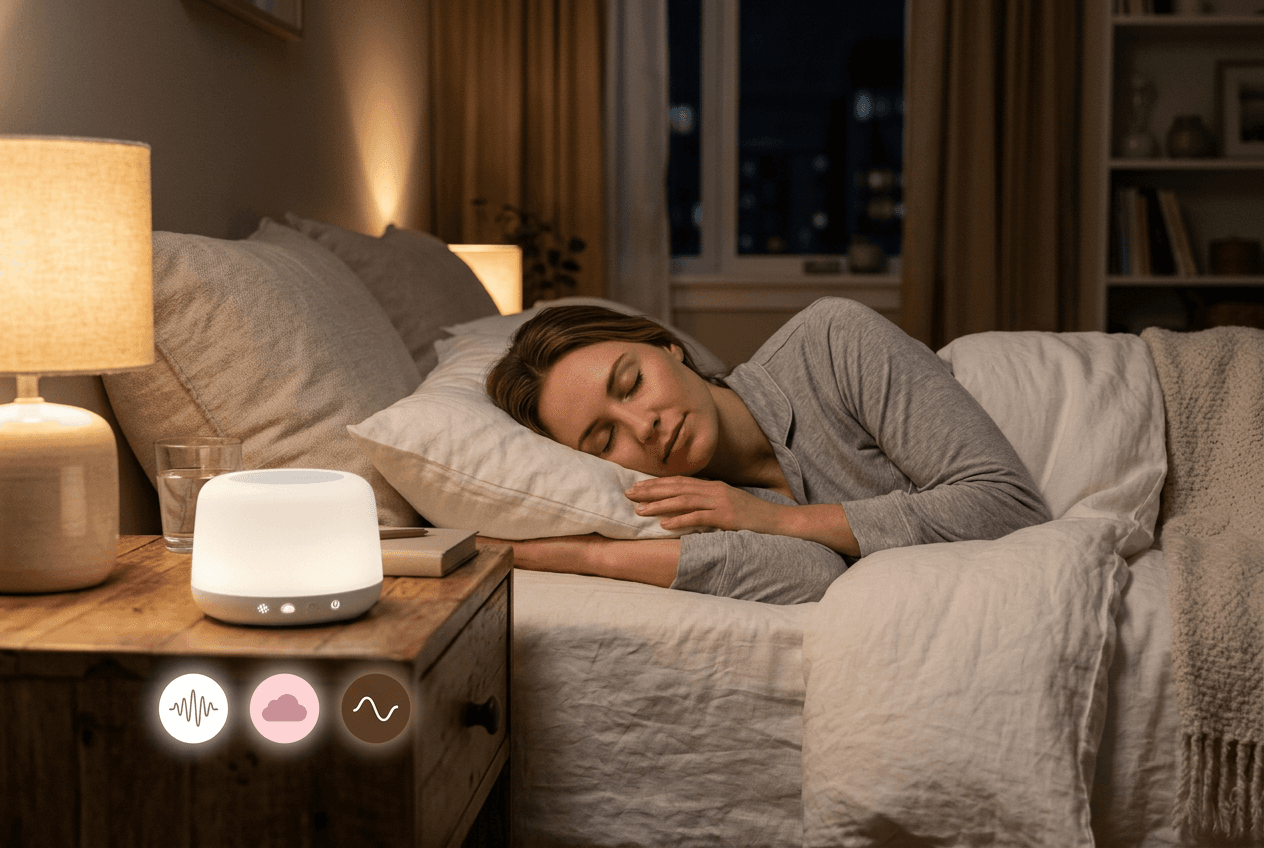
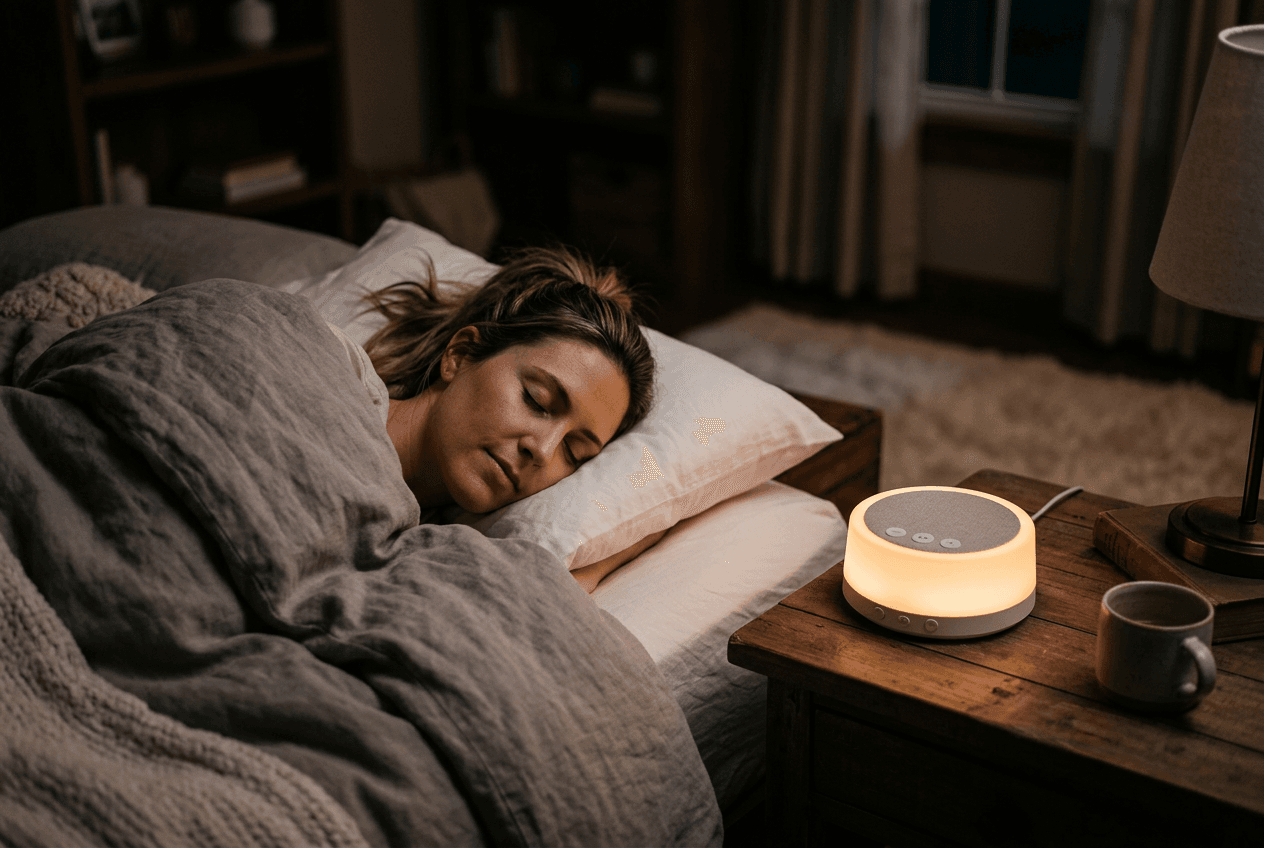
Your delivery method affects both comfort and sound quality. Standard speakers work well if you sleep alone or your partner doesn't mind ambient sound. Place them at ear level, not directly beside your head, to create a more natural acoustic environment.
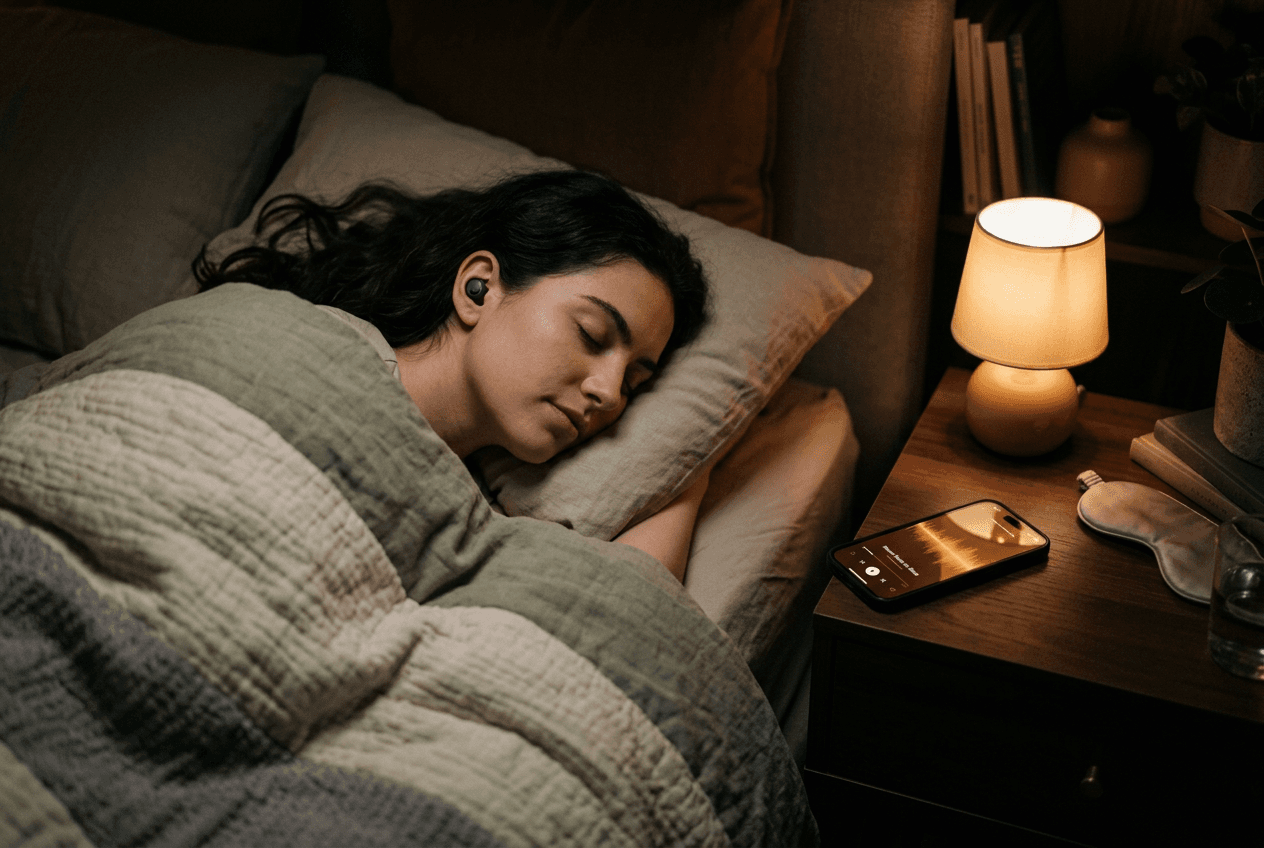
Sleep headphones designed for overnight wear offer privacy but require careful selection. Hard earbuds become uncomfortable during side sleeping and can cause ear canal irritation. Soft headband-style speakers or flat sleep earbuds work better for most people. Bone conduction headphones represent another option, though research on their effectiveness for sleep acoustic stimulation remains limited.
Whatever hardware you choose, ensure it can play continuously for 7-8 hours without interruption. Apps that stop after a timer or devices that auto-shut-off will break the consistency that makes pink noise effective.
Future Directions in Auditory Sleep Therapy
The Penn Medicine research opens several promising avenues. Consumer devices that monitor sleep stages in real-time and deliver synchronized pink noise pulses are already in development. These would replicate the study's precise timing without requiring clinical EEG equipment.
Researchers are also exploring whether acoustic stimulation might help specific populations: older adults experiencing age-related sleep decline, people with mild cognitive impairment, or those recovering from brain injuries. The non-invasive nature of sound therapy makes it attractive compared to pharmaceutical interventions.
For now, the practical takeaway is clear. Pink noise, particularly when played consistently throughout the night at moderate volumes, can support deeper sleep and better cognitive function. You don't need expensive equipment or clinical monitoring to benefit. A quality speaker, a reliable pink noise source, and attention to volume levels will get you started.
The 2025 Penn Medicine study revealed something many of us suspected but couldn't prove: the sounds we sleep to genuinely affect sleep quality at a neurological level. Pink noise isn't a cure-all, but it's one of the few sleep interventions with solid research behind it. Worth trying tonight.