Theta vs. Delta Waves: Which Is Better for Sleep?

7 min read
Your brain doesn't stay in one state all night. It cycles through distinct phases, each dominated by different electrical frequencies that serve specific purposes. Understanding theta waves vs delta waves and which is best for sleep isn't about picking a winner - it's about recognizing what each frequency does and why you need both.
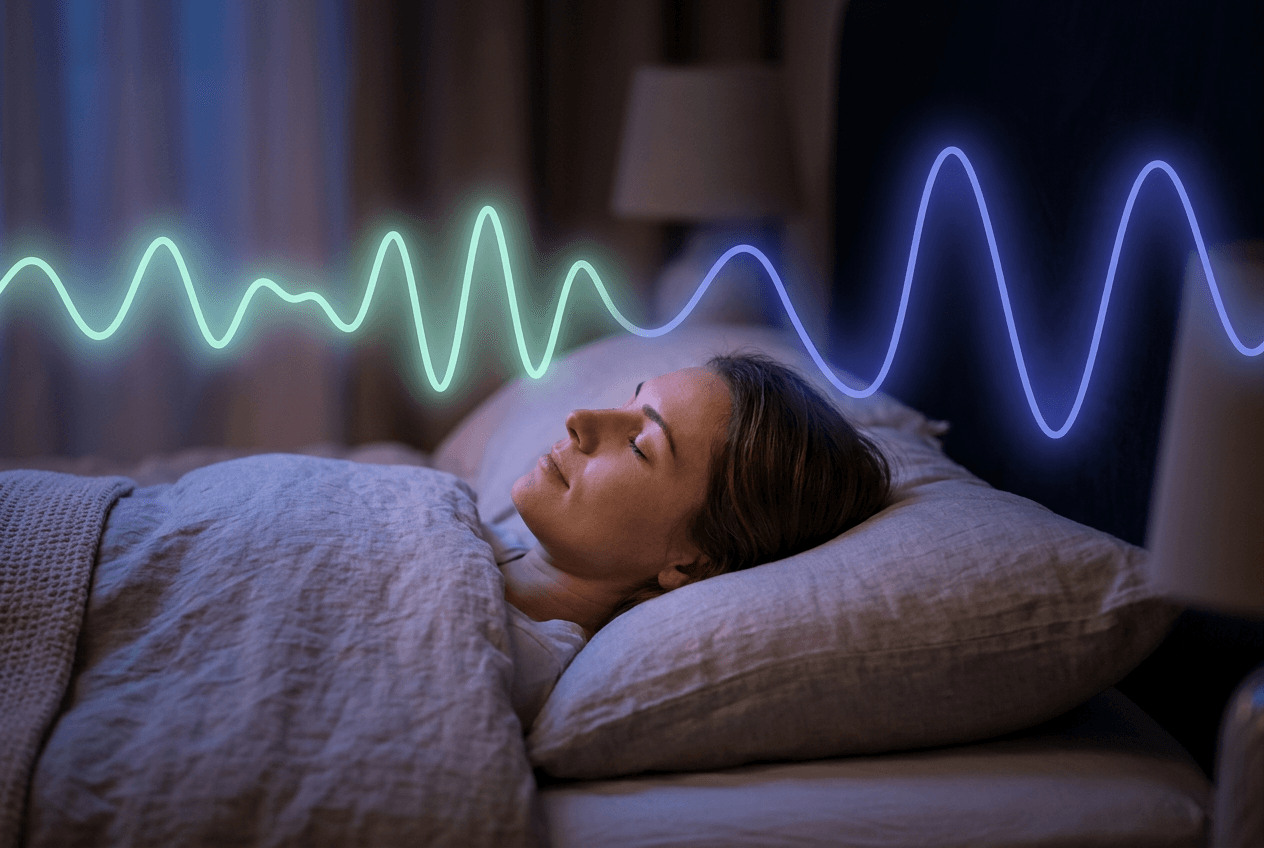
Most sleep advice treats rest as a single activity, but that's like saying "exercise" without distinguishing between cardio and strength training. The reality is more nuanced. Theta waves (4-8 Hz) dominate during light sleep and dreaming, while delta waves (0.5-4 Hz) take over during deep, restorative phases. Skip either one, and you'll feel the consequences - whether that's waking up groggy, struggling with memory, or watching your stress levels climb.
Here's what the research actually shows about these two brainwave states and how to support both for genuinely better rest.
The Fundamentals of Brainwave Frequencies and Sleep
What Are Theta Waves? (4Hz - 8Hz)
Theta waves oscillate between 4 and 8 cycles per second, sitting between the alert beta state and the deeply unconscious delta range. Your brain produces theta activity during the transition from wakefulness to sleep, during REM dreaming, and during meditative states.
Think of theta as your brain's "processing mode." A 2019 study in Nature Neuroscience demonstrated that theta rhythms help consolidate emotional memories and integrate new information with existing knowledge. This is why you often have insights or creative breakthroughs right before falling asleep or during morning drowsiness - your brain is actively connecting dots in theta state.
What Are Delta Waves? (0.5Hz - 4Hz)
Delta waves are the slowest brainwaves, ranging from 0.5 to 4 Hz. They dominate during stages 3 and 4 of non-REM sleep, the deepest phases of your sleep cycle. Children and young adults produce abundant delta activity, while production naturally decreases with age.
These slow oscillations aren't random. Research from the University of Rochester showed that delta waves coordinate the glymphatic system — your brain's waste clearance mechanism. During delta-dominant sleep, cerebrospinal fluid flows through neural tissue at rates 60% higher than during wakefulness, flushing out metabolic debris including beta-amyloid proteins linked to Alzheimer's disease.
Theta Waves: The Gateway to Light Sleep and Dreaming
The Role of Theta in Stage 1 and REM Sleep
Stage 1 sleep is brief, typically lasting 5-10 minutes, but it's where theta waves first emerge as you drift off. This transitional phase prepares your nervous system for deeper rest, gradually reducing muscle tone and slowing heart rate.
The more significant theta activity occurs during REM sleep, which cycles throughout the night in 90-minute intervals. During REM, theta waves synchronize across the hippocampus and prefrontal cortex, facilitating memory consolidation. A 2021 study in Current Biology found that artificially boosting theta coherence during REM improved next-day recall of learned material by 18%.
Benefits for Stress Reduction and Creative Visualization
Theta states correlate strongly with reduced cortisol and increased parasympathetic nervous system activity. This explains why meditation practices that induce theta brainwaves - particularly those involving visualization or body scanning - produce measurable stress reduction even in short sessions.
The creative benefits are equally documented. EEG studies of artists and musicians show elevated theta activity during moments of creative flow. Some researchers theorize that theta's role in loosening associative boundaries allows the brain to form novel connections that feel impossible in more alert states.
Delta Waves: The Key to Physical Restoration
Deep Sleep and the Glymphatic System
Deep sleep isn't just "more sleep" - it's qualitatively different from lighter stages. Delta waves coordinate a brain-wide cleaning process that can't happen efficiently during wakefulness. The glymphatic system, identified by Dr. Maiken Nedergaard's team in 2012, relies on these slow oscillations to drive fluid exchange between blood vessels and neural tissue.
Sleep deprivation studies consistently show that delta sleep rebounds first when subjects are allowed to recover. Your body prioritizes this phase because the consequences of skipping it accumulate rapidly: impaired immune function, increased inflammation markers, and accelerated cognitive decline.
Hormone Regulation and Muscle Recovery
Growth hormone release peaks during delta sleep, with up to 70% of daily secretion occurring in the first deep sleep cycle of the night. This isn't just relevant for children - adults need growth hormone for tissue repair, fat metabolism, and maintaining muscle mass.
Athletes have known this intuitively for decades, but the science now confirms it. A Stanford study on basketball players found that extending sleep (and thereby increasing delta sleep time) improved sprint times by 4% and free-throw accuracy by 9%. The physical restoration happening during delta phases directly translates to performance.
Comparing the Impact on Sleep Quality
When Theta Is Better: Overcoming Insomnia and Anxiety
For people whose primary sleep obstacle is an overactive mind, theta-inducing techniques often work better than attempting to force deep sleep directly. Anxiety and rumination keep the brain in beta states, making the transition to any sleep phase difficult.
Theta-focused interventions - including certain binaural beats, guided meditations, and progressive relaxation - help bridge this gap. A 2020 randomized controlled trial in the Journal of Sleep Research found that theta-frequency audio stimulation reduced sleep onset latency by an average of 12 minutes in participants with mild insomnia. The key is using theta as a stepping stone, allowing the brain to naturally progress into deeper stages once the initial transition is achieved.
When Delta Is Better: Longevity and Cognitive Health
If you're sleeping enough hours but still waking exhausted, insufficient delta sleep is often the culprit. This becomes increasingly common after age 40, when deep sleep architecture naturally shifts toward lighter stages.
The long-term stakes are significant. A 2023 meta-analysis in Sleep Medicine Reviews linked reduced delta sleep to accelerated brain aging, with each 10% decrease in slow-wave sleep associated with a 27% increased risk of dementia over 10-year follow-up periods. For cognitive longevity, protecting and enhancing delta sleep matters more than total sleep duration.
How to Optimize Your Brainwaves for Better Rest
Binaural Beats and Isochronic Tones
Binaural beats work by playing slightly different frequencies in each ear, causing the brain to perceive a third "beat" at the difference frequency. Our full guide to binaural beats for sleep explains the evidence and how to use them effectively. For theta induction, you might hear 200 Hz in one ear and 206 Hz in the other, creating a 6 Hz theta perception.
Isochronic tones use a single pulsing frequency and don't require headphones. Research suggests both methods can influence brainwave activity, though individual responses vary considerably. A practical approach: try theta-range frequencies (4-8 Hz) during your wind-down routine, then switch to delta-range (1-3 Hz) tracks if you use audio during sleep itself.
Meditation and Breathwork Techniques
Specific breathing patterns reliably shift brainwave states. The 4-7-8 technique (inhale 4 counts, hold 7, exhale 8) activates the parasympathetic nervous system and promotes theta activity within minutes. Box breathing (equal counts for inhale, hold, exhale, hold) produces similar effects.
Body scan meditations naturally induce theta states by directing attention inward and reducing external stimulus processing. For delta enhancement, the key is consistency: regular meditation practice correlates with increased slow-wave sleep duration, likely through improved sleep architecture regulation.
The Verdict: Balancing Theta and Delta for Optimal Health
The question of theta vs delta waves for sleep quality misses the point. You need both, cycling naturally throughout the night in their proper proportions. Theta facilitates the transitions and handles memory processing during REM. Delta provides the deep restoration that keeps your brain healthy and your body recovered.
The practical takeaway: if you struggle to fall asleep, focus on theta-inducing techniques during your evening routine. If you sleep but wake unrefreshed, investigate factors that might be disrupting deep sleep - alcohol, late meals, inconsistent schedules, or sleep apnea.
Track your sleep architecture if possible. Consumer devices like the Oura Ring or Whoop band provide reasonable estimates of sleep stages. For a scientific comparison of which audio frequencies best support delta and theta states, see our article on the best frequencies for sleep., letting you see whether you're getting adequate time in each phase. Aim for 15-20% of total sleep in deep stages and 20-25% in REM for most adults.
Your brain already knows how to cycle through these states - the goal is removing obstacles and supporting its natural rhythms rather than forcing specific frequencies. Start with sleep hygiene basics, add targeted techniques where needed, and let your neurophysiology handle the rest.