Why Thunderstorm Sounds Help You Sleep Despite Fear

7 min read
The crack of thunder used to send me diving under blankets as a kid. Heart racing, palms sweating, convinced the storm was somehow personal. Fast forward twenty years, and I fall asleep to recorded thunderstorms almost every night. The transformation sounds contradictory, but it makes perfect sense once you understand what's actually happening in your brain when storm sounds play through your speakers versus when a real storm rattles your windows.
Millions of people who actively fear thunder in real life find themselves inexplicably soothed by thunderstorm recordings at bedtime. This isn't cognitive dissonance or some strange psychological trick. The science behind why thunderstorm sounds work for sleep, even when you fear actual thunder, involves everything from evolutionary biology to acoustic physics. Your brain processes controlled audio environments completely differently than unpredictable natural events, and that distinction changes everything about your stress response. The rain component of thunderstorms is a big part of the story — we cover the neuroscience behind that in detail in our guide on why your brain loves the sound of rain.
The Paradox of Relaxing to Stormy Sounds
The apparent contradiction dissolves when you separate the sensory experience from the perceived threat. Real thunderstorms carry genuine risk: lightning strikes, power outages, potential property damage. Your nervous system evolved to take these threats seriously. But a recording? Your brain knows, even subconsciously, that the speaker on your nightstand poses zero danger.
Understanding Astraphobia and Sleep Anxiety
Astraphobia, the fear of thunder and lightning, affects roughly 10% of adults to varying degrees. The fear response involves your amygdala flagging storms as potential threats, triggering cortisol and adrenaline release. This makes perfect evolutionary sense. Our ancestors who took shelter during storms survived longer than those who ignored them.
Sleep anxiety operates through similar pathways. Racing thoughts, hypervigilance, and an inability to "switch off" keep your nervous system in a low-grade fight-or-flight state. The bedroom becomes a battlefield where you're fighting your own biology. What's fascinating is how recorded storm sounds can actually interrupt this anxiety cycle rather than amplify it.
The Psychological Concept of Controlled Exposure
Therapists use controlled exposure to treat phobias for good reason: it works. When you choose to play thunderstorm audio, you're in complete control. You set the volume, you pick the specific recording, and you can stop it instantly. This agency transforms the experience from threat to tool.
The key difference lies in predictability and choice. Real storms arrive uninvited and unpredictably. Recorded storms exist entirely within your control. Your brain registers this distinction even when you're not consciously thinking about it. The same rumbling bass frequencies that might spike your cortisol during an actual storm can lower it when you've deliberately selected them as your sleep soundtrack.
How Pink Noise Masks Disruptive Nighttime Sounds
Beyond the psychological elements, thunderstorm recordings serve a purely acoustic function. They're remarkably effective at masking the random noises that jolt you awake: car doors, barking dogs, creaking floorboards, your partner's breathing patterns.
Differentiating White Noise from Thunderstorm Frequencies
White noise contains equal energy across all frequencies, creating that static-television sound. Pink noise, which thunderstorms naturally produce, emphasizes lower frequencies while reducing higher ones. This creates a richer, more natural sound profile that many people find less fatiguing over long periods. For a full breakdown of how pink noise compares to white and brown, see our guide on white, pink, or brown noise for sleep.
Thunderstorm recordings combine several acoustic elements:
- Continuous rain provides steady pink noise masking
- Distant thunder rumbles add low-frequency depth
- Occasional closer thunder creates rhythmic variation
- Wind sounds fill mid-range frequencies
This layered approach covers more of the auditory spectrum than simple white noise machines, making it harder for random environmental sounds to punch through and disturb your sleep.
Smoothing Out Abrupt Audio Peaks
Your brain stays alert for sudden changes in your environment, even during sleep. A dog barking at 2 AM registers as a potential threat because it represents an abrupt change from silence. Continuous storm sounds raise the baseline audio level, making those random spikes less dramatic by comparison.
Think of it like trying to spot a flashlight beam. In complete darkness, even a small light grabs your attention. In a well-lit room, that same flashlight barely registers. Storm recordings create an acoustic "well-lit room" where minor disturbances blend into the background rather than startling you awake.
The Evolutionary Comfort of Seeking Shelter
Something primal happens when you're warm, dry, and listening to rain. The contrast between the perceived "outside" conditions and your actual safe, comfortable position triggers a deep sense of security that predates modern psychology.
The 'Caveman' Instinct and Protective Environments
Our ancestors spent countless generations seeking shelter from storms. Those who found good shelter and stayed put survived. This created an association between the sound of storms and the feeling of being safely protected that persists in our neurology today.
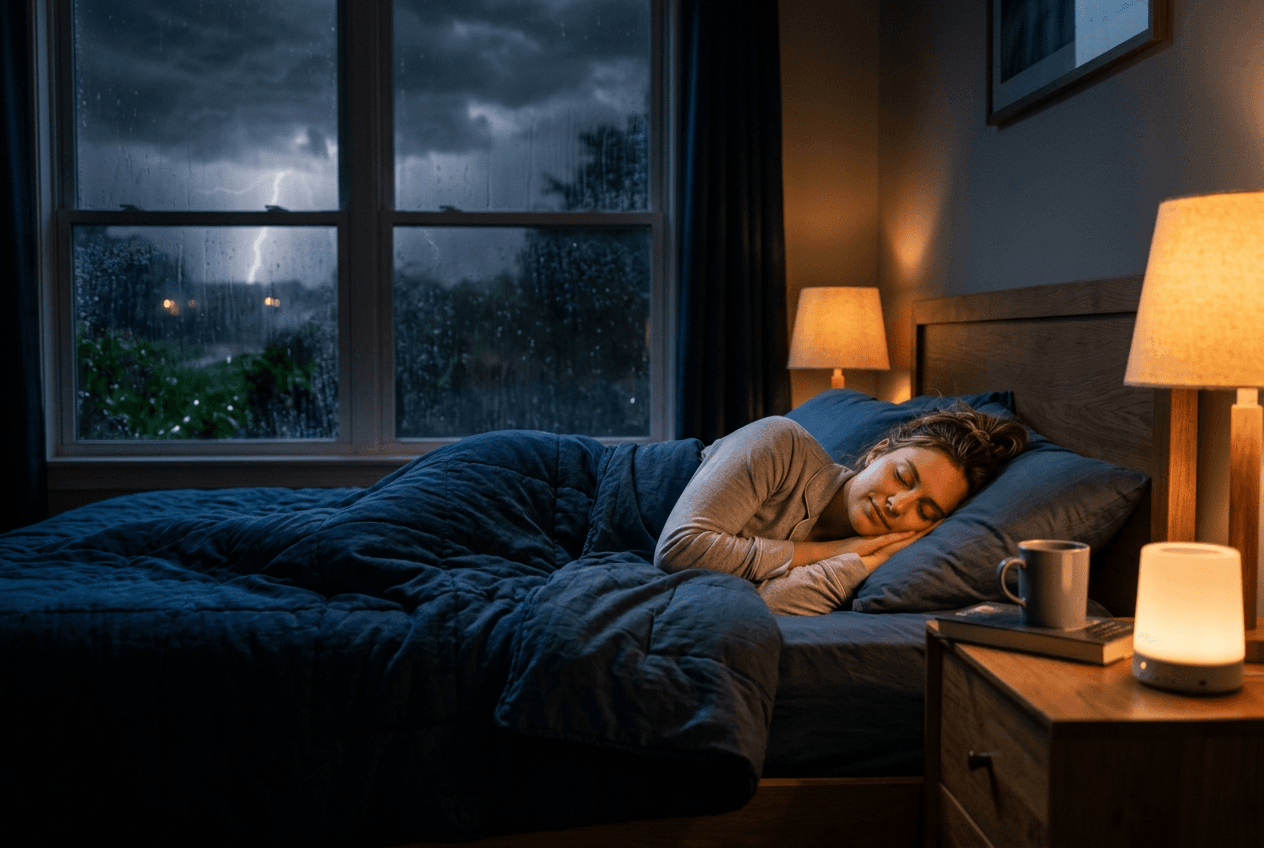
When you hear rain on a roof while lying in a warm bed, your brain receives confirmation that you've successfully found shelter. You're doing exactly what evolution designed you to do. This triggers a relaxation response that's difficult to replicate through other means. The storm sounds aren't threatening you; they're confirming your safety.
This explains why many people report that thunderstorm recordings feel "cozy" rather than scary. The audio cues suggest environmental challenge while your physical circumstances confirm protection. Your nervous system interprets this combination as success, not danger.
Brain Wave Entrainment and Deep Sleep Cycles
The rhythmic patterns in storm recordings do more than mask noise. They can actually influence your brain wave activity, encouraging the slower frequencies associated with deep, restorative sleep.
Lowering Cortisol Levels Through Rhythmic Rain
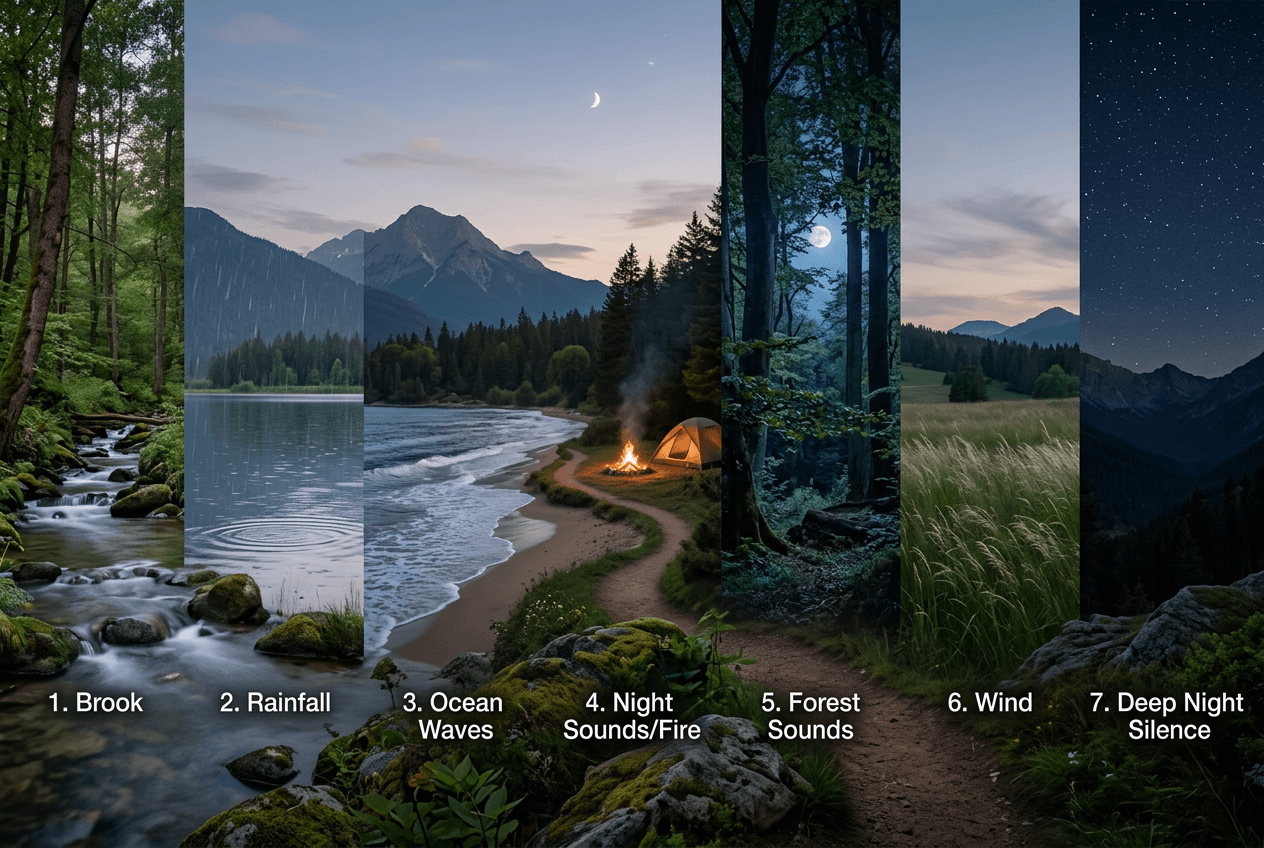
Steady rain creates a consistent rhythmic pattern that your brain can synchronize with. This process, called entrainment, gradually shifts your dominant brain wave frequency toward the slower patterns characteristic of relaxation and sleep. Studies measuring cortisol levels show that participants listening to nature sounds, including rain, exhibited lower stress hormone levels than those in silent conditions. If you're curious how thunderstorms compare to other nature soundscapes for sleep, our ranking of the 7 best nature sounds for sleep puts them in context.
The effect compounds over time. Regular use of storm sounds for sleep creates a conditioned response. Your brain learns to associate those specific audio patterns with sleep, making the transition faster and more reliable with each use. After a few weeks of consistent practice, simply hearing the first drops of recorded rain can begin shifting your nervous system toward sleep mode.
Creating a Safe Auditory Environment for Recovery
Not all thunderstorm recordings work equally well, especially if you have any sensitivity to thunder. The key lies in customization and thoughtful selection.
Customizing Soundscapes to Minimize Triggering Claps
If loud thunder claps still trigger anxiety even in recordings, look for tracks emphasizing rain and distant rumbles over dramatic lightning strikes. Many sleep-focused storm recordings intentionally minimize sharp peaks. Apps like Calm and Headspace offer customizable storm sounds where you can adjust the thunder-to-rain ratio.
Consider these selection criteria:
- Choose recordings with gradual thunder rather than sudden cracks
- Prioritize continuous rain over intermittent showers
- Select longer tracks to avoid jarring loop points
- Test recordings during the day before committing to nighttime use
Starting with gentler storm sounds and gradually introducing more thunder over weeks can help desensitize your response while maintaining the sleep benefits.
Combining Storms with Calming Visuals for Total Relaxation
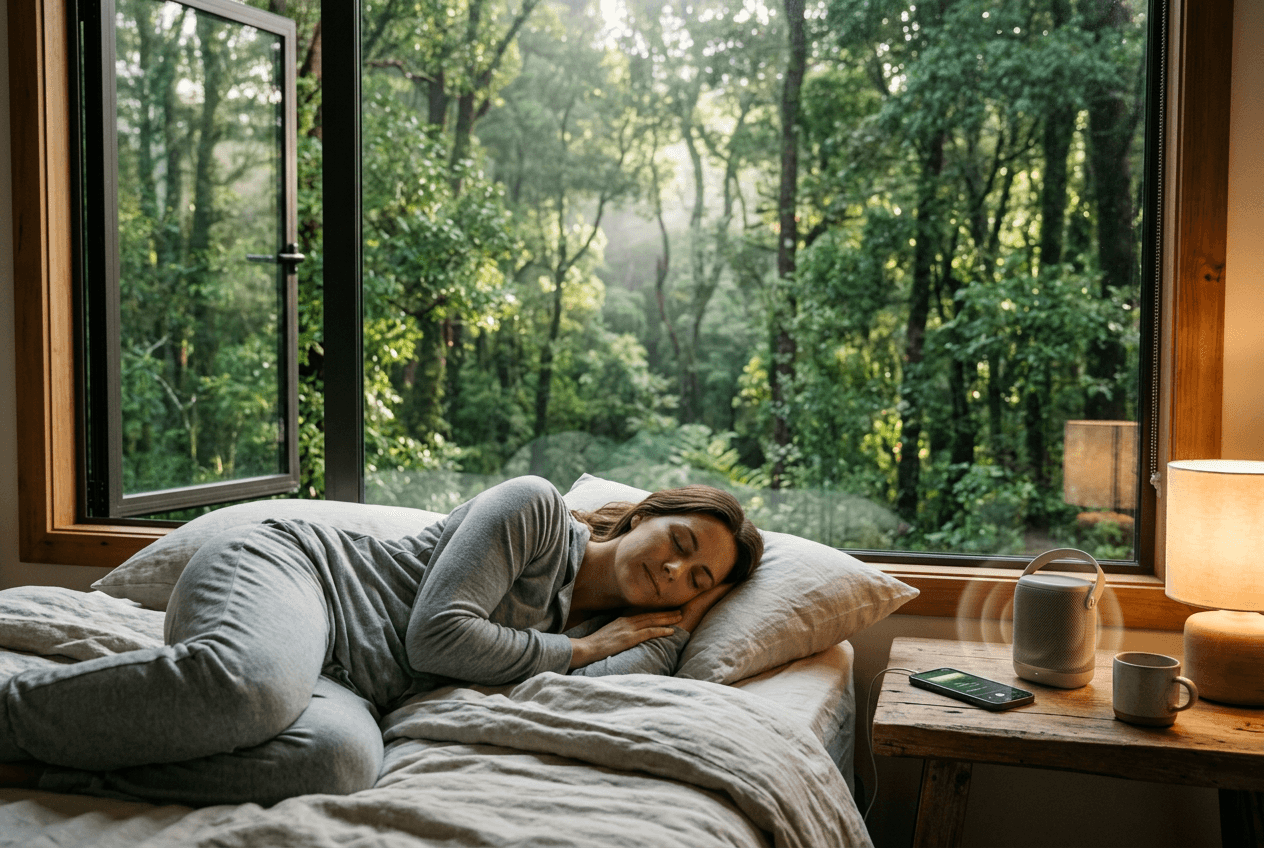
For pre-sleep wind-down routines, pairing storm audio with appropriate visuals can enhance the effect. Videos showing rain on windows, cozy cabin interiors during storms, or fireplace scenes with rain in the background engage multiple senses in the relaxation process.
This multi-sensory approach works particularly well for people whose minds tend to race at bedtime. Giving your visual attention something calming to focus on while storm sounds handle the audio environment leaves less mental bandwidth for anxious thoughts to occupy.
Making Storms Work for Your Sleep
The relationship between fear and comfort isn't as contradictory as it first appears. Your brain distinguishes between genuine threats and controlled experiences, even when the sensory input seems similar. Thunderstorm sounds for sleep work precisely because you've chosen them, because they mask disruptions, because they trigger ancient shelter-seeking satisfaction, and because their rhythms encourage your brain toward rest.
If you've been curious about storm sounds but worried your fear of actual thunder would make them counterproductive, start small. Try a rain-heavy recording with minimal thunder during a relaxed evening. Notice how your body responds when you're in control of the experience. Most people find that the cozy, protected feeling quickly overtakes any residual anxiety, transforming what once felt threatening into a reliable path toward better sleep.