Why Your Brain Loves the Sound of Rain for Sleep

8 min read
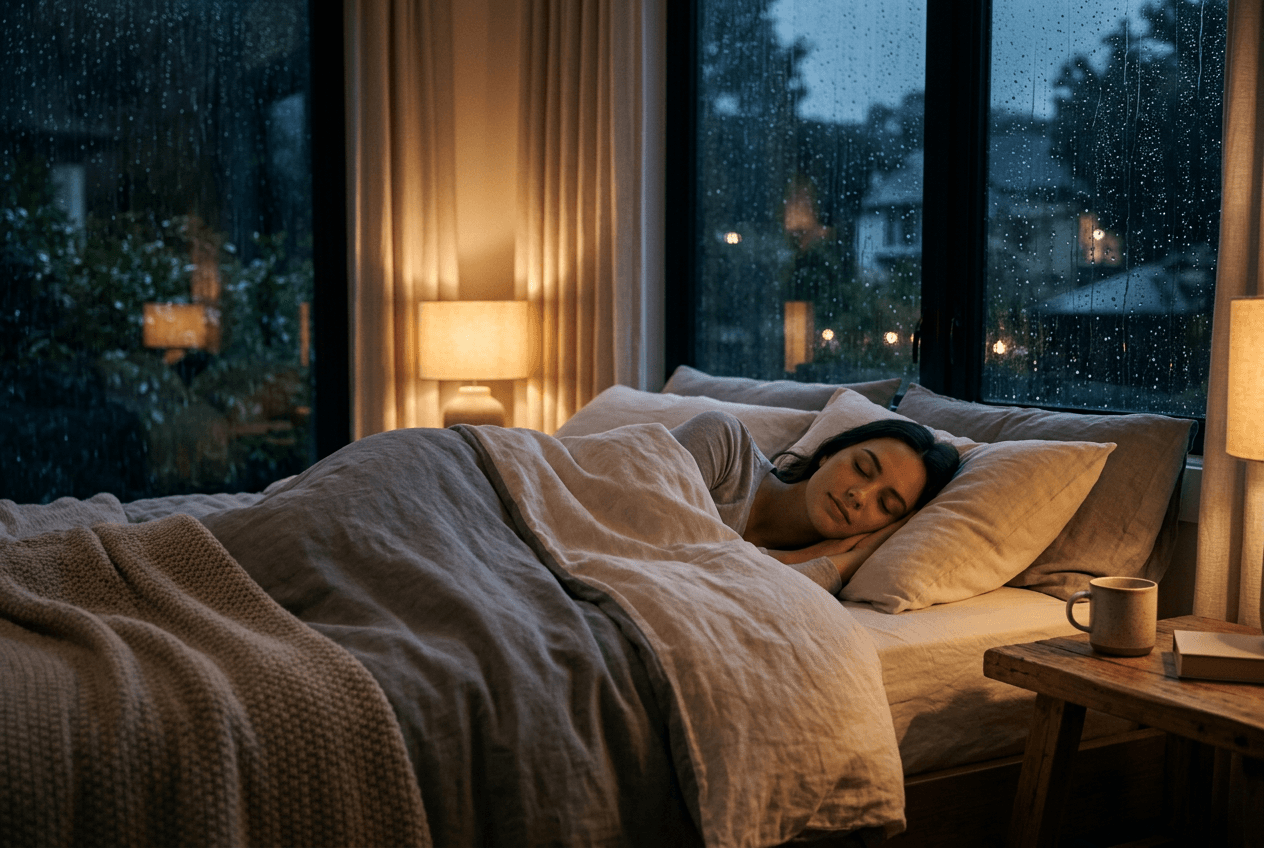
Something strange happens when rain starts falling at night. Your shoulders drop, your breathing slows, and sleep suddenly feels possible in a way it didn't moments before. This isn't coincidence or mere preference. Your brain is wired to respond to rain sounds for sleep, and the reasons stretch back thousands of years into human evolution while simultaneously involving sophisticated neuroscience that researchers are only now beginning to understand.
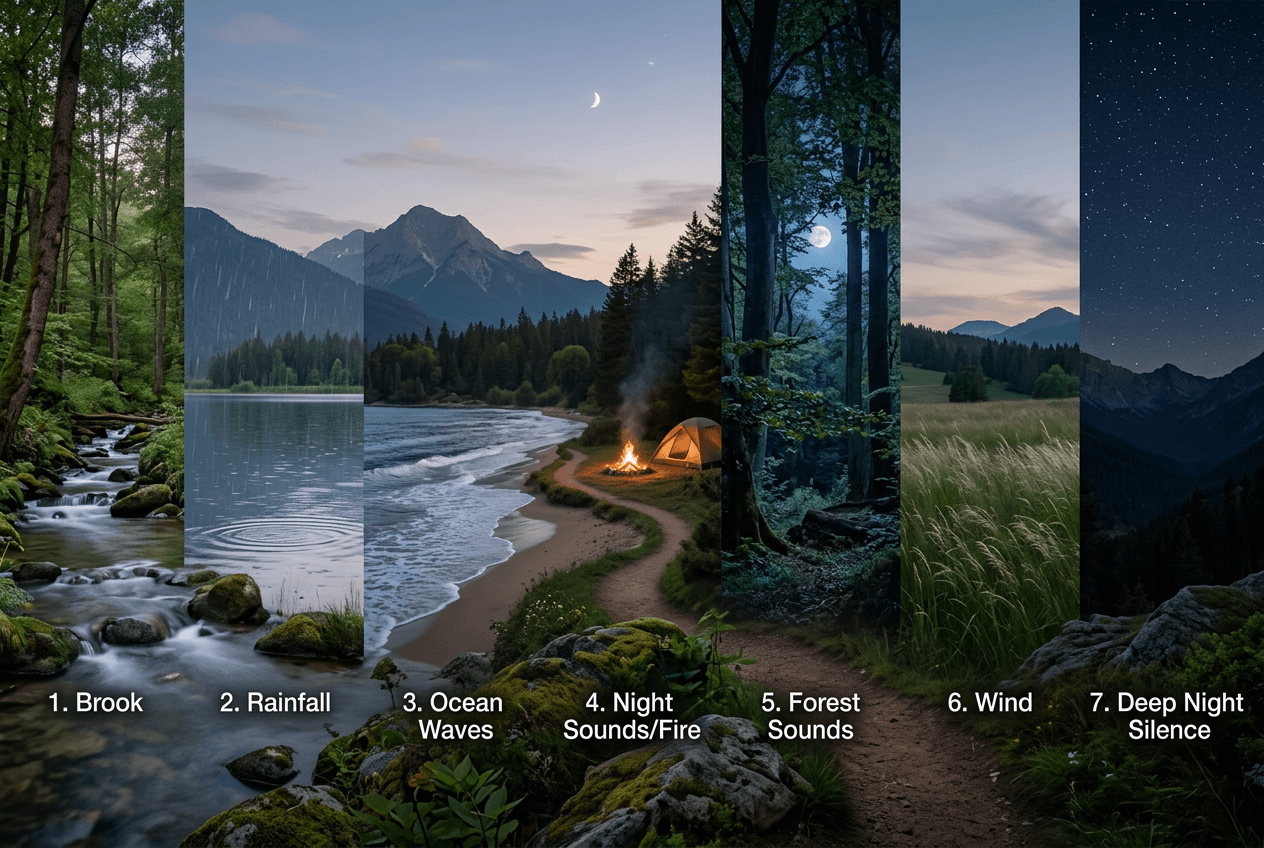
Most people who struggle with sleep have tried rain recordings at some point. Some swear by them. Others find them mildly pleasant but not particularly effective. The difference often comes down to understanding what's actually happening in your brain when those droplets hit the roof, and how to use that knowledge properly. Your brain loves these sounds for specific, measurable reasons, and once you understand them, you can make rain work significantly better for your sleep. Rain is also just one piece of the nature sounds puzzle — if you want to see how it ranks against ocean waves, forest sounds, and others, check out our data-driven guide to the 7 best nature sounds for sleep.
The relationship between rainfall and rest isn't just about pleasant associations with cozy nights indoors. It's about threat detection, brainwave patterns, stress hormones, and the architecture of sound itself. Here's what's actually going on.
The Evolutionary Comfort of Rain Sounds
The Absence of Predators in Inclement Weather
For most of human history, nighttime was genuinely dangerous. Predators hunted after dark, and our ancestors needed to remain somewhat vigilant even during sleep. But rain changed the equation. Heavy rainfall meant reduced predator activity across nearly every ecosystem humans inhabited.
Large cats avoid hunting in rain because it compromises their hearing and scent-tracking abilities. Snakes become less active in cool, wet conditions. Even human threats from rival groups decreased during storms. Your ancient ancestors who could relax during rainfall and sleep deeply when conditions were safest would have been better rested and more likely to survive. That genetic programming remains active in your nervous system today.
Primal Associations with Shelter and Safety
Rain also signaled something else: you were inside, protected, and had successfully found shelter. The sound of rain hitting a roof or cave entrance meant the immediate environment was secure. You weren't exposed. You weren't vulnerable.
This association runs deep. Infants who have never experienced rain often calm immediately when hearing recordings of it. The response appears partially innate rather than entirely learned. Your brain interprets rain sounds as environmental confirmation that shelter has been achieved and vigilance can decrease.
The Science of Pink Noise and Sound Masking
How Rain Differs from White Noise
Rain isn't white noise, and the distinction matters significantly for sleep. White noise contains all frequencies at equal intensity, creating a harsh, static-like quality. Rain produces what acousticians call pink noise, where lower frequencies are more prominent than higher ones.
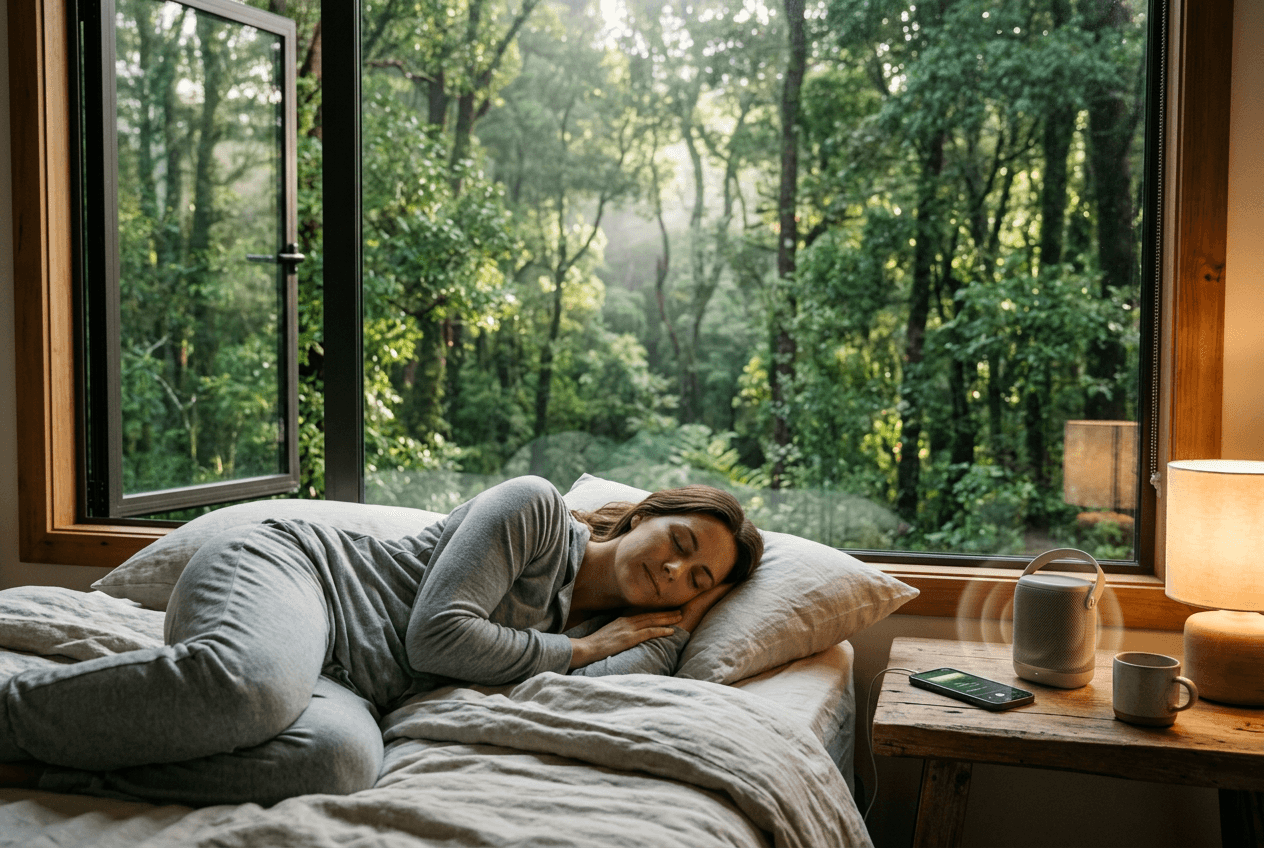
Pink noise more closely matches the natural frequency distribution of human hearing. Your ear is more sensitive to certain frequency ranges, and pink noise accounts for this by reducing intensity in those ranges. The result is a sound that feels balanced and natural rather than artificial or fatiguing. Studies comparing pink noise to white noise for sleep consistently show pink noise performing better, with subjects reporting deeper sleep and fewer nighttime awakenings. Forest soundscapes produce a very similar acoustic profile — our article on how forest sounds reduce cortisol digs into the shared mechanisms.
Neutralizing Sudden Nighttime Decibel Spikes
Your sleeping brain remains remarkably sensitive to sudden changes in your auditory environment. A car door slamming, a dog barking, or a partner's cough can trigger a partial arousal even if you don't fully wake. These micro-awakenings fragment sleep architecture and reduce the restorative quality of your rest.
Rain provides consistent sound masking that reduces the relative volume difference between background and sudden noises. That car door still makes sound, but it's no longer a dramatic spike against silence. Your brain registers it as a minor variation within an existing soundscape rather than a potential threat requiring investigation. The technical term is "auditory masking," and rain accomplishes it naturally.
Inducing a Meditative State Through Rhythmic Patterns
Alpha and Theta Brainwave Synchronization
Your brain produces different electrical patterns depending on your mental state. Alert focus generates beta waves. Relaxed wakefulness produces alpha waves. Light sleep and deep meditation involve theta waves. The transition from beta to alpha to theta represents the natural progression toward sleep.
Rain sounds appear to facilitate this progression. EEG studies show that subjects listening to rainfall recordings demonstrate increased alpha and theta activity compared to silence or other environmental sounds. The irregular-yet-consistent rhythm of rain seems to provide just enough auditory stimulation to occupy the attention-seeking parts of your brain while allowing deeper relaxation systems to engage.
Reducing Cortisol via Auditory Continuity
Cortisol, your primary stress hormone, typically decreases throughout the evening to allow sleep onset. But anxiety, rumination, or environmental unpredictability can keep cortisol elevated, making sleep initiation difficult.
Continuous, predictable sound appears to help regulate this hormonal pattern. Research on natural soundscapes shows measurable cortisol reduction after exposure to rain and water sounds. The mechanism likely involves your brain's threat-detection systems. Unpredictable silence creates uncertainty. Consistent, non-threatening sound creates certainty. Your stress response can stand down when the auditory environment signals ongoing safety.
The Psychological 'Cocoon Effect'
Beyond neuroscience and evolution, rain creates something psychologists call containment. The sound establishes an auditory boundary around your sleeping space, creating the sensation of being enclosed in a protective bubble.
This cocoon effect works on multiple levels. Physically, rain sounds fill the room with consistent audio, eliminating the empty silence that can feel exposed or vulnerable. Psychologically, rain represents a barrier between you and the outside world. Things happening beyond the rain feel distant and irrelevant.
Many people report that rain sounds help quiet racing thoughts not by providing distraction but by creating a sense of permission. The rain seems to say: nothing needs to happen right now. The world is paused. You can stop monitoring, planning, and problem-solving.
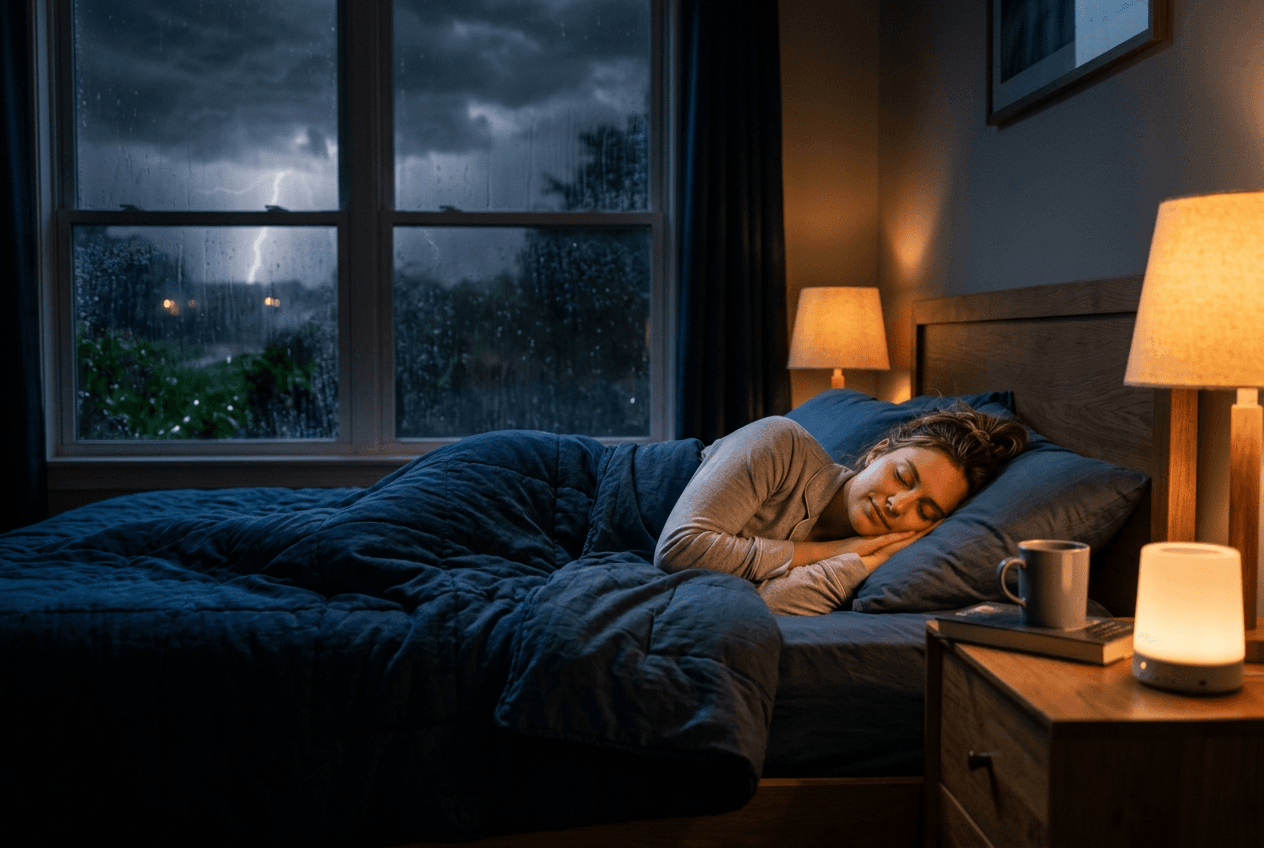
This psychological permission is surprisingly powerful. Insomnia often involves difficulty disengaging from waking concerns. Rain provides an external cue that disengagement is appropriate, that the situation doesn't require your attention. For chronic overthinkers, this external permission can be more effective than internal self-talk about relaxation. If you find rain alone isn't enough, adding thunder to the mix can deepen the effect — we explore the psychology of that in our piece on why thunderstorm sounds help you sleep.
Optimizing Your Rain Sound Environment
Natural vs. Digital Recordings
Not all rain recordings work equally well. Short loops with obvious repeat points can become irritating as your brain detects the pattern. Heavily processed or artificial-sounding rain may fail to trigger the evolutionary responses that make natural rain effective.
Look for recordings of at least 30 minutes before any loop, preferably longer. Field recordings from actual rainstorms generally outperform synthesized rain sounds. Recordings that include subtle variation, like occasional thunder rumbles or changes in intensity, tend to remain engaging without becoming alerting.
Some people prefer specific types of rain: gentle drizzle versus heavy downpour, rain on leaves versus rain on a tin roof. Experimentation helps, but research suggests that moderate-intensity rain with some surface impact sounds works best for most people. Pure rainfall without any surface contact can sound artificial.
Setting the Ideal Volume for Sleep Hygiene
Volume matters more than most people realize. Too quiet, and the rain won't effectively mask environmental sounds or occupy your attention. Too loud, and it becomes stimulating rather than relaxing, potentially interfering with sleep architecture even if it helps with initial onset.
The target is approximately 40-50 decibels, roughly equivalent to a quiet conversation or light rainfall heard from indoors. You should be able to hear the rain clearly but not feel surrounded by it. A good test: if you have to raise your voice to speak over the rain, it's too loud for sleep.
Placement also matters. Sound coming from a single point source, like a phone on your nightstand, creates a different effect than sound filling the room. Speakers positioned away from your head, or multiple small speakers creating ambient coverage, often work better than headphones or nearby devices.
Making Rain Work for Your Sleep
Understanding why your brain responds to rain transforms how you use it. This isn't just pleasant background noise. It's a tool that engages evolutionary safety signals, produces favorable brainwave changes, reduces stress hormones, and creates psychological permission for rest.
Start with high-quality recordings at appropriate volume. Give your brain time to respond, as the effects build over 10-15 minutes rather than occurring instantly. Consider combining rain with other sleep hygiene practices: consistent bedtime, cool room temperature, limited screen exposure beforehand.
Rain sounds for sleep work because your brain evolved to recognize them as signals of safety and shelter. That ancient programming remains functional, waiting to be activated. The sound of water falling from the sky told your ancestors they could rest. It can tell you the same thing tonight.