What Is Green Noise? The Natural Sound for Sleep

8 min read
The sound of rain pattering against leaves, wind rustling through a forest canopy, waves lapping at a rocky shore: these are the sonic textures that have lulled humans to sleep for millennia. What researchers now call green noise captures this same frequency profile, and it's quickly becoming the preferred choice for people struggling to get quality rest. Unlike the static hiss of white noise or the rumbling depth of brown noise, green noise occupies a middle ground that our brains seem hardwired to find soothing. If you haven't yet compared all three main noise colors, our guide to white, pink, and brown noise for sleep is a good starting point. Understanding this natural noise color and how it differs from other sound options could be the key to transforming your sleep.
Understanding Green Noise and Its Frequency Profile
Green noise sits in a specific range of the sound spectrum that emphasizes mid-range frequencies while gently rolling off the highs and lows. Think of it as the acoustic equivalent of a forest environment: present enough to mask disturbances, but never harsh or intrusive. The frequency profile peaks around 500 Hz, which happens to align with many sounds we encounter in natural outdoor settings.
The Science of Sound Colors
Sound engineers and researchers categorize ambient noise by "colors" based on their frequency distribution. White noise contains all frequencies at equal intensity, creating that familiar static sound. Pink noise reduces higher frequencies, while brown noise emphasizes bass tones even further. Green noise carves out its own territory by concentrating energy in the middle frequencies that humans find most comfortable for extended listening. This isn't arbitrary: our ears evolved to be most sensitive to mid-range sounds, which is where speech and most environmental cues exist.
Why It Is Called the 'Nature' Sound
The "green" designation connects directly to natural environments. When you stand in a forest, the ambient soundscape features rustling leaves, birdsong, flowing water, and gentle breezes. These sounds predominantly occupy the mid-frequency range that defines green noise. Your brain recognizes these patterns as safe and non-threatening, which is why exposure to natural sounds consistently reduces stress markers in clinical studies — including a widely-cited 2017 fMRI study from Brighton and Sussex Medical School. The color name serves as a useful shorthand for "sounds like being outdoors."
Green Noise vs. White, Pink, and Brown Noise
Each noise color serves different purposes, and choosing the wrong one can actually make sleep harder. White noise works well for masking sudden sounds but can feel harsh over extended periods. Pink noise offers a softer alternative that many find pleasant, though it may not mask higher-pitched disturbances effectively. For the latest research on pink noise specifically, see our article on the 2025 Penn Medicine pink noise study. Brown noise appeals to people who prefer deep, rumbling tones, but some find it too bass-heavy for comfortable sleeping.
Key Differences in Pitch and Intensity
The practical differences become obvious when you listen to each type back-to-back. White noise sounds like television static or a fan running at high speed. Pink noise resembles steady rainfall or a waterfall heard from a distance. Brown noise evokes thunder or heavy wind. Green noise falls between pink and white, offering enough high-frequency content to mask disturbances while maintaining the warmth that makes long-term listening comfortable. The intensity distribution means green noise rarely causes the listener fatigue that some experience with white noise.
Choosing the Right Color for Your Sleep Style
Your ideal noise color depends on what's actually disrupting your sleep. If traffic sounds or conversation from neighboring apartments keep you awake, green noise's mid-range emphasis provides excellent coverage. Light sleepers who wake at the slightest sound often prefer green noise because it creates a consistent sonic environment without the harshness of white noise. People who find most ambient sounds too "bright" or stimulating typically gravitate toward brown noise, while those needing maximum masking power might stick with white noise despite its less pleasant character.
The Primary Benefits of Green Noise for Sleep
The research on green noise specifically remains limited compared to white and pink noise, but the existing evidence and user reports point to several consistent advantages. These benefits stem from both the acoustic properties of the sound and our psychological response to nature-like audio environments.
Masking Disruptive Environmental Sounds
Green noise excels at covering the types of sounds that most commonly wake sleepers: voices, car doors, footsteps, and household noises. These disturbances typically fall within the frequency range where green noise is strongest. Unlike earplugs, which can feel uncomfortable and don't block low-frequency sounds effectively, green noise creates an active masking layer that makes intrusions less noticeable. The consistency matters too: your brain stops monitoring for changes when the ambient sound remains steady.
Calming the Nervous System and Reducing Anxiety
Exposure to nature sounds triggers measurable changes in nervous system activity. Heart rate variability improves, cortisol levels decrease, and the parasympathetic nervous system becomes more active. Because green noise mimics natural soundscapes, it appears to produce similar calming effects. People with anxiety-related sleep difficulties often report that green noise helps quiet racing thoughts more effectively than silence, which can feel oppressive, or white noise, which some find agitating.
Improving Sleep Maintenance and Quality
Falling asleep is only half the battle. Many people wake multiple times during the night, often without realizing it. Green noise helps maintain sleep by preventing the micro-arousals that fragment rest and reduce sleep quality. Users frequently report feeling more refreshed even when their total sleep time hasn't changed, suggesting that the continuity of sleep matters as much as duration.
Who Should Use Green Noise?
While green noise can benefit almost anyone, certain groups tend to see the most dramatic improvements. Understanding whether you fall into these categories can help you decide if green noise deserves a place in your sleep routine.
Support for Light Sleepers and Insomniacs
Light sleepers live in a state of hypervigilance where even minor sounds trigger awakening. Green noise helps by raising the threshold for what registers as a disturbance. Instead of waking at every creak or car passing outside, the brain learns to filter these sounds as part of the ambient environment. For people with insomnia, green noise addresses one common contributor to sleep difficulty: the anxiety of waiting for the next disturbance. Knowing that sounds will be masked reduces anticipatory stress.
Benefits for Tinnitus Sufferers
Tinnitus, the perception of ringing or buzzing in the ears, worsens in quiet environments. Many tinnitus sufferers find that green noise provides relief by partially masking the internal sounds without introducing harsh frequencies that could aggravate their condition. The mid-range emphasis of green noise often matches tinnitus frequencies better than alternatives, providing more effective coverage.
How to Incorporate Green Noise into Your Nightly Routine
Adding green noise to your sleep environment requires minimal investment but benefits from thoughtful implementation. The goal is creating a consistent, comfortable soundscape that becomes part of your sleep association.
Top Apps and Sound Machines
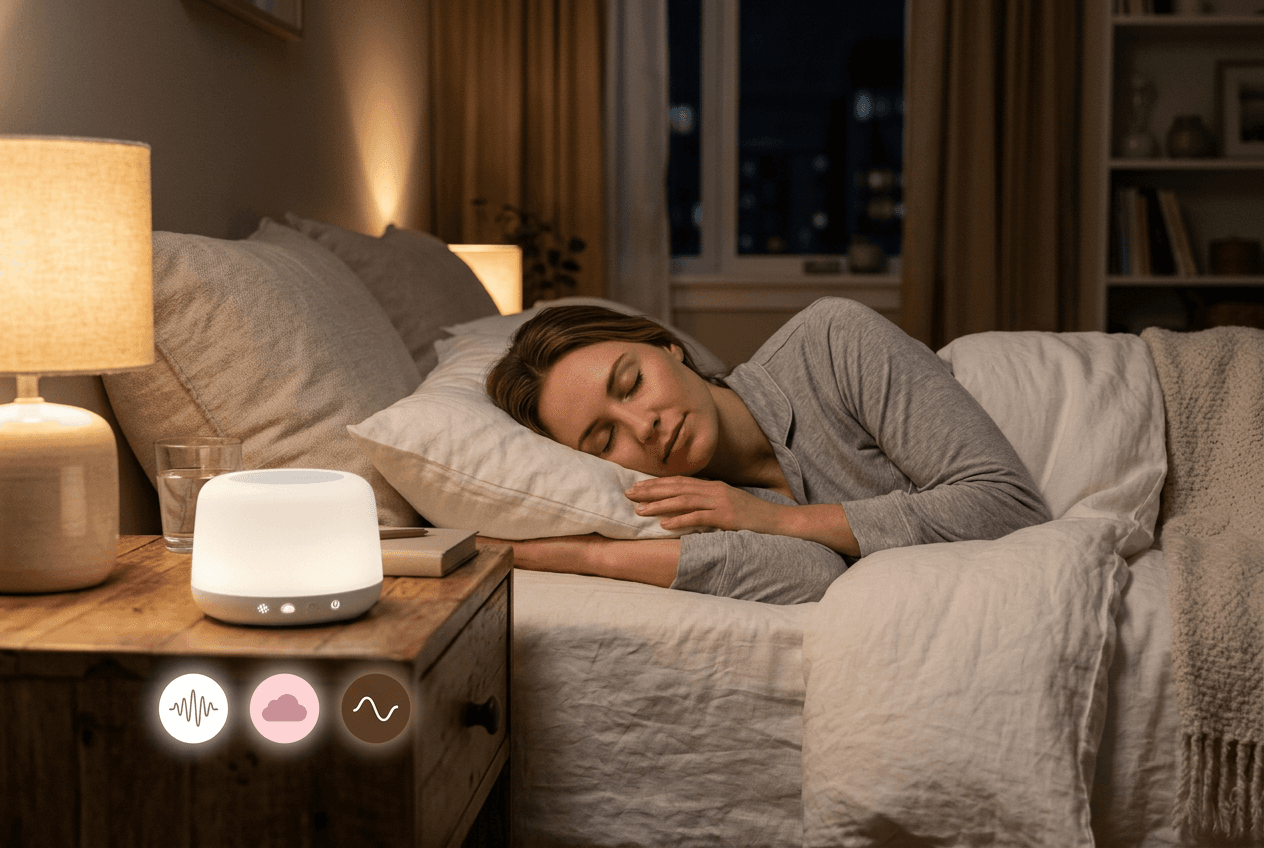
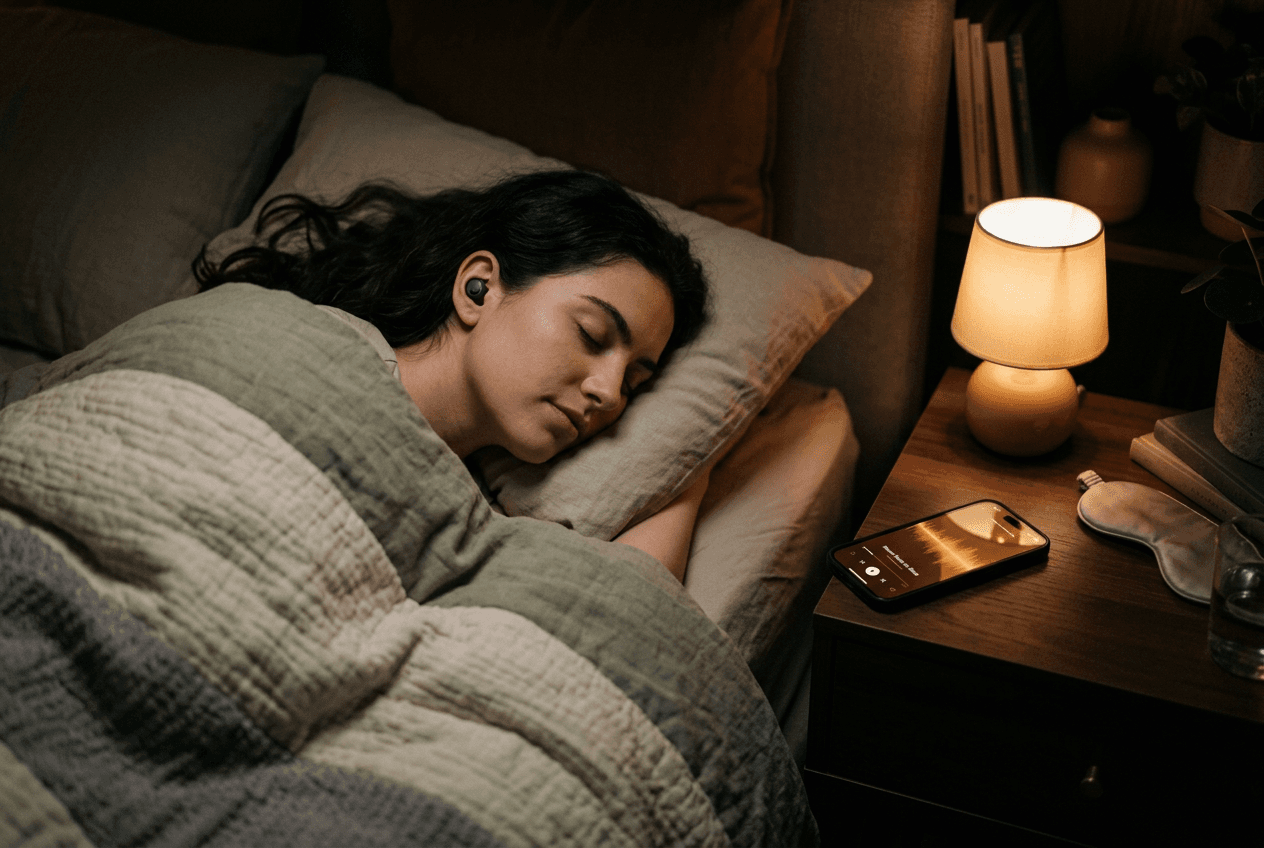
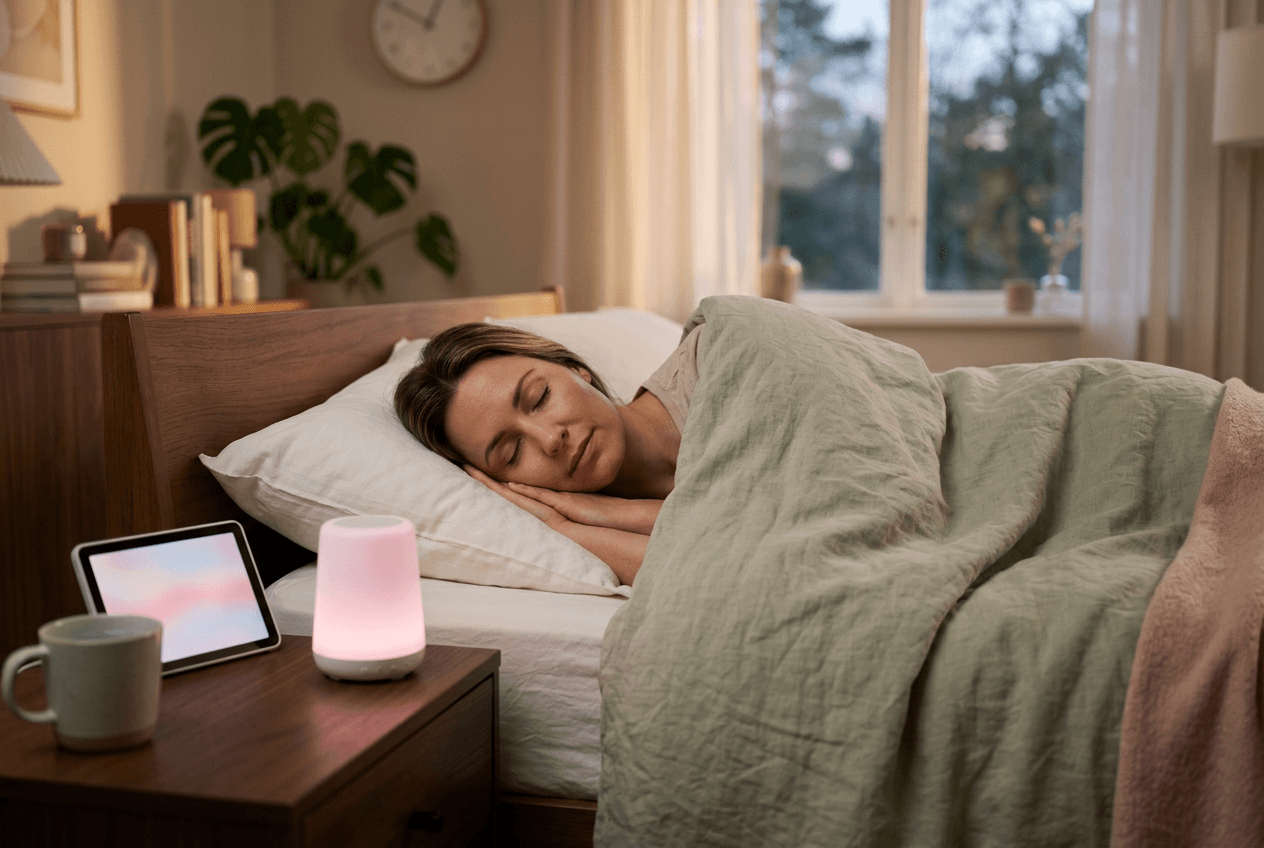
Dedicated sound machines from brands like LectroFan, Marpac, and Hatch offer green noise options with consistent playback and no risk of phone notifications interrupting your sleep. For flexibility, apps like Noisli, myNoise, and White Noise provide green noise along with customization options. Free options exist on YouTube and Spotify, though these may include ads or require premium subscriptions for uninterrupted playback. Choose a source that can play continuously throughout the night without requiring interaction.
Best Practices for Volume and Speaker Placement
Volume should be loud enough to mask disturbances but quiet enough that you could still hear a smoke alarm or someone calling your name. Start around 50-60 decibels, roughly the level of normal conversation, and adjust based on your environment. Place speakers or sound machines at bed height, ideally 3-6 feet from your head. Avoid placing them directly on nightstands where vibrations might transmit through furniture. Some people prefer ceiling-mounted speakers for more diffuse sound distribution.
Potential Drawbacks and Safety Considerations
Green noise isn't without limitations. Some people simply don't respond well to any ambient sound during sleep, finding it more distracting than helpful. Dependency can develop, making sleep without the noise more difficult. This usually isn't problematic unless you frequently travel or sleep in environments where you can't control the sound. Keep volume at safe levels: prolonged exposure above 70 decibels can damage hearing over time. If you share a bed, discuss preferences with your partner, as noise tolerance varies significantly between individuals.
Parents should exercise caution when using any ambient noise around infants. While sound machines can help babies sleep, placing them too close or setting volume too high poses hearing risks. The American Academy of Pediatrics recommends keeping sound machines at least 7 feet from cribs and below 50 decibels. See our full guide to safe volume and AAP guidelines for baby sleep music for a complete breakdown.
Green noise represents one of the most accessible sleep interventions available. It costs nothing or very little, requires no prescription, produces no side effects at appropriate volumes, and works immediately. If you've struggled with sleep quality and haven't explored sound-based solutions, experimenting with green noise offers a low-risk starting point. Try it for a week before deciding whether it works for you: most people need several nights to adjust to sleeping with ambient sound before the benefits become apparent.