Safe Volume and AAP Guidelines for Baby Sleep Music

8 min read
Parents often underestimate how loud their baby's nursery actually is. That white noise machine you bought to help your infant sleep? There's a good chance it's cranked up way past safe levels. A 2014 study published in Pediatrics tested 14 popular infant sleep machines and found that all of them could exceed 85 decibels at close range, which is roughly equivalent to a food blender running next to your baby's head for hours on end.
Understanding safe volume levels for baby sleep music isn't just about following rules. It's about protecting your child's developing auditory system during the most critical period of their life. The American Academy of Pediatrics has established clear guidelines on this topic, yet most parents I've spoken with have never heard of the 50-decibel threshold or know why machine placement matters as much as volume settings. Here's what the research actually says, and how to apply it in your nursery tonight.
The Role of Sound in Infant Sleep Development
Sound plays a surprisingly central role in how babies learn to sleep. Unlike adults, who often prefer silence, infants have spent nine months surrounded by constant noise. The transition to a quiet room can actually be jarring for them.
How Music and White Noise Mimic the Womb
Inside the womb, your baby experienced continuous sound at roughly 70-90 decibels. That includes the whooshing of blood flow, the rhythmic thump of your heartbeat, and muffled external noises. This explains why many newborns find complete silence unsettling rather than soothing.
White noise and gentle music recreate this familiar auditory environment. Our guide to the 5 best white noises pediatricians recommend for babies covers which specific sound profiles work best. The consistent sound provides a sense of security while also masking household noises that might otherwise startle a sleeping infant. A door closing, a dog barking, or siblings playing in another room become less disruptive when there's a baseline of gentle sound in the nursery.
Benefits of Auditory Cues for Sleep Training
Beyond mimicking the womb, consistent sleep sounds help establish what researchers call "sleep associations." When your baby hears the same lullaby or white noise pattern at bedtime, their brain begins to recognize it as a cue that sleep is coming. This conditioning can significantly reduce the time it takes for infants to fall asleep and may improve overall sleep quality.
Studies have shown that infants exposed to consistent auditory sleep cues often develop more predictable sleep patterns within weeks. If you're also using live singing as part of your routine, our article on the science of why lullabies work explains why a parent's voice is particularly powerful. The key word here is "consistent," as using the same sounds at the same volume creates the strongest associations.
AAP Recommendations for Safe Decibel Levels
The American Academy of Pediatrics has been clear about noise exposure limits for infants, though these guidelines don't always make it into the product manuals parents read.
The 50-Decibel Threshold for Infant Safety
The AAP recommends that sound levels in hospital nurseries remain at or below 50 decibels. This same threshold applies to home nurseries. To put this in perspective, 50 decibels is approximately the volume of a quiet conversation or light rainfall. It's noticeably softer than most people assume.
Here's where things get concerning: many parents set their sound machines to levels that "feel right" without measuring actual output. What feels like a comfortable volume to an adult standing several feet away may register at 65-75 decibels right next to the crib. That difference matters significantly for developing ears.
Risks of Prolonged Exposure to High-Volume Audio
Infant ears are more vulnerable to noise damage than adult ears. The structures are smaller, and the auditory system is still developing. Prolonged exposure to sounds above 50 decibels can potentially affect hearing development and may contribute to auditory processing difficulties later in childhood.
The concern isn't just about immediate hearing damage. Extended exposure to elevated sound levels during sleep can also affect sleep quality itself, potentially disrupting the deep sleep cycles that are crucial for infant brain development. Some research suggests links between chronic noise exposure and delayed language development, though more studies are needed to establish causation.
Optimizing Machine Placement and Duration
Getting the volume right is only half the equation. Where you place the machine and how long it runs matter just as much.
Safe Distance from the Crib or Bassinet
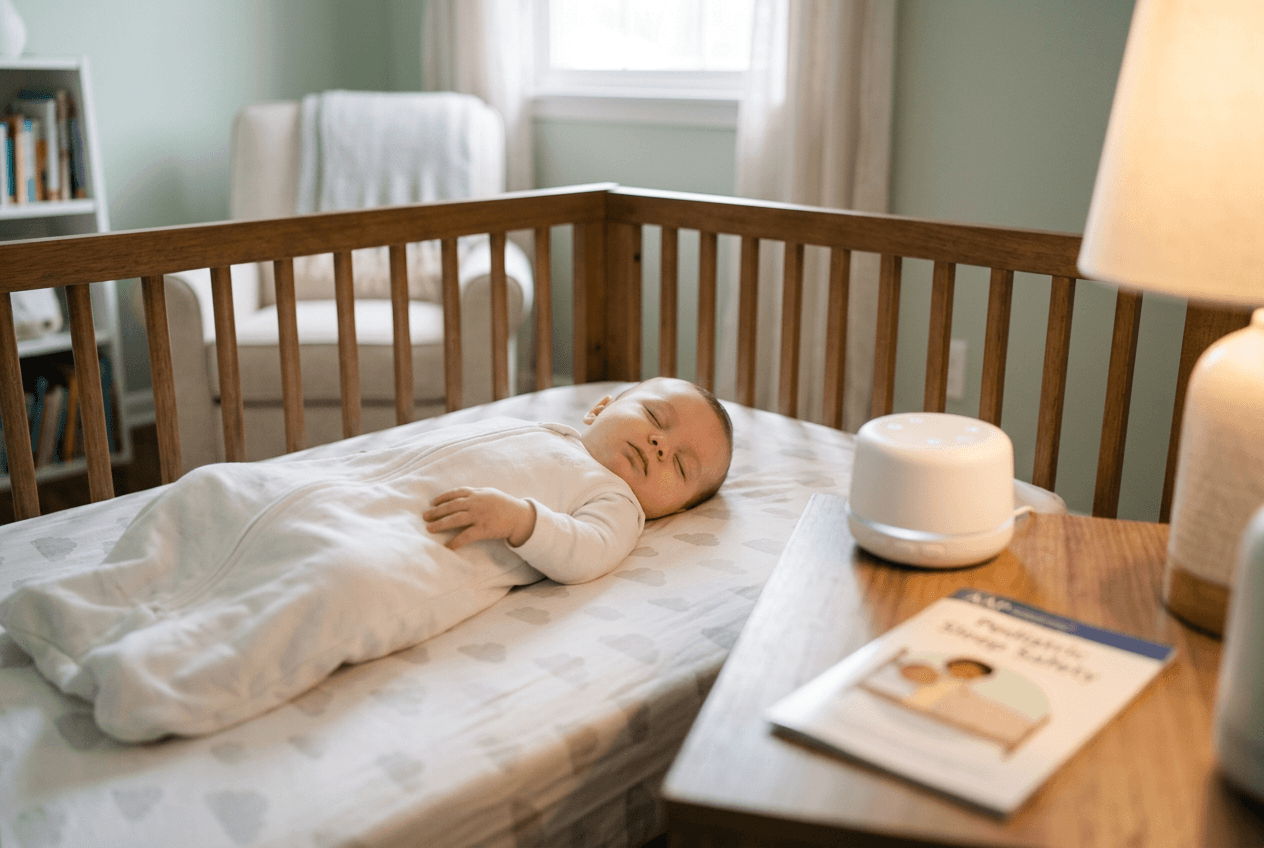
The AAP recommends placing sound machines at least 200 centimeters, roughly 7 feet, away from where your baby sleeps. Sound intensity decreases with distance, so a machine set to 60 decibels at the source might register at a safer 45-50 decibels by the time it reaches your baby's ears from across the room.
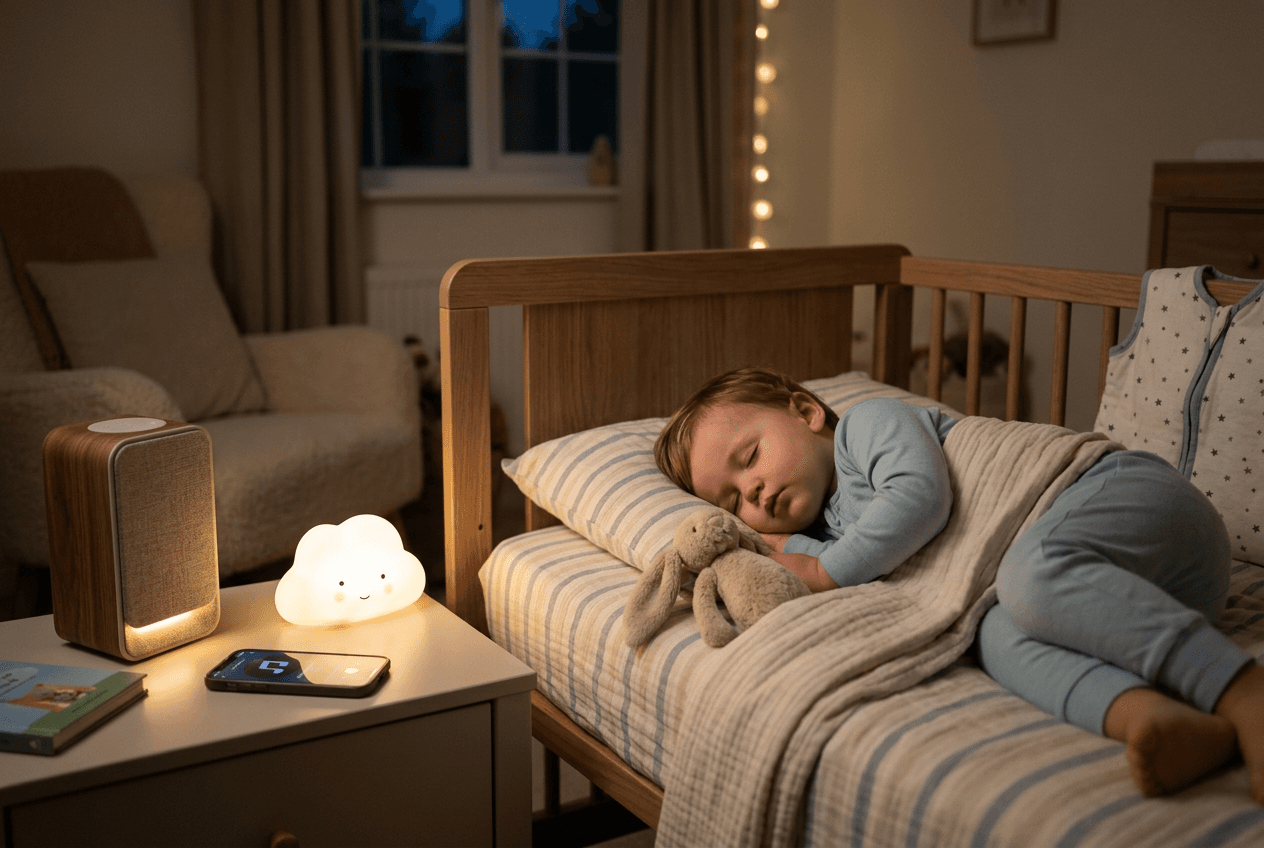
Most nurseries can accommodate this distance if you're intentional about placement. Consider mounting the machine on a shelf near the door or placing it on a dresser on the opposite wall from the crib. Avoid the temptation to clip it directly onto the crib rails, as some products are designed to do.
Continuous Play vs. Auto-Shutoff Timers
There's ongoing debate about whether sound machines should run all night or shut off after a certain period. The AAP hasn't issued definitive guidance on duration, but many pediatric sleep specialists recommend using auto-shutoff timers set for 30-60 minutes.
The reasoning is straightforward: your baby doesn't need sound to stay asleep once they've entered deeper sleep cycles. Running a machine continuously means unnecessary noise exposure during hours when the benefit is minimal. Many modern sound machines include timer functions, and using them is a simple way to reduce overall exposure while still helping your baby fall asleep initially.
Choosing the Right Type of Sleep Music
Not all sleep sounds are created equal. The type of audio you choose can affect both safety and effectiveness.
Lullabies vs. Ambient Soundscapes
Traditional lullabies have variable dynamics, meaning they include louder and softer passages. This variation can be soothing during active settling but may cause brief arousals during light sleep phases if a louder passage coincides with a sleep cycle transition.
Ambient soundscapes like white noise, pink noise, or nature sounds maintain more consistent volume levels throughout playback. This consistency may be preferable for maintaining sleep once your baby has drifted off. Many parents find success using lullabies during the active settling period, then switching to steady ambient sound for overnight.
Avoiding Sudden Frequency Shifts and Tempo Changes
Whatever you choose, avoid tracks with sudden changes in frequency, tempo, or volume. A lullaby that includes a dramatic crescendo or a nature soundscape with intermittent bird calls can startle a sleeping infant. Listen to any track completely before adding it to your baby's sleep routine.
Pink noise, which emphasizes lower frequencies more than white noise, tends to be gentler on infant ears while still providing effective sound masking. Some parents find it sounds less harsh than traditional white noise, which can have a slightly abrasive quality at higher volumes.
Practical Tips for Monitoring Nursery Volume
You don't need expensive equipment to ensure your nursery meets AAP guidelines. A few simple tools and techniques can give you confidence in your setup.
Using Smartphone Apps as Decibel Meters
Free decibel meter apps are available for both iPhone and Android devices. While they're not perfectly calibrated like professional equipment, they're accurate enough for home use. NIOSH SLM and Decibel X are two options that have been tested against professional meters with reasonable accuracy.
To measure properly, place your phone where your baby's head would rest in the crib, then take readings with your sound machine running at its typical setting. Check multiple times over a few minutes to account for any variation. If you're consistently seeing readings above 50 decibels, reduce the volume or move the machine farther away.
The 'Conversation Test' for At-Home Calibration
If you don't want to use an app, try the conversation test. Stand next to your baby's crib with the sound machine running and have someone speak to you in a normal conversational voice from about 3 feet away. If you can hear and understand them clearly without straining, your sound machine is likely at or below 50 decibels. If you need to raise your voice to be heard, the machine is too loud.
This isn't a perfect measurement, but it's a reliable quick check that you can do anytime without pulling out your phone.
Summary of Best Practices for Auditory Sleep Aids
Getting baby sleep music and sound machines right comes down to a few key principles. As your child moves into the toddler years, our guide to toddler sleep music for ages 1–3 covers how your approach should evolve. Keep volume at or below 50 decibels as measured at your baby's sleeping position. Place machines at least 7 feet from the crib. Use auto-shutoff timers to limit overnight exposure. Choose sounds with consistent dynamics rather than variable tracks with sudden changes.
The AAP guidelines exist because infant hearing is genuinely vulnerable during the first years of life. Following these recommendations doesn't mean abandoning sound machines entirely. These devices can be genuinely helpful for establishing healthy sleep patterns. It simply means using them thoughtfully.
Take 10 minutes tonight to measure your current setup with a smartphone app. If you're above 50 decibels, the fix is usually as simple as turning the dial down or moving the machine to a shelf across the room. Your baby's hearing is worth that small effort.