5 Best White Noises Pediatricians Recommend for Babies

8 min read
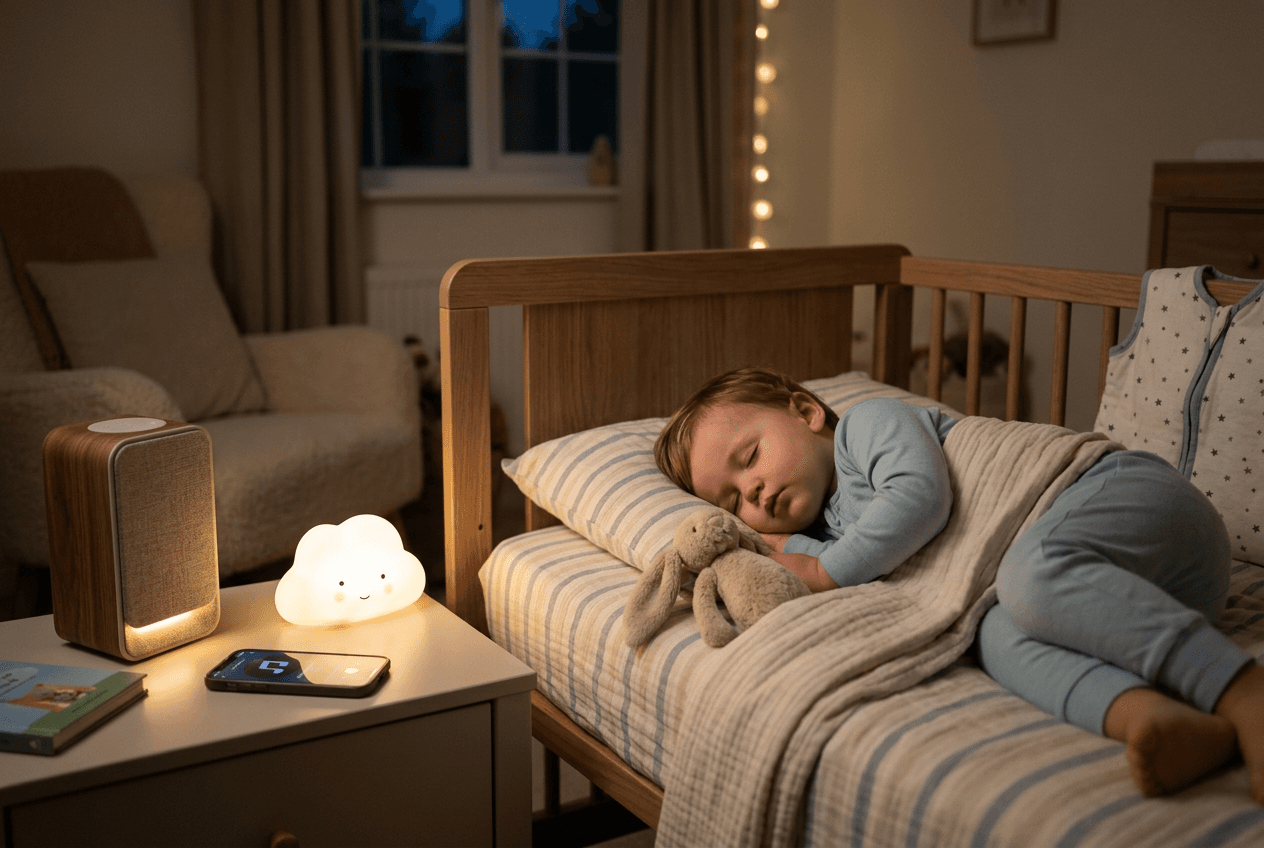
New parents hear a lot of conflicting advice, but here's something most pediatricians actually agree on: white noise can be remarkably effective for helping babies sleep. The reasoning isn't mystical or trendy. It's grounded in what we know about infant neurology and the environment babies just spent nine months inhabiting.
Your baby didn't develop in silence. The womb is loud, roughly 80-90 decibels of constant whooshing, heartbeat rhythms, and muffled external sounds. Then suddenly, they're born into a world of jarring quiet punctuated by unpredictable noises. No wonder so many newborns struggle to settle. When parents ask pediatricians about the best white noise for babies, the conversation usually starts with understanding why these sounds work in the first place.
But not all white noise is created equal. Some frequencies promote deeper sleep cycles while others simply mask disruptive sounds. Some volume levels are safe for developing ears while others risk hearing damage. And the way you use a sound machine matters as much as which one you buy. What pediatricians actually recommend often differs from what marketing departments want you to believe.
Why Pediatricians Advocate for White Noise in Infancy
The endorsement of white noise by pediatric sleep specialists isn't arbitrary. It stems from two well-documented physiological phenomena that affect nearly every newborn.
Replicating the Womb Environment
Inside the uterus, your baby was never in silence. Blood rushing through the placenta, your heartbeat, digestive sounds, and your voice created a constant acoustic backdrop. Dr. Harvey Karp, whose research on infant calming has influenced pediatric practice for decades, describes this as the "fourth trimester" concept. Babies are born neurologically immature, and recreating womb-like conditions helps them transition.
White noise approximates that familiar soundscape. The continuous, low-frequency nature of effective white noise mirrors what babies heard for months. This isn't about entertainment or distraction. It's about providing sensory continuity during a massive environmental transition. Pediatricians often note that babies who struggle with sleep in quiet rooms frequently settle immediately when appropriate background sound is introduced.
The Science of Masking Startle Reflex Triggers
The Moro reflex, that sudden arm-flinging startle you've probably witnessed, is hardwired into newborns. It's an evolutionary survival mechanism, but it's also a sleep destroyer. A door closing, a dog barking, or even a sibling's footsteps can trigger it, jolting your baby from sleep.
White noise creates what audiologists call a "sound floor." By maintaining consistent ambient sound, sudden noises become less jarring relative to the baseline. The startle threshold effectively rises. Research published in the Archives of Disease in Childhood found that 80% of newborns fell asleep within five minutes when exposed to white noise, compared to only 25% in silence. The mechanism is straightforward: consistent sound reduces the acoustic contrast that triggers the Moro reflex.
Top 5 Pediatrician-Recommended Sound Profiles
Not every white noise option performs equally. Pediatricians and sleep specialists tend to recommend specific sound profiles based on research and clinical observation.
Pink Noise for Deep Sleep Cycles
Pink noise differs from traditional white noise in its frequency distribution. While white noise contains equal energy across all frequencies, pink noise emphasizes lower frequencies, creating a deeper, less hissy sound. For a full adult-focused comparison of how the noise colors differ, see our guide on white, pink, and brown noise for sleep. Think of it as white noise with the harsh high frequencies softened.
Research from Northwestern University found that pink noise synchronized with brain waves during sleep, potentially enhancing deep sleep quality. For babies, this translates to longer sleep stretches and easier transitions between sleep cycles. Many pediatric sleep consultants now specifically recommend pink noise over traditional white noise for overnight use. Examples include the sound of steady rainfall, rustling leaves, or a gentle waterfall.
Low-Frequency Rumbly Sounds
Sounds that mimic the low-frequency environment of the womb often outperform higher-pitched options. Think of a running car engine, a clothes dryer, or a vacuum cleaner from another room. These rumbly, bass-heavy sounds more closely replicate what babies heard in utero.
Dr. Karp's research specifically highlights shushing sounds and low-frequency rumbles as most effective for calming crying babies. The key is consistency and depth. High-pitched sounds or those with significant variation tend to be less effective and can even be stimulating rather than soothing.
Continuous Static and Rainfall
Classic white noise static, that familiar television-between-stations sound, remains a pediatric staple. Its effectiveness lies in its absolute consistency. There are no variations in pitch, no crescendos, no patterns for a baby's brain to track and anticipate.
Rainfall sounds work similarly, provided they're continuous rather than featuring thunder or varying intensity. The goal is monotony. Pediatricians emphasize that the most effective sounds are almost boring in their consistency. Anything with melody, rhythm variation, or sudden changes can actually stimulate rather than soothe developing brains.
Safe Usage Guidelines for Developing Ears
Here's where many parents go wrong. The effectiveness of white noise depends entirely on using it safely. Pediatric audiologists have specific concerns about infant hearing that every parent should understand.
The 50-Decibel Safety Limit
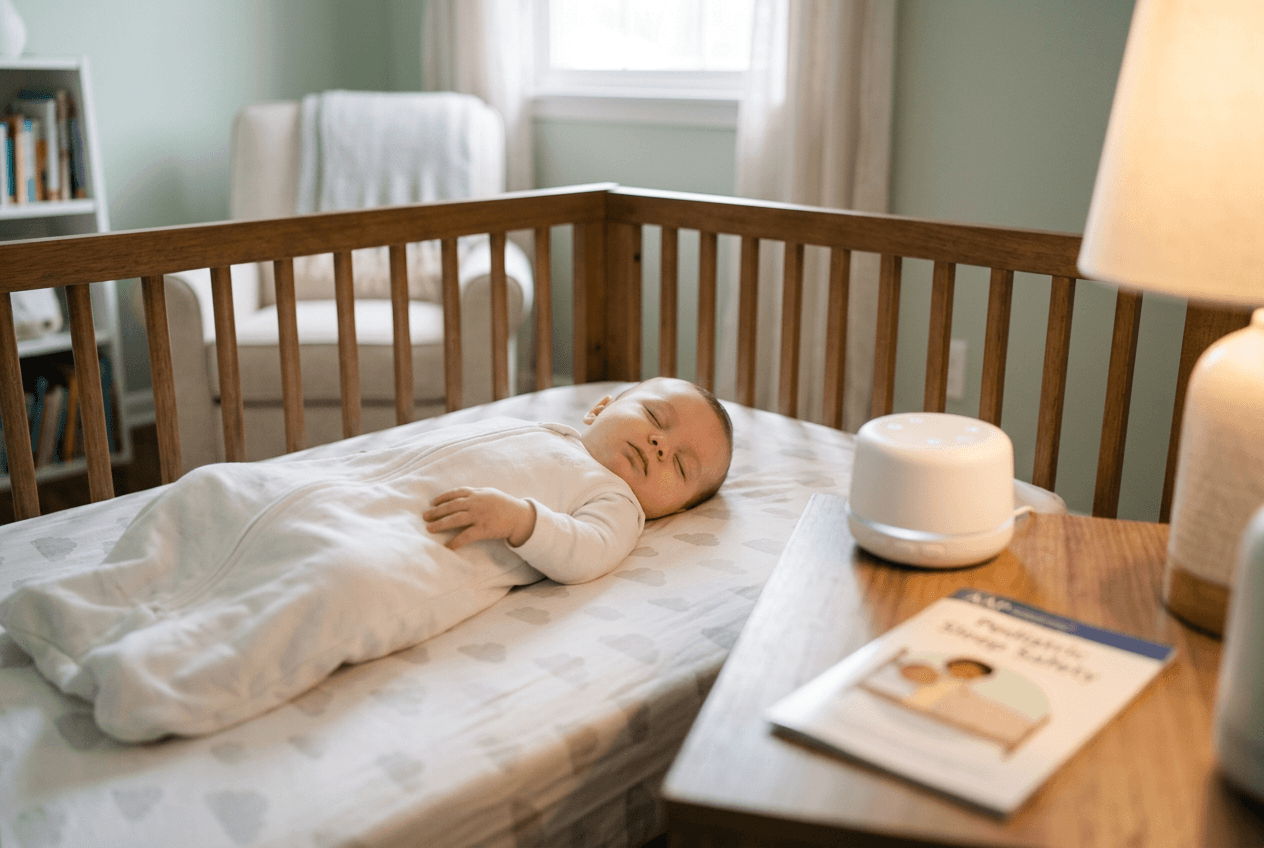
The American Academy of Pediatrics recommends keeping infant sound machines at or below 50 decibels. For a full breakdown of how to measure and apply these guidelines at home, see our guide to safe volume and AAP guidelines for baby sleep music. For reference, that's roughly the volume of a quiet conversation or moderate rainfall. Many sound machines can produce 85+ decibels at close range, which exceeds safe exposure levels for extended periods.
A 2014 study in Pediatrics tested 14 popular infant sound machines and found that all of them could exceed 85 decibels when placed near the crib. Three exceeded 85 decibels even at the maximum recommended distance of 200 centimeters. The researchers recommended placing machines at least 200 centimeters (about 6.5 feet) from where babies sleep and using the lowest effective volume setting.
Optimal Machine Placement and Distance
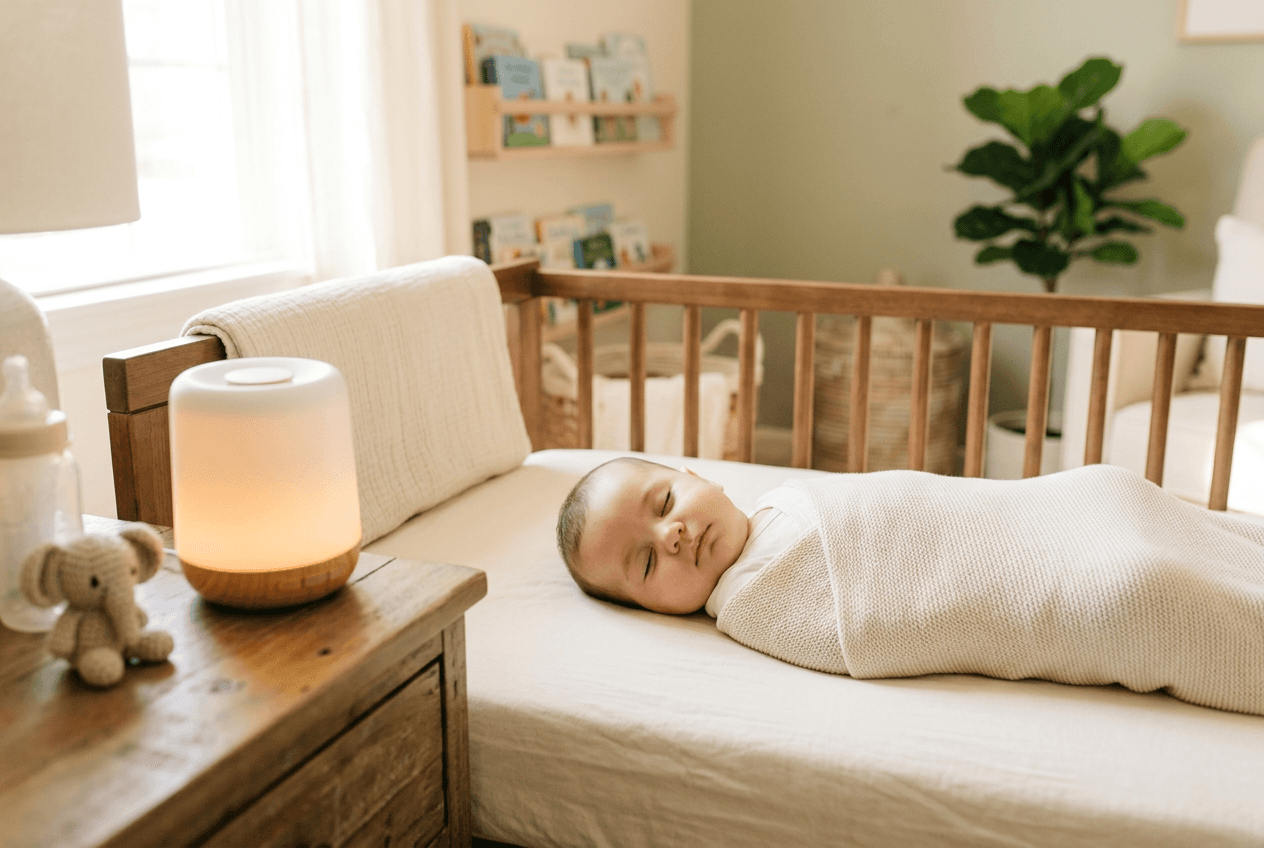
Placement matters more than most parents realize. The sound machine should never sit inside the crib or directly next to your baby's head. Position it across the room, ideally near the primary source of disruptive noise (a door, window, or shared wall).
Test the volume from your baby's sleep position. If you need to raise your voice to speak over it, it's too loud. The goal isn't to drown out all sound but to create a consistent baseline that makes sudden noises less startling. Many pediatricians suggest starting at the lowest volume setting and increasing only if needed.
Choosing the Right Sound Machine Features
The market is flooded with options, from smartphone apps to dedicated devices costing over $100. Pediatricians generally prioritize function over features, but certain characteristics matter.
Portable vs. Plug-in Options
Portable, battery-operated machines offer obvious advantages for travel and naps on the go. However, they often sacrifice sound quality and volume consistency for convenience. Plug-in models typically produce fuller, more consistent sound.
The practical recommendation from most pediatric sleep consultants: own both. Use a quality plug-in machine for the primary sleep space and keep a portable option for car seats, strollers, and travel. The consistency of the sound matters more than the device itself. If your baby associates a particular sound with sleep, having access to that same sound in different environments helps maintain sleep associations.
Why Continuous Play Beats Auto-Timers
Many sound machines feature auto-shutoff timers, which seems logical for energy savings. Pediatricians generally advise against using them for infant sleep. The sudden absence of sound can trigger waking, particularly during the lighter sleep phases that occur throughout the night.
Babies cycle through sleep stages approximately every 45-60 minutes. If white noise stops during a light sleep phase, the sudden silence itself becomes a disruption. Continuous play throughout the entire sleep period maintains the consistent sound floor that prevents startle-triggered waking. The minimal electricity cost is worth the improved sleep continuity.
When and How to Wean Your Baby Off White Noise
White noise isn't meant to be permanent. Most pediatricians recommend beginning the weaning process somewhere between 12 and 24 months, though there's flexibility based on individual circumstances.
The process should be gradual. Start by lowering the volume slightly every few nights over several weeks. Once you've reached barely audible levels, try eliminating it for naps first, which tend to be shorter and lower stakes. Nighttime weaning can follow once naps succeed consistently.
Some children transition easily while others need more time. If your child is going through a major transition, such as a new sibling, moving homes, or starting daycare, it's reasonable to delay weaning. The goal is independent sleep skills, but there's no prize for rushing the process.
For parents seeking the best approach to infant sleep sounds, pediatric guidance is clear: choose low-frequency, consistent sounds, keep volumes safe, position machines properly, and plan for eventual weaning. White noise is a tool, not a crutch, and when used correctly, it can make those early months significantly more manageable for everyone in the household. As your baby gets older, you may also want to explore the science behind why lullabies work as a complement to white noise in the bedtime routine.