Best Toddler Sleep Music for 1–3 Year Olds

8 min read
Getting a toddler to sleep can feel like negotiating with a tiny, unreasonable dictator. You've tried the warm bath, the bedtime story, the exact right stuffed animal arrangement, and still those little eyes stay wide open. Here's what many exhausted parents discover by accident: the right sleep music for toddlers aged 1 to 3 can transform bedtime from a battle into something almost peaceful.
The science behind this isn't complicated. Young children's brains respond powerfully to auditory cues, and music activates regions associated with emotional regulation and relaxation. But not all music works equally well. That peppy playlist you love? It's probably keeping your toddler wired. The key lies in understanding what actually works for the 1 to 3 age group, from tempo and frequency to timing and volume. Parents who get this right often see results within days, not weeks.
What follows is everything I've learned from pediatric sleep research and conversations with parents who've cracked the code on toddler sleep music.
The Benefits of Music for Toddler Sleep Cycles
Regulating Cortisol and Promoting Relaxation
Cortisol, the stress hormone, naturally decreases as bedtime approaches in well-rested children. But toddlers often struggle with this transition, especially after stimulating days at daycare or busy family evenings. Music with specific characteristics can accelerate cortisol reduction by 15 to 20 percent compared to silence alone.
Slow, predictable melodies activate the parasympathetic nervous system, essentially telling your toddler's body that it's safe to wind down. This physiological shift happens whether or not your child consciously "likes" the music. Their heart rate slows, breathing deepens, and muscle tension releases. These changes typically begin within 10 to 15 minutes of consistent exposure to appropriate sleep music.
Establishing Consistent Bedtime Cues
Toddlers thrive on predictability, even when they seem to fight routine with every fiber of their being. Playing the same sleep music each night creates a powerful Pavlovian association. After two to three weeks of consistency, simply hearing those opening notes signals to your child's brain that sleep is coming.
This works because toddlers haven't developed strong time-awareness skills yet. They can't read clocks or understand "fifteen more minutes." But they absolutely recognize patterns. The music becomes a reliable marker that bedtime has arrived, reducing resistance over time.
Top Genres and Styles for 1–3 Year Olds
Classical Compositions and the Mozart Effect
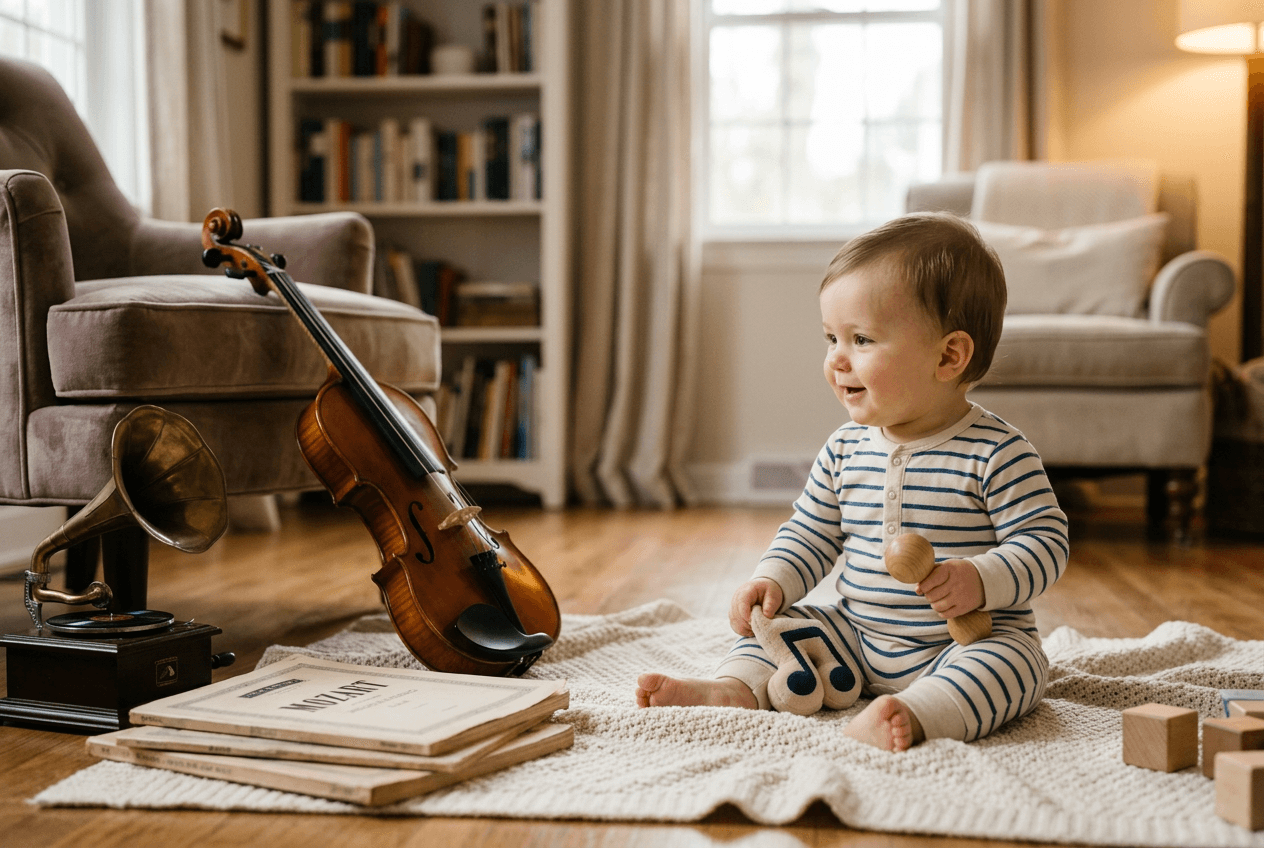
The so-called Mozart Effect has been somewhat overhyped for cognitive benefits — we break down what's fact vs. fiction in our article on the Mozart Effect for babies — but classical music genuinely excels for sleep purposes. Baroque-era pieces by composers like Bach and Handel often feature the ideal 60 to 80 beats per minute range that mirrors a resting heart rate.
Avoid anything with dramatic crescendos or sudden tempo changes. Vivaldi's "Four Seasons" might be beautiful, but the storm movement will jolt your toddler awake. Better choices include Bach's "Goldberg Variations," Debussy's "Clair de Lune," or Satie's "Gymnopédies." These pieces maintain consistent dynamics throughout.
Soft Instrumental Lullabies and Nature Sounds
Traditional lullabies work for good reason. They've been refined across generations specifically for the purpose of soothing children to sleep. The neuroscience behind why is explored in our piece on the science of why lullabies work. Instrumental versions often work better than sung versions for toddlers, since lyrics can be engaging enough to keep little minds active.
Nature sounds paired with soft instrumentation hit a sweet spot for many children. Gentle rain, ocean waves, or forest ambience layered under acoustic guitar or piano creates a rich but non-stimulating soundscape. The nature elements also provide consistent masking for household noises.
White Noise and Pink Noise for Sound Masking
White noise contains all frequencies at equal intensity, creating that familiar static-like sound. Pink noise emphasizes lower frequencies, producing a deeper, more natural tone similar to steady rainfall or wind. For toddlers, pink noise often proves more effective because it's less harsh on developing ears.
Both types excel at masking disruptive sounds like traffic, siblings, or creaky floorboards. If your toddler is a light sleeper who wakes at every door closing, noise masking might matter more than melodic music. Some parents combine both, using pink noise as a base layer with quiet instrumental music on top.
Key Characteristics of Effective Sleep Tracks
Optimal Tempo and Beats Per Minute (BPM)
The magic number range sits between 60 and 80 BPM. This tempo aligns with a healthy resting heart rate and encourages entrainment, where your toddler's physiological rhythms naturally sync with the music's pace. The full science behind this is covered in our article on the 60–80 BPM rule for sleep music. Anything faster tends to energize rather than calm.
You can check BPM using free apps or websites that analyze audio files. Many parents are surprised to discover that songs they assumed were slow actually clock in at 100+ BPM. Trust the numbers over your perception, since our adult sense of "slow" doesn't always match what works for toddler sleep.
Avoiding High-Frequency Notes and Sudden Changes
High-pitched sounds activate alertness responses in young children. Flutes, piccolos, and upper-register violin passages can work against your sleep goals. Opt for lower-register instruments like cello, bass, or piano in the mid-range.
Sudden dynamic changes are equally problematic. A piece that starts quietly and builds to a loud section will likely wake your toddler just as they're drifting off. Look for tracks with consistent volume throughout, or use audio software to normalize volume levels across a playlist.
How to Safely Integrate Music into the Nightly Routine
Setting Appropriate Volume Levels
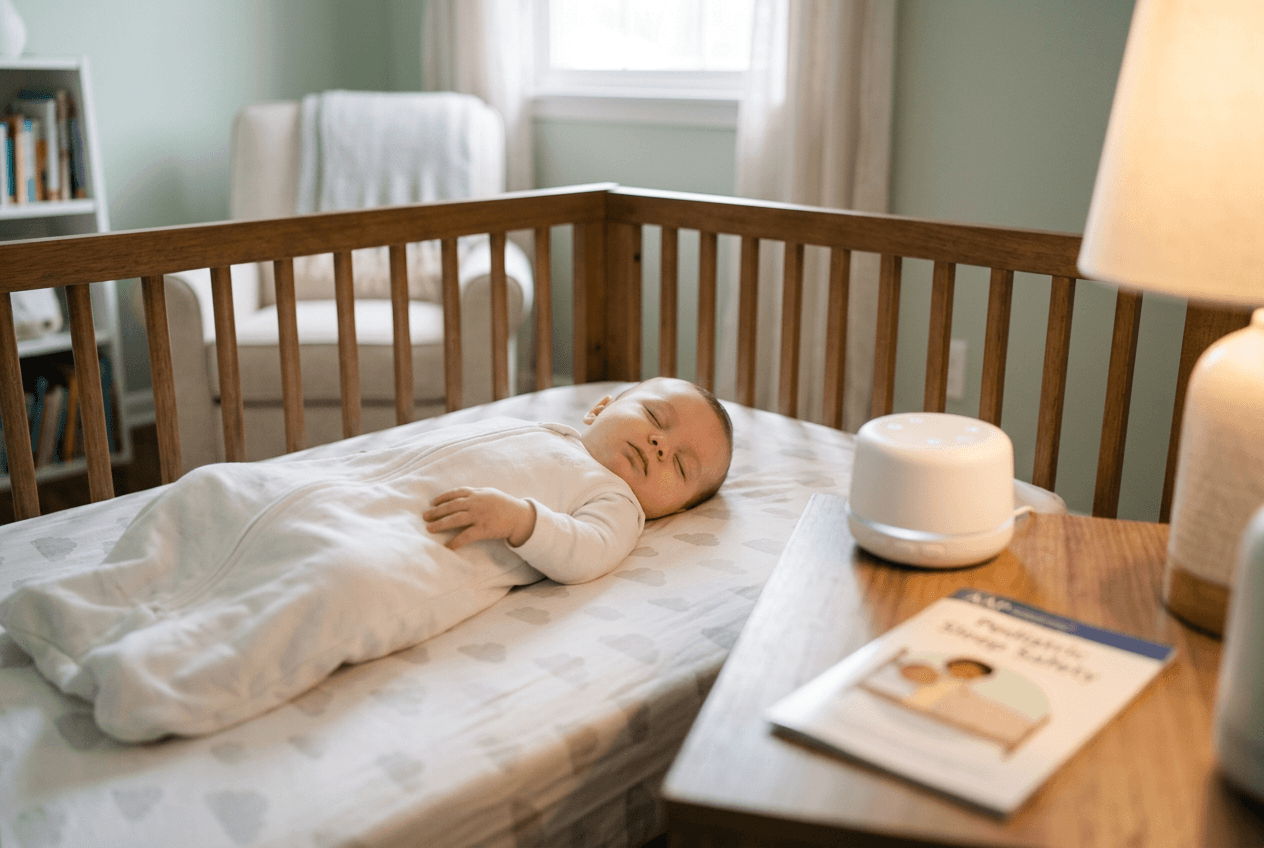
The American Academy of Pediatrics recommends keeping sustained sounds below 50 decibels for sleeping infants and toddlers. Our full guide to safe volume and AAP guidelines explains exactly how to measure and set levels correctly. That's roughly the volume of a quiet conversation or moderate rainfall. If you need to raise your voice to be heard over the music, it's too loud.
Place speakers at least three feet from your toddler's head. Sound intensity decreases significantly with distance, so positioning matters as much as volume settings. The AAP's pediatric noise exposure research found all 14 tested infant sound machines could exceed safe levels at close range. Many parents place a speaker near the door rather than beside the crib or bed.
Using Timers and Auto-Shutoff Features
Continuous music all night isn't necessary and may actually interfere with sleep quality during lighter sleep cycles. Set timers for 30 to 45 minutes, allowing the music to fade as your toddler enters deeper sleep stages.
Most smart speakers and sleep apps include auto-shutoff features. Some allow gradual volume reduction over the final 10 minutes, which prevents the abrupt silence that occasionally wakes sensitive sleepers. Experiment with different fade-out durations to find what works for your child.
Recommended Apps and Devices for Toddler Playlists
Several apps cater specifically to children's sleep needs. Baby Sleep Sounds offers curated playlists with verified BPM ranges. Moshi combines music with short sleep stories for toddlers who need a bit more engagement before settling. Spotify and Apple Music both have extensive toddler sleep playlists, though quality varies widely.
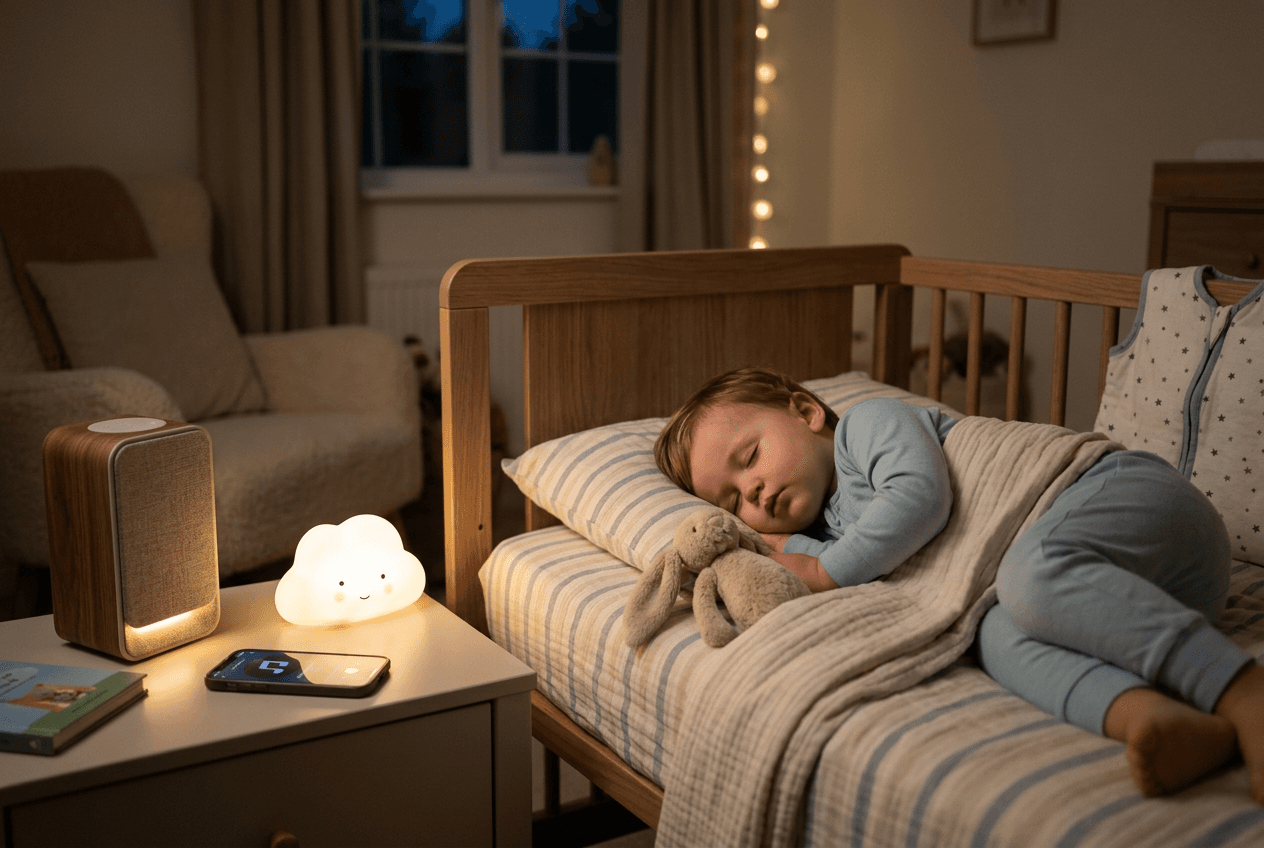
For devices, consider a dedicated sleep sound machine rather than a smart speaker. Products from Hatch, LectroFan, and Yogasleep are designed specifically for nursery use with appropriate volume limiters built in. They're also less likely to accidentally play podcast ads at 2 AM when your WiFi hiccups.
Bluetooth speakers work fine if you prefer flexibility. Look for models with physical volume limiters or parental controls. Avoid placing any electronic device inside the crib or bed with your toddler.
Overcoming Common Challenges with Sleep Audio
Dealing with Music Dependency
Some parents worry that their toddler will become unable to sleep without music. This concern is valid but manageable. The goal is using music as a transition tool, not a permanent requirement.
After three to four months of consistent use, begin gradually reducing volume over several weeks. Drop by 10 percent every few nights until you reach near-silence. Alternatively, shorten the timer duration progressively. Most toddlers adapt to these gradual changes without significant sleep disruption.
Transitioning from Lullabies to Silence
Around age 3, many children naturally become less dependent on sleep music. You can encourage this transition by introducing "quiet time" before the music starts. Start with just two minutes of silence, then extend gradually.
Some children transition more easily to nature sounds first, then to silence. Others do better going cold turkey during a schedule change like starting preschool. Watch for signs of readiness: if your toddler falls asleep before the music ends consistently, they may be ready to try without it.
The right approach to sleep music for your 1 to 3 year old combines understanding the science with knowing your specific child. Start with low-tempo, consistent tracks played at safe volumes with appropriate timers. Give any new approach at least a week before judging its effectiveness. And remember that what works at 18 months may need adjusting by age 2 or 3. Sleep needs evolve, and your strategies should evolve with them.