Does White Noise for Sleep Actually Work?

7 min read
You've probably tried everything: counting sheep, cutting caffeine, buying blackout curtains. Yet you're still lying awake at 2 AM, listening to your neighbor's dog bark or cars passing on the street. That's when someone inevitably suggests white noise. Maybe you've downloaded an app or considered buying a dedicated machine, but you're skeptical. Does white noise for sleep actually work, or is it just another wellness trend that sounds good but delivers nothing?
The short answer: yes, it can work, but not for everyone, and the science is more nuanced than most articles admit. The real question isn't whether white noise helps people sleep. It's whether it will help you sleep, given your specific situation, environment, and sleep challenges. Understanding how sound masking actually functions in your brain, what different types of noise do, and the legitimate concerns around long-term use will help you make an informed decision rather than just hoping for the best.
The Science of Sound Masking and Sleep
Sound masking isn't magic. It's physics combined with how your auditory system processes information while you're trying to rest.
How White Noise Creates a Constant Sound Floor
Your brain is constantly monitoring your environment, even during sleep. This made sense for our ancestors who needed to wake up when predators approached. The problem is that your brain can't distinguish between a genuine threat and your refrigerator cycling on at 3 AM.
White noise works by creating a consistent baseline of sound across all audible frequencies simultaneously. Think of it like a steady hum that fills in the acoustic gaps in your environment. When a sudden noise occurs, like a door slamming or a car honking, it doesn't stand out as dramatically against this constant backdrop. Your brain registers less contrast between silence and the disruptive sound, so you're less likely to startle awake.
The Role of Sound Consistency in Reducing Sleep Latency
Sleep latency is the time it takes you to fall asleep after getting into bed. Studies have shown that consistent ambient sound can reduce this period, particularly for people who live in noisy environments. One 2021 study in Sleep Medicine found that participants fell asleep 38% faster when exposed to white noise compared to silence.
The key word here is consistency. Your brain habituates to predictable sounds quickly. It's the unpredictable ones that keep you alert.
White, Pink, and Brown: Understanding the Noise Spectrum
Not all noise is created equal. The "colors" of noise refer to different frequency distributions, and each affects your perception differently.
The Differences in Frequency and Intensity
White noise contains equal energy across all frequencies, which can sound somewhat harsh or hissy to some ears. Think static on an old television.
Pink noise reduces energy at higher frequencies, creating a deeper, more balanced sound. Rainfall, steady wind, and ocean waves approximate pink noise naturally. For a full comparison of how white, pink, and brown noise differ for sleep, see our guide on which noise color is best for sleep. Many people find it more pleasant than pure white noise.
Brown noise (sometimes called red noise) goes even further, emphasizing low frequencies while minimizing high ones. There's also a lesser-known option worth knowing about: green noise, which occupies the mid-frequency range and is often described as the most naturally soothing of all the colors. It sounds like a deep rumble, similar to thunder in the distance or a strong waterfall.
Which Color of Noise is Best for Your Sleep Environment?
There's no universal answer here. Personal preference matters significantly. However, research suggests pink noise may have an edge for sleep quality specifically. A 2012 study published in the Journal of Theoretical Biology found that pink noise not only helped participants fall asleep faster but also increased time spent in deep sleep stages.
If you're new to sleep sounds, start with pink noise and adjust from there. Some people find brown noise too rumbly, while others find white noise too sharp. Experimentation takes a few nights, but finding your preference is worth the effort.
Evidence-Based Benefits of Using Sleep Sounds
Beyond the general mechanism of sound masking, specific benefits have been documented in clinical research.
Blocking Disruptive Environmental Noises
This is the most straightforward benefit. If you live near a busy road, have loud neighbors, or share a bedroom with a snoring partner, ambient noise can genuinely help. A 2016 study in the Journal of Caring Sciences found that ICU patients exposed to white noise reported significantly better sleep quality despite the inherently disruptive hospital environment.
The effect is particularly pronounced for:
- Light sleepers who wake easily to small sounds
- People in urban environments with unpredictable noise patterns
- Shift workers sleeping during daytime hours
- Parents of young children who need to sleep through minor sounds while still hearing genuine emergencies
Managing Tinnitus Symptoms During the Night
For the estimated 15% of adults who experience tinnitus, nighttime can be especially challenging. The ringing, buzzing, or humming becomes more noticeable in silence. White noise provides an external sound that can partially mask tinnitus symptoms, making it easier to fall asleep.
This isn't a cure for tinnitus, but it's a widely recommended management strategy by audiologists and sleep specialists.
Potential Drawbacks and Safety Considerations
Here's where many articles fall short. There are legitimate concerns about white noise use that deserve honest discussion.
The Risk of Hearing Damage from High Volume
Any sound, including white noise, can damage hearing if played too loudly for extended periods. Because white noise plays all night, the cumulative exposure matters. The World Health Organization recommends keeping environmental noise below 70 decibels for extended exposure.
Most white noise machines and apps don't display decibel levels, making it hard to know if you're in a safe range. A practical rule: if you need to raise your voice to talk over your white noise machine, it's too loud. Aim for a volume that masks disruptive sounds without dominating the room.
Developing an Auditory Dependency for Sleep
This concern is real but often overstated. Some people do become dependent on white noise to fall asleep, finding it difficult to rest in its absence, like hotel rooms or camping trips.
However, this dependency isn't fundamentally different from needing a dark room, a specific pillow, or cool temperatures. It's a sleep association. If you travel frequently or value being able to sleep anywhere, you might want to use white noise selectively rather than every single night.
How to Effectively Implement White Noise in Your Routine
If you've decided to try white noise, implementation details matter more than you might expect.
Choosing Between Machines, Fans, and Digital Apps
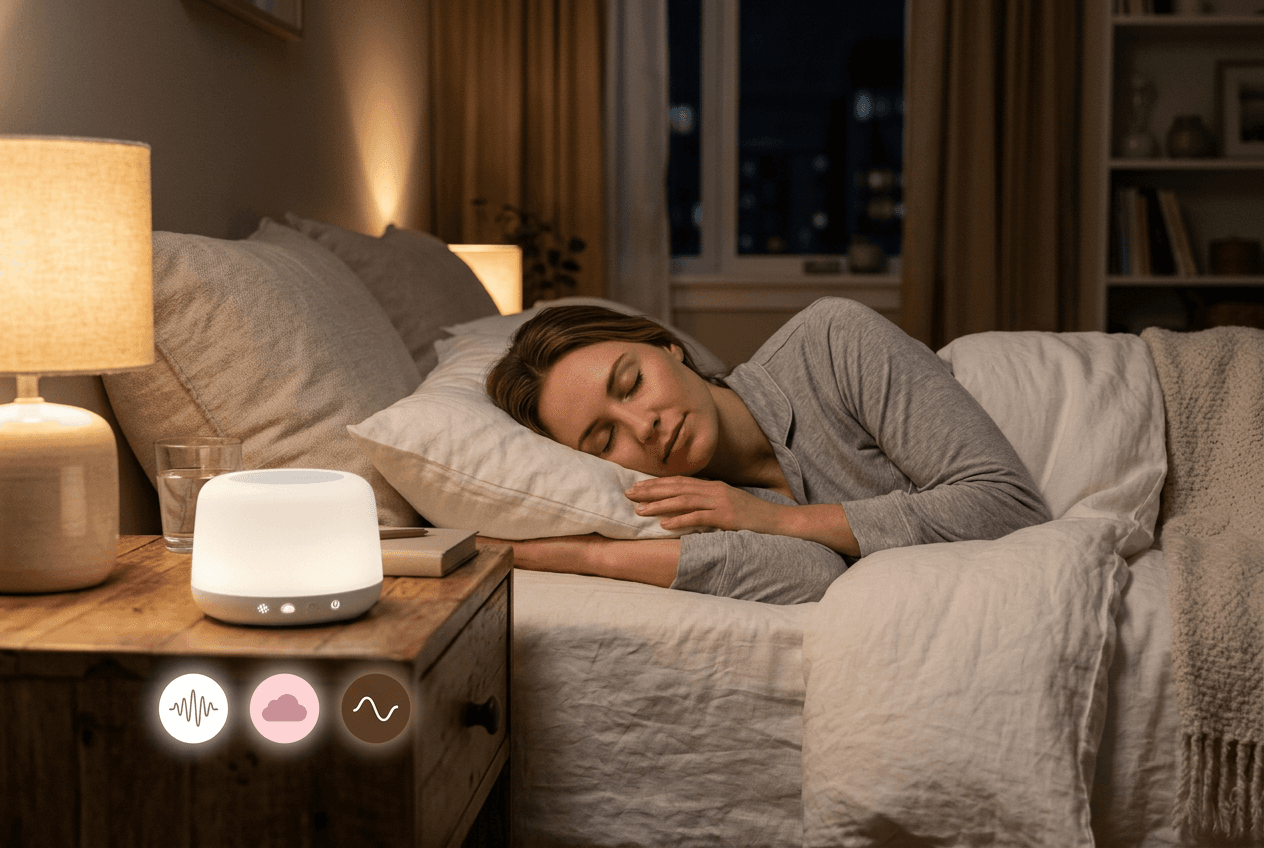
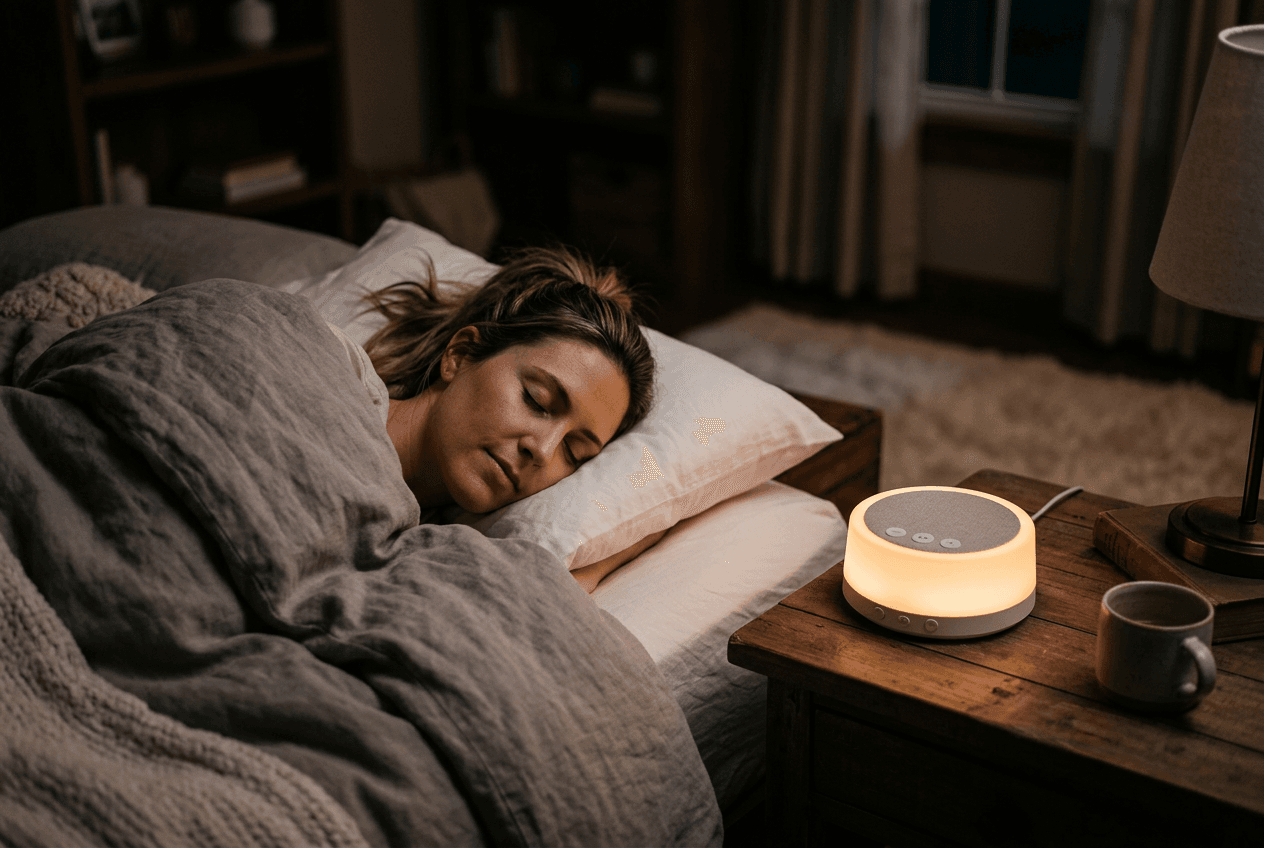
Dedicated white noise machines typically produce more consistent, higher-quality sound than smartphone apps. They don't have notification interruptions, battery concerns, or the temptation to check your phone.
Simple fans work well for some people and have the added benefit of air circulation. However, fan noise isn't technically white noise and may not mask all frequency ranges effectively.
Apps are convenient and often free, making them good for testing whether white noise helps you before investing in hardware. If you use an app, enable airplane mode to prevent notifications from disrupting your sleep.
Optimal Volume Levels and Speaker Placement
Position your sound source 3-6 feet from your head. Placing it directly on your nightstand or under your pillow is too close and increases hearing damage risk.
Start at a low volume and increase only until you notice disruptive sounds becoming less prominent. You're not trying to drown everything out, just reduce the contrast between silence and sudden noises.
Determining if White Noise is Right for You
The honest answer is that you won't know until you try it consistently for at least a week. One night isn't enough data. Your brain needs time to adjust to the new acoustic environment.
White noise tends to help most if you're a light sleeper, live in a noisy environment, have tinnitus, or find your mind racing in silence. If you want to explore whether pink noise might work better for you, the 2025 Penn Medicine pink noise study is a compelling read. It's less likely to help if your sleep problems stem from anxiety, medical conditions, or poor sleep hygiene that no amount of ambient sound will fix.
Give it a genuine trial. Track your sleep quality during the experiment. And if it doesn't work, that's useful information too. Not every solution fits every person, and the best sleep strategy is the one that actually works for your specific situation.