Why Piano Music for Sleep Works: The Science Explained

8 min read
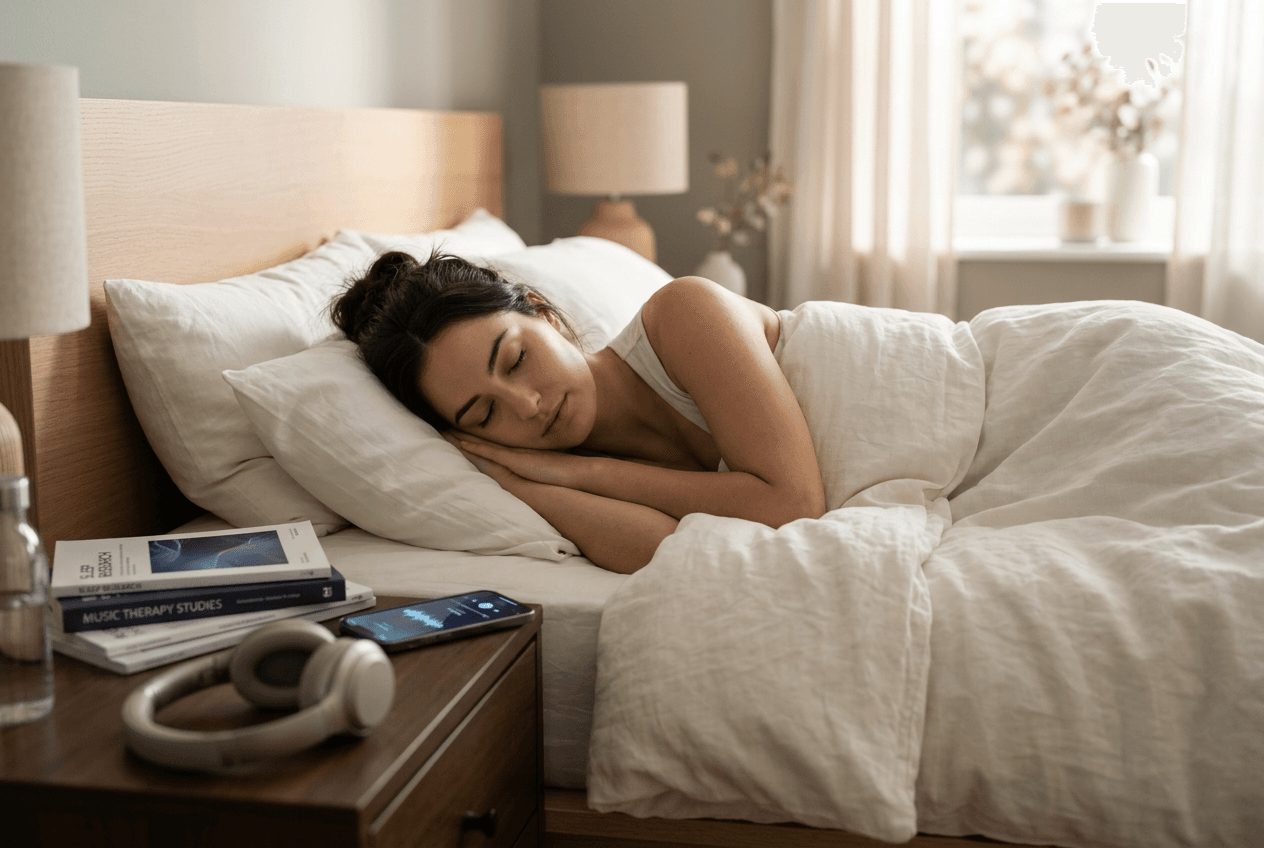
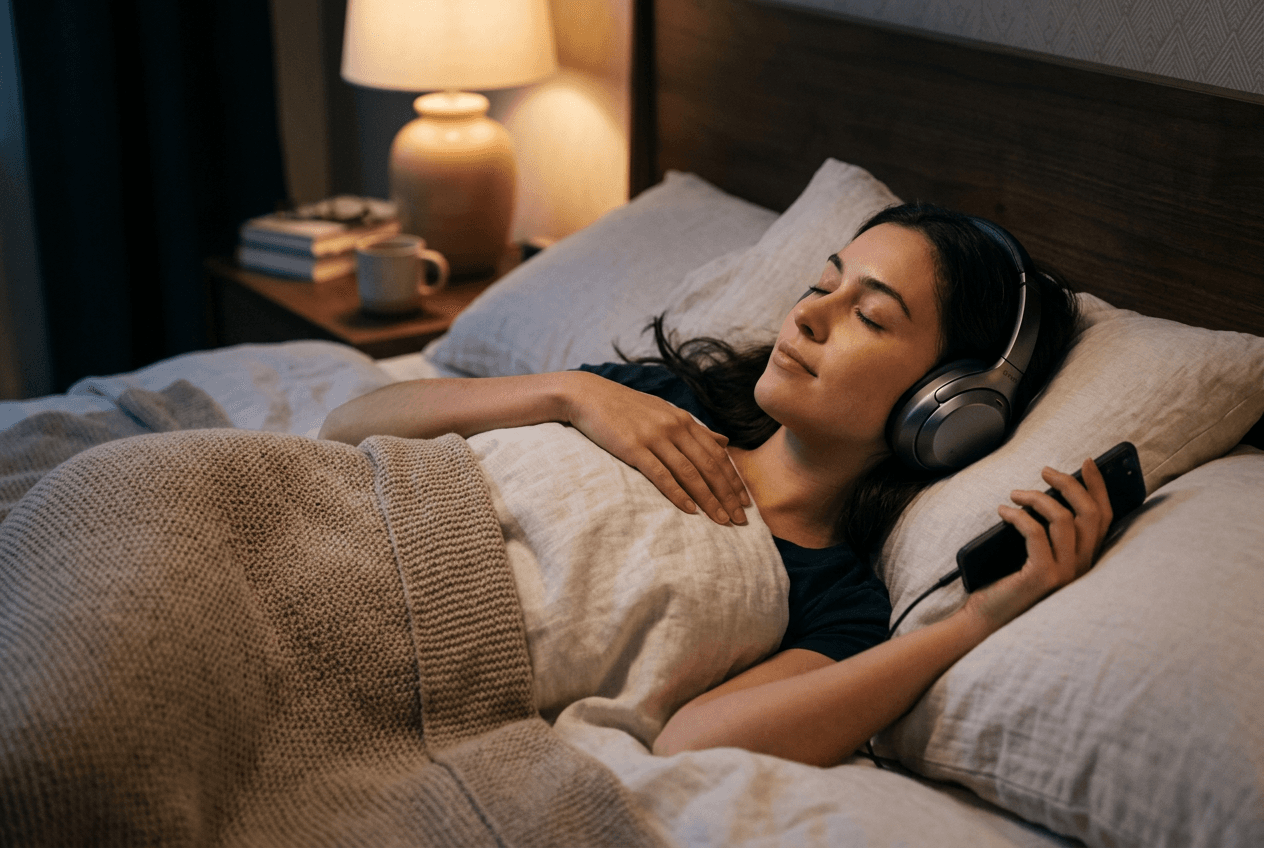
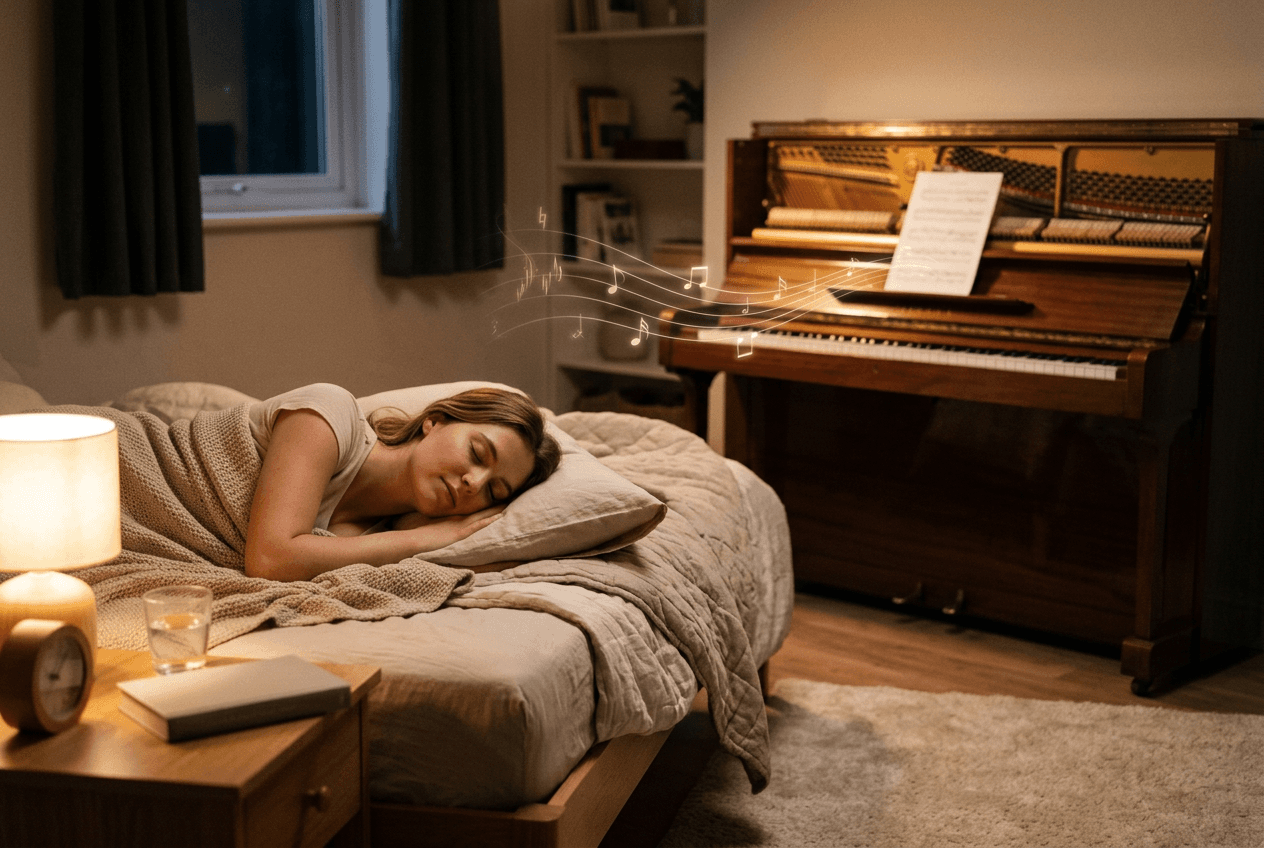
You're lying in bed, exhausted, but your brain refuses to cooperate. The day's conversations replay on loop. Tomorrow's tasks stack up in your mind. Then you press play on a piano playlist, and something shifts. Your shoulders drop. Your breathing slows. Twenty minutes later, you're asleep.
This isn't coincidence or placebo. The science behind piano music's soothing effect on sleep is remarkably well-documented, spanning neuroscience, acoustics, and psychology. Researchers have spent decades unpacking why certain sounds trigger relaxation while others keep us wired, and piano music hits a neurological sweet spot that few other instruments match.
What makes piano specifically effective isn't just personal preference or nostalgia, though those play a role. The instrument's acoustic properties, combined with how our nervous system processes sound, create measurable physiological changes that prepare the body for rest. Understanding this science doesn't just satisfy curiosity. It helps you use music more strategically to improve your sleep quality. If you're also curious how classical compositions more broadly compare, our guide to why classical music helps you sleep covers the full landscape.
Here's what happens in your brain and body when those soft piano notes fill the room, and why this knowledge matters for anyone struggling to wind down at night.
The Auditory Connection to the Parasympathetic Nervous System
Your autonomic nervous system operates like a toggle switch between two states: sympathetic (fight-or-flight) and parasympathetic (rest-and-digest). Sleep requires parasympathetic dominance, but modern life keeps many of us stuck in sympathetic overdrive. Slow, predictable music acts as a physiological intervention, essentially tricking your nervous system into switching modes.
When you listen to calm piano music, your brain's auditory cortex sends signals to the limbic system, which governs emotional responses. From there, the message cascades to the hypothalamus, which regulates autonomic functions. The result is a measurable downshift: your heart rate drops, blood pressure decreases, and stress hormones recede.
Lowering Cortisol and Heart Rate through Rhythm
Cortisol, the primary stress hormone, follows a daily rhythm that should peak in the morning and decline toward evening. Chronic stress disrupts this pattern, leaving cortisol elevated when you're trying to sleep. Studies published in the Journal of Advanced Nursing found that listening to relaxing music for 45 minutes before bed reduced cortisol levels significantly compared to control groups.
The mechanism involves entrainment, your body's tendency to synchronize with external rhythms. Slow piano music with consistent tempos guides your heart rate downward. Research from the British Journal of Health Psychology documented heart rate reductions of 5-10 beats per minute within 15 minutes of listening to slow-tempo classical music. For someone with an elevated resting heart rate of 80 BPM, this drop represents a meaningful shift toward sleep-readiness.
The Role of the Vagus Nerve in Sound Processing
The vagus nerve, the longest cranial nerve in your body, serves as the primary communication highway between your brain and your organs. It's responsible for activating parasympathetic responses, and sound directly influences its activity. Low-frequency vibrations and slow musical patterns stimulate vagal tone, essentially strengthening your body's ability to relax on demand.
Piano music, particularly in lower registers, produces frequencies that resonate with this vagal activation. The instrument's range extends from 27.5 Hz to over 4,000 Hz, covering the full spectrum of human hearing. When composers write sleep-oriented piano pieces, they often emphasize the middle and lower registers, precisely where vagal stimulation occurs most effectively.
The Unique Acoustic Properties of Piano Tones
Not all instruments produce equally sleep-conducive sounds. Electric guitars, brass instruments, and synthesizers can be calming in context, but piano possesses acoustic characteristics that make it particularly effective for sleep induction. These properties relate to how the instrument generates and sustains sound.
Predictable Frequency Ranges and Harmonic Consonance
Piano strings produce what acousticians call "nearly harmonic" overtones. When you strike a piano key, the fundamental frequency sounds alongside a predictable series of higher frequencies. This harmonic structure creates consonance, a sense of acoustic stability that the brain interprets as safe and predictable.
Dissonant sounds, by contrast, create tension. Your brain evolved to interpret unpredictable acoustic patterns as potential threats, triggering alertness. Piano music composed for relaxation deliberately avoids dissonance, using chord progressions that resolve smoothly. The brain doesn't need to stay vigilant for unexpected sounds, allowing it to disengage from active processing.
The frequency range matters too. Piano's sweet spot for relaxation falls between 250 Hz and 2,000 Hz, corresponding to the human voice's fundamental frequencies. We're neurologically primed to find this range comfortable, having evolved to communicate within it. Sleep-oriented piano compositions exploit this by centering melodies in the mid-range while avoiding harsh high frequencies.
The Impact of Attack and Decay on Brainwave Entrainment
Every musical note has four phases: attack, decay, sustain, and release. Piano's attack is soft compared to percussion instruments, with hammers striking felt-covered strings rather than hard surfaces. The decay is gradual, with notes fading naturally over several seconds.
This acoustic envelope matters for brainwave entrainment. Your brain produces electrical activity at different frequencies depending on your state of consciousness. Beta waves (12-30 Hz) dominate during alert wakefulness. Alpha waves (8-12 Hz) appear during relaxed wakefulness. Theta waves (4-8 Hz) emerge during drowsiness and light sleep.
Slow piano music with gradual note decay encourages alpha and theta wave production. The brain synchronizes with the music's temporal patterns, gradually shifting from alert beta states toward sleep-ready theta states. EEG studies have documented this transition occurring within 20-30 minutes of listening to appropriate music.
Psychological Comfort and the Power of Minimalist Melodies
Beyond pure acoustics, piano music for sleep works through psychological mechanisms. The mind's response to music involves memory, association, and attention, all of which influence sleep onset.
Masking Environmental Noise and Intrusive Thoughts
One of music's most practical benefits is acoustic masking. Environmental sounds, such as traffic, neighbors, or household appliances, can prevent sleep onset or cause awakenings. Piano music provides a consistent auditory environment that covers these interruptions without demanding attention.
The same principle applies to mental noise. Intrusive thoughts, the worries and ruminations that surface when external stimulation disappears, often sabotage sleep. Music occupies just enough cognitive bandwidth to prevent this mental chatter without requiring active engagement. Piano works particularly well because its melodic simplicity doesn't demand interpretation or analysis.
Researchers call this "attention capture without attention demand." The music is interesting enough to redirect focus from anxious thoughts but simple enough not to stimulate active thinking. Minimalist piano compositions, with their repetitive phrases and sparse arrangements, excel at this balance.
Emotional Regulation through Soft Dynamics
Volume and dynamic range significantly impact emotional response. Loud, dynamically varied music triggers arousal. Soft, consistent music promotes calm. Piano's natural dynamic range allows composers to create pieces that stay within a narrow, quiet band, avoiding the sudden volume changes that startle the nervous system.
The emotional content of piano music also matters. Minor keys, often associated with sadness, can actually promote relaxation when combined with slow tempos. Major keys feel more emotionally neutral. Sleep playlists typically mix both, avoiding anything too emotionally intense in either direction.
Optimizing Sleep Hygiene with Curated Piano Playlists
Understanding the science helps, but application matters more. Using piano music effectively for sleep requires attention to tempo, timing, and consistency.
Finding the Ideal Tempo: The 60-80 BPM Rule
Research consistently identifies 60-80 beats per minute as the optimal tempo range for sleep music. This range corresponds to a resting heart rate, facilitating the entrainment effect described earlier. Faster tempos may feel relaxing subjectively but don't produce the same physiological downshift. We explore this in detail in our guide to the 60–80 BPM rule for sleep music.
When selecting or creating sleep playlists, check the BPM of individual tracks. Many streaming platforms display this information, or you can use free online tools to analyze tempo. Aim for consistency across the playlist, avoiding tracks that suddenly jump to faster tempos.
Avoid tracks with significant tempo variations within the piece. Classical piano works often include dramatic tempo changes for emotional effect, but these interrupt the steady state your nervous system needs. Look for ambient piano, minimalist compositions, or pieces specifically composed for sleep.
Consistency and the Pavlovian Response to Sleep Music
The more consistently you use piano music for sleep, the more effective it becomes. This isn't mystical thinking; it's classical conditioning. Your brain learns to associate the specific sounds with sleep onset, eventually triggering drowsiness automatically when the music begins.
Building this association requires consistency in several dimensions:
- Use the same playlist or similar music nightly
- Start the music at the same point in your bedtime routine
- Keep volume levels consistent
- Avoid using sleep music during other activities
After two to three weeks of consistent use, most people report faster sleep onset. The music becomes a sleep cue, signaling to your brain that it's time to disengage from wakefulness.
The science behind piano music for sleep isn't complicated, but it is specific. Slow tempos, harmonic consonance, soft dynamics, and consistent use create measurable changes in your nervous system. If you've struggled with sleep onset, a well-curated piano playlist might be the simplest intervention you haven't tried. The Sleep Foundation's overview of noise and sleep offers additional context on how sound environments affect sleep quality. Start tonight, stay consistent, and let your nervous system do what it already knows how to do.